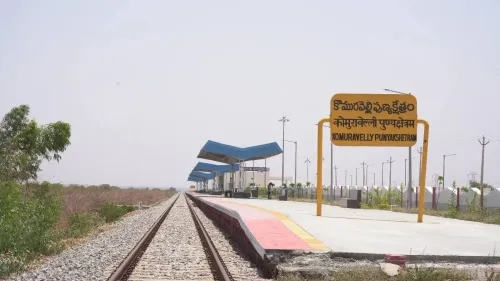
Kishan Reddy: Komuravelli Railway Station 99% Complete
Synopsis
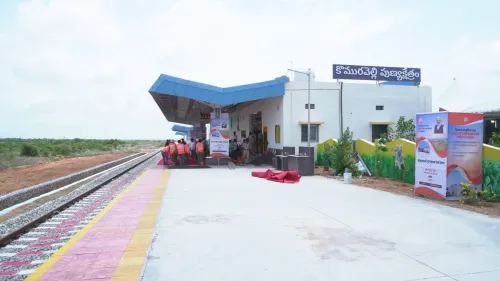
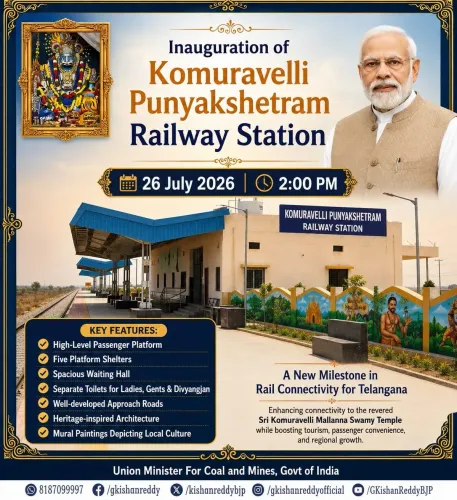
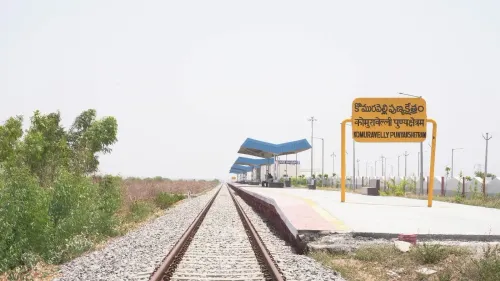
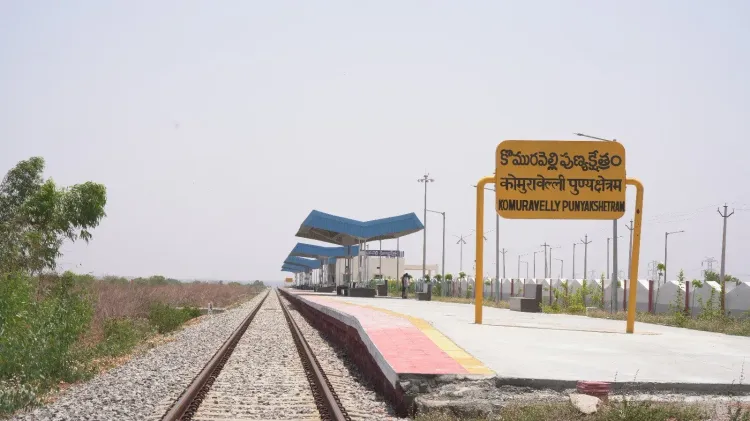
Union Minister G. Kishan Reddy has announced that the Komuravelli Punyakshetram Railway Station in Telangana is 99% complete. Sanctioned in 2024 at ₹5.63 crore, the halt station between Lakudaram and Duddeda will improve rail access for pilgrims visiting the Komuravelli Mallanna Swamy Temple in Siddipet district.
Key Takeaways
The Komuravelli Punyakshetram Railway Station is 99% complete as of June 2026 .
The halt station was sanctioned in 2024 at a project cost of ₹5.63 crores .
It is located on the existing rail line between Lakudaram and Duddeda in Telangana .
Kishan Reddy laid the foundation stone in February 2024 .
The station is designed to serve pilgrims visiting the Komuravelli Mallanna Swamy Temple in Siddipet district .
Formal commissioning and introduction of scheduled train stops remain the final pending steps.
Union Coal and Mines Minister G. Kishan Reddy announced on Saturday, 6 June 2026 that the Komuravelli Punyakshetram Railway Station in Telangana is 99% complete, marking a near-final milestone for a project he had championed to improve pilgrim access to the Komuravelli Mallanna Swamy Temple.
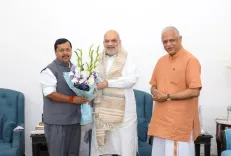
Posting on X, Reddy stated that the halt station — sanctioned in 2024 and positioned between Lakudaram and Duddeda on an existing rail line — had been built at a project cost of ₹5.63 crores. He added that he had laid the foundation stone for the station in February 2024, underscoring his personal involvement in pushing the project through.
Context
The Komuravelli Mallanna Swamy Temple in Siddipet district is one of Telangana's most prominent Shaivite shrines, drawing large crowds of devotees throughout the year, particularly during festival seasons. Despite its religious significance, the absence of a nearby railway halt had long been a practical barrier for pilgrims arriving by train. The new station directly addresses that gap by placing a scheduled stop within reach of the temple complex.
Kishan Reddy, who serves simultaneously as BJP Telangana state president, has consistently highlighted central infrastructure investments in the state — a region where the party has sought to expand its footprint. His post noted that the station is 'set to enhance connectivity and facilitate seamless travel for devotees.'
Policy Backdrop
Indian Railways sanctioned the halt station as part of a broader push during 2023–24 to add low-cost stops on existing lines across southern states, improving last-mile access without requiring new alignments or heavy capital expenditure. Post-bifurcation Telangana — formed in 2014 — has been a recurring focus of such incremental rail upgrades, with successive annual budgets approving new halts and line doublings to address connectivity gaps inherited at the time of the state's creation.
The ₹5.63 crore outlay for the Komuravelli halt is characteristic of this model: modest in scale but targeted in impact, designed to serve a specific community of users — in this case, temple pilgrims — rather than anchor a large freight or intercity corridor.
Stakeholders and Impact
The primary beneficiaries are the thousands of pilgrims who travel annually to the Komuravelli Mallanna Swamy Temple, many of whom come from smaller towns and villages across Telangana and neighbouring states where rail remains the most affordable mode of long-distance travel. Local vendors, accommodation providers, and the broader temple-town economy around Komuravelli in Siddipet district are also expected to see increased footfall once train services begin stopping at the new station.
For Indian Railways, the project represents a replicable template: a limited-budget intervention on an existing route that generates goodwill among religious communities and supports rural mobility without diverting resources from larger network priorities.
What's Next
With work at 99% completion, the formal commissioning of the station and the introduction of scheduled train halts remain the final steps. Railway officials will need to notify train services operating on the Lakudaram–Duddeda stretch to include the new stop in their timetables. Reddy's post signals that an inauguration announcement is likely imminent. More broadly, similar halt-station proposals are expected to be taken up in other Telangana temple corridors during upcoming railway budget cycles, continuing the pattern of incremental pilgrimage-connectivity upgrades.
Point of View
Targeted investments on existing corridors to serve religious tourism — a politically resonant category of infrastructure that delivers visible benefits to large, organised communities of users. For G. Kishan Reddy, the announcement carries dual utility: it demonstrates deliverable central-government action in Telangana ahead of potential electoral cycles, and it reinforces the BJP's effort to associate itself with the protection and promotion of pilgrimage culture in a state where the party remains in opposition. The ₹5.63 crore price point also signals that such projects can be replicated at scale across other temple corridors without straining railway finances. Whether the station's commissioning follows swiftly or faces procedural delays will determine how effectively this infrastructure milestone translates into political capital.
NationPress
23 Oct 2026
Frequently Asked Questions
What is the Komuravelli Punyakshetram Railway Station?
It is a new halt station on the existing rail line between Lakudaram and Duddeda in Telangana's Siddipet district, built specifically to improve train access for pilgrims visiting the Komuravelli Mallanna Swamy Temple.
How much did the Komuravelli railway station cost?
The project cost is ₹5.63 crores , funded through Indian Railways as part of its low-cost halt station programme for southern states.
When was the foundation stone for Komuravelli station laid?
Union Minister G. Kishan Reddy laid the foundation stone in February 2024 , the same year the project was sanctioned.
Is the Komuravelli railway station open yet?
As of June 2026 , the station is 99% complete but has not yet been formally commissioned; scheduled train halts are the final pending step.
Which temple does the Komuravelli railway station serve?
The station serves the Komuravelli Mallanna Swamy Temple in Siddipet district, one of Telangana's most prominent Shaivite shrines and a major pilgrimage destination.