KPSC recruitment row: Kharge tells Kumaraswamy to stop 'hit-and-run' allegations
Synopsis
Karnataka Home Minister Priyank Kharge didn't just defend the state government on the KPSC recruitment row — he went on offence, demanding Kumaraswamy explain who appointed the KPSC chairman and why central agencies like the ED and CBI have done 'nothing' in the case. The exchange signals a deepening political battle over institutional accountability in Karnataka's biggest recent recruitment controversy.
Key Takeaways
Karnataka Home Minister Priyank Kharge on 31 August rebuked Union Minister H.D.
Kumaraswamy for making 'hit-and-run' allegations over the KPSC recruitment case.
Kharge stated that OMR sheets are in KPSC custody — not the state government's — and that the commission itself conducted the exam and directed recruitment.
He questioned Kumaraswamy's silence on KPSC Chairman Shivashankarappa Sahukar and the circumstances of his appointment.
Karnataka Police has arrested an IAS officer , his driver, and an alleged middleman in the case; Kharge alleged the ED and CBI have taken no meaningful action.
Kharge also targeted RSS chief Mohan Bhagwat over remarks made during a US visit , alleging a contradiction between his statements abroad and BJP positions at home.
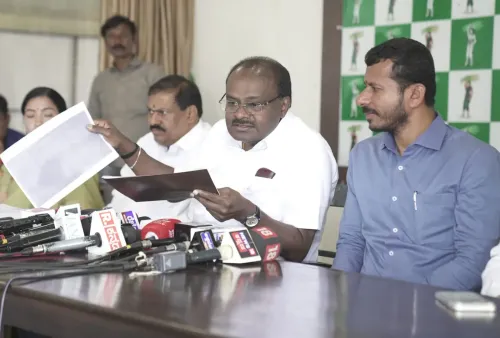
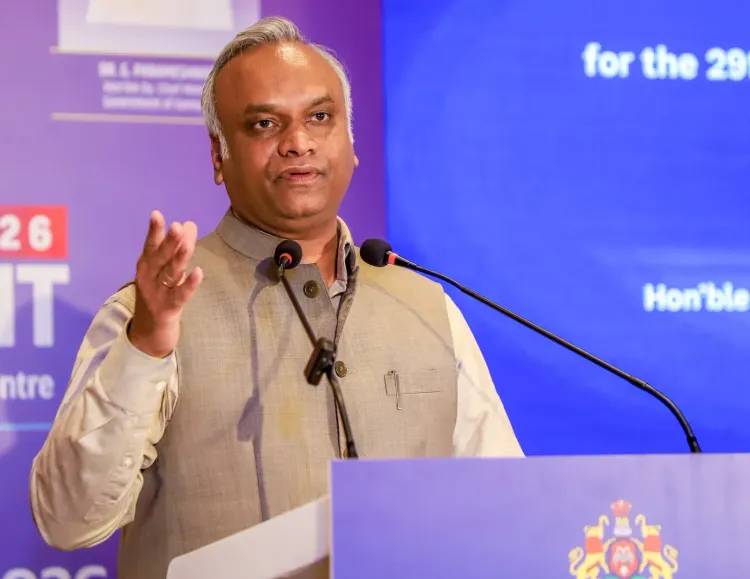
Karnataka Home Minister Priyank Kharge on Monday, 31 August sharply rebuked Union Minister H.D. Kumaraswamy over his allegations in the Karnataka Public Service Commission (KPSC) recruitment irregularities case, demanding that Kumaraswamy present facts publicly rather than resort to what Kharge called 'hit-and-run' accusations. Speaking to reporters in Bengaluru, Kharge argued that the KPSC — not the state government — bore primary responsibility for the examination process.
Kharge's Core Defence: KPSC Conducted the Exam
Kharge was pointed in laying out the institutional chain of responsibility. He noted that the Optical Mark Recognition (OMR) sheets remain in the custody of the KPSC, not the Department of Rural Development and Panchayat Raj (RDPR), and said Kumaraswamy appeared to be unaware of this basic fact.
'The OMR sheets are under the custody of the KPSC and not under the Department of RDPR. That is common sense,' Kharge said.
He argued that since the KPSC conducted the examination, released the selection list, and directed the government to proceed with recruitment, the state administration could not be held accountable for alleged irregularities originating within the commission. The government, he added, had subsequently issued a conditional order in response to objections, in compliance with directions from the Karnataka Administrative Tribunal (KAT) and the Karnataka High Court.
Kharge Questions Kumaraswamy's Silence on KPSC Leadership
The Home Minister turned the spotlight on KPSC Chairman Shivashankarappa Sahukar, questioning why Kumaraswamy had not uttered a word about the chairman or other commission members — including who appointed them.
'How come Kumaraswamy has not uttered a single word on the KPSC Chairman Shivshankarappa? Not a single word. How come he did not ask who made him a member? Who made him a chairman? Who made the other members? Who nominated the other members of the KPSC?' Kharge said.
He also questioned Kumaraswamy's silence on former Chief Minister B.S. Yediyurappa and other Bharatiya Janata Party (BJP) leaders in connection with the case, suggesting the criticism was politically selective.
Police Action and the Role of Central Agencies
Kharge cited concrete enforcement steps taken by the Karnataka Police to counter claims of government inaction. He noted the arrest of an IAS officer, the officer's driver, and an alleged middleman — the last of whom was reportedly apprehended while attempting to flee the country.
'When an IAS officer went missing, it was the Karnataka Police that brought him back to Karnataka and arrested him. His driver was arrested by the Karnataka Police. The middleman was fleeing the country and was arrested by Karnataka Police,' he said.
He then turned the accountability lens on central investigative agencies — the Income Tax Department, the Enforcement Directorate (ED), and the Central Bureau of Investigation (CBI) — alleging they had done nothing of consequence. Kharge alleged that the pace of the ED's proceedings raised questions about whether it was seeking to shield BJP leaders, a charge the ED has not publicly responded to.
Kharge Also Targets RSS Chief Bhagwat's US Visit
Separately, Kharge trained his criticism on RSS chief Mohan Bhagwat, taking aim at remarks Bhagwat reportedly made during a recent visit to the United States — including that Muslims are an integral part of India. Kharge alleged a contradiction between Bhagwat's remarks abroad and positions taken by BJP leaders and members of the wider Sangh Parivar within India.
'Mohan Bhagwatji will do anything for funds. In India, it is Hindu Rashtra. In America, we are a nation who is the most secular, most democratic, and we thrive on unity in diversity,' Kharge said.
He also questioned the funding arrangements for Bhagwat's foreign trip and asked why the RSS was not registered in India if organisations associated with it were registered abroad for fundraising purposes. Neither the RSS nor Bhagwat's office had responded to these remarks at the time of reporting.
What Comes Next
The KPSC recruitment controversy has drawn in multiple institutions — the state government, the commission, the KAT, the High Court, and central agencies — making a swift resolution unlikely. Kharge reiterated that the government would take action regardless of political affiliation, pointing to existing arrests as evidence. Whether the ED and CBI step up their roles, and how Kumaraswamy responds to Kharge's pointed questions about KPSC leadership appointments, will shape the next phase of this escalating political and administrative dispute.
Point of View
He shifts the accountability frame from the current Congress government to the BJP's tenure in Karnataka — a move that puts Kumaraswamy on the defensive rather than the offensive. The silence of central agencies is the more substantive issue here; if the ED and CBI have jurisdiction but have not acted, that demands explanation beyond partisan point-scoring. The KPSC row is also a stress test for Karnataka's institutional independence — a commission that neither flagged irregularities internally nor escalated them to the government creates a governance vacuum that both sides are now exploiting politically rather than resolving administratively.
NationPress
31 Aug 2026
Frequently Asked Questions
What is the KPSC recruitment controversy in Karnataka?
The Karnataka Public Service Commission (KPSC) recruitment case involves allegations of tampering with Optical Mark Recognition (OMR) sheets used in a state public service examination. The case has led to the arrest of an IAS officer, his driver, and an alleged middleman, and has become a flashpoint between the ruling Congress government and opposition leaders including Union Minister H.D. Kumaraswamy.
Why is Priyank Kharge defending the Karnataka government's role?
Kharge argues that since the KPSC — an independent body — conducted the exam, released the selection list, and directed the government to recruit, the state administration cannot be held responsible for alleged irregularities originating within the commission. He also notes that the government issued a conditional recruitment order in compliance with Karnataka Administrative Tribunal and High Court directions.
Who has been arrested in the KPSC recruitment case so far?
Karnataka Police has arrested an IAS officer, his driver, and an alleged middleman who was reportedly attempting to flee the country. Kharge cited these arrests as evidence of the state government's willingness to act regardless of the accused's position or political affiliation.
Why did Kharge question Kumaraswamy about KPSC Chairman Shivashankarappa Sahukar?
Kharge alleged that Kumaraswamy's criticism was selective because he had not questioned who appointed KPSC Chairman Shivashankarappa Sahukar or other commission members — implying those appointments may trace back to a previous BJP-led government. The question is designed to shift the accountability narrative toward the BJP's tenure.
What did Kharge allege about the ED and CBI's role in the KPSC case?
Kharge alleged that the Income Tax Department, Enforcement Directorate, and CBI had done nothing of consequence in the KPSC investigation. He further alleged that the ED's slow pace of proceedings raised questions about whether it was seeking to protect BJP leaders — a charge the ED has not publicly addressed.