IIT Kanpur study: Brain-gut signals predict antidepressant response in 7-10 days
Synopsis
A study from IIT Kanpur and GSVM Medical College has found that brain and stomach electrical signals recorded in the first week of antidepressant therapy can predict treatment response with up to 84% sensitivity — potentially cutting the standard 4–6-week assessment window to just 7–10 days. For the more than half of depression patients who don't respond to their first medication, this could be a game-changer.
Key Takeaways
Researchers at IIT Kanpur and GSVM Medical College found that brain (EEG) and gastric (EGG) electrical signals can predict antidepressant response within 7–10 days of starting treatment.
The study included 206 participants , of whom 144 were treatment-naive depression patients.
The predictive model achieved 84% sensitivity and 78% specificity during evaluation; 77.3% overall accuracy on an independent cohort.
Depression affects approximately 4.5% of India's population; over half of patients do not respond to their first antidepressant.
The findings could reduce the conventional 4–6-week assessment window, enabling faster, more personalised treatment decisions.
A joint study by researchers at the Indian Institute of Technology Kanpur (IIT Kanpur) and Ganesh Shankar Vidyarthi Memorial (GSVM) Medical College has found that a combination of brain and gastric electrical signals, alongside clinical symptom data, can predict antidepressant treatment outcomes within just 7–10 days of starting therapy. The findings, published on Monday, 31 August, could significantly compress the conventional 4–6-week window currently required to assess whether a patient is responding to medication.
The Research and What It Examined
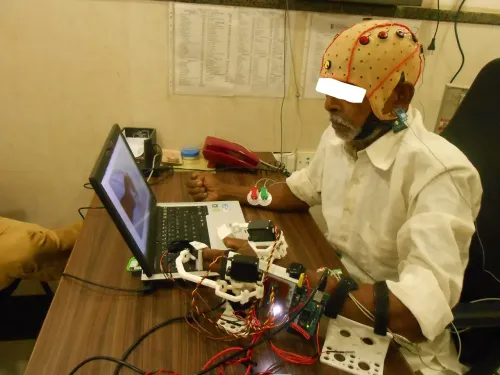
The study used electroencephalography (EEG) to measure electrical activity in the brain and electrogastrography (EGG) to record gastric electrical signals — both non-invasive techniques. Researchers enrolled 206 participants, including 144 treatment-naive patients diagnosed with depression. Signals were recorded at the start of treatment and again approximately one week later, and then cross-referenced against treatment outcomes assessed at the 4–6 week mark.
The study identified distinct patterns in brain and gut physiology that correlated with whether patients would respond to antidepressants — offering a biological basis for the wide variability seen in patient outcomes.
How Accurate Is the Predictive Model
The predictive model demonstrated 84% sensitivity and 78% specificity in identifying patients unlikely to respond to treatment during model evaluation. When tested on an independent patient cohort, it achieved 77.3% overall accuracy, with 80% specificity and 71.4% sensitivity for identifying non-responders. These figures suggest the approach is clinically meaningful, though researchers have not yet claimed it is ready for routine clinical deployment.
What the Researchers Said
'Our study showed that objective non-invasive brain and gut electrophysiological signals collected in about the first week of treatment already contain valuable information about treatment response to precisely guide the intervention,' said Dr. Pragathi Priyadharsini Balasubramani, Assistant Professor, Department of Cognitive Science, IIT Kanpur, and the study's corresponding author.
Amal Jude Ashwin Francis, PhD Scholar, Department of Cognitive Science, IIT Kanpur, and the study's first author, added: 'We found that different symptom profiles were associated with distinct patterns of brain and gut physiology linked to treatment outcomes.' Francis noted that recognising these biological subtypes helps explain why patients respond differently to the same medication and could enable more personalised treatment strategies.
Why This Matters for Depression Care in India
Depression affects an estimated 5% of adults globally and approximately 4.5% of India's population. Critically, more than half of all patients may not respond adequately to their first prescribed antidepressant — forcing clinicians into weeks of trial and error before landing on an effective regimen. This delay can worsen outcomes and increase the burden on both patients and the healthcare system.
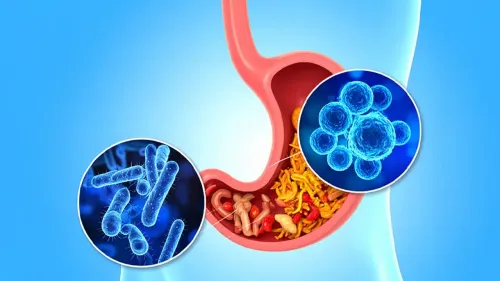
This is the first study of its kind to combine EEG and EGG biomarkers with clinical data for early antidepressant response prediction, according to IIT Kanpur. The brain-gut axis — the bidirectional communication network between the central nervous system and the gastrointestinal tract — has attracted growing scientific attention, and this research adds a clinically actionable dimension to that body of work.
What Comes Next
The researchers indicated that the next steps would involve larger multi-centre trials to validate the model's accuracy across diverse patient populations. If replicated at scale, the approach could reshape how psychiatrists make early treatment decisions — potentially reducing the emotional and clinical cost of prolonged ineffective therapy.
Point of View
But 77.3% overall accuracy on an independent cohort means roughly one in four predictions could still be wrong — a non-trivial margin in a clinical setting where misclassification could delay or deny effective treatment. The real test will come in multi-centre replication with more diverse patient populations, including those with comorbidities. If that bar is cleared, India's public mental health system — chronically under-resourced and reliant on long follow-up cycles — stands to benefit disproportionately.
NationPress
15 Oct 2026
Frequently Asked Questions
What did the IIT Kanpur antidepressant study find?
The study found that a combination of brain electrical signals (EEG), gastric electrical signals (EGG), and clinical symptom data can predict whether a patient will respond to antidepressant treatment within just 7–10 days of starting therapy. This is significantly faster than the conventional 4–6-week assessment period currently used in clinical practice.
How accurate is the brain-gut prediction model for antidepressant response?
The predictive model identified patients unlikely to respond to treatment with 84% sensitivity and 78% specificity during model evaluation. When tested on an independent patient cohort, it achieved 77.3% overall accuracy, with 80% specificity and 71.4% sensitivity for identifying non-responders.
Why does early antidepressant response prediction matter?
More than half of depression patients do not respond adequately to their first antidepressant, often requiring weeks of trial and error. Predicting non-response within 7–10 days could allow doctors to switch or adjust treatment far earlier, reducing patient suffering and the clinical burden of prolonged ineffective therapy.
Who conducted the study and how many patients were involved?
The study was conducted jointly by researchers at IIT Kanpur and Ganesh Shankar Vidyarthi Memorial (GSVM) Medical College. It included 206 participants, of whom 144 were treatment-naive patients diagnosed with depression.
What is the brain-gut axis and why is it relevant to depression?
The brain-gut axis refers to the bidirectional communication network between the central nervous system and the gastrointestinal tract. Emerging research suggests gut physiology influences mood and mental health outcomes. This study used electrogastrography (EGG) alongside EEG to show that gut electrical signals carry predictive information about antidepressant response, adding clinical weight to the brain-gut connection.