Piyush Goyal Launches NSTCC for Real-Time Trade Intelligence
Synopsis
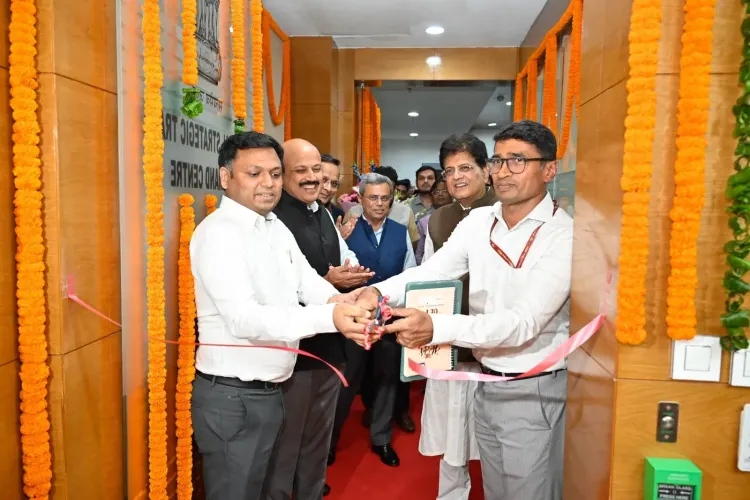
Union Commerce Minister Piyush Goyal launched the National Strategic Trade Command Centre at Vanijya Bhawan on October 15, creating a dedicated data analytics hub to monitor India's international trade in real time and support evidence-based trade policy decisions.
Key Takeaways
Union Commerce Minister Piyush Goyal launched the National Strategic Trade Command Centre (NSTCC) on October 15, 2026 .
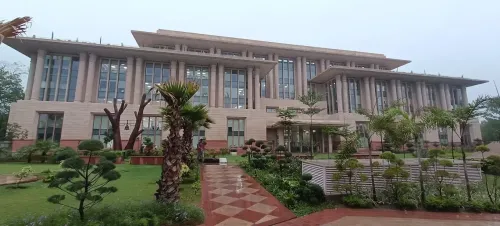
The NSTCC is housed at Vanijya Bhawan , headquarters of the Ministry of Commerce and Industry , New Delhi.
The centre integrates data analytics to enable real-time monitoring of India's international trade flows.
It is designed to support evidence-based, proactive and transparent trade governance for exporters and policymakers.
The NSTCC extends India's existing digital trade infrastructure, including the DGFT portal and customs single-window systems.
Operational guidelines for cross-ministry data integration and early trade intelligence outputs remain the critical next steps.
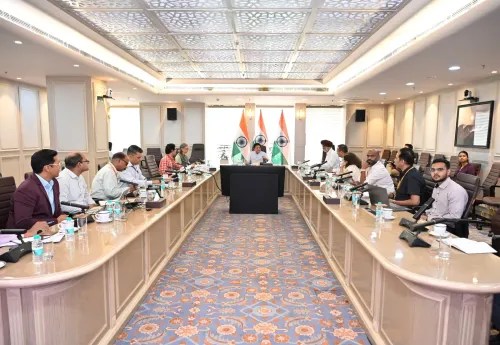
India's trade governance just got a dedicated nerve centre. Union Commerce and Industry Minister Piyush Goyal on Thursday, October 15 launched the National Strategic Trade Command Centre (NSTCC) at Vanijya Bhawan in New Delhi, marking a significant step toward data-driven oversight of the country's international trade flows.
What the NSTCC is built to do
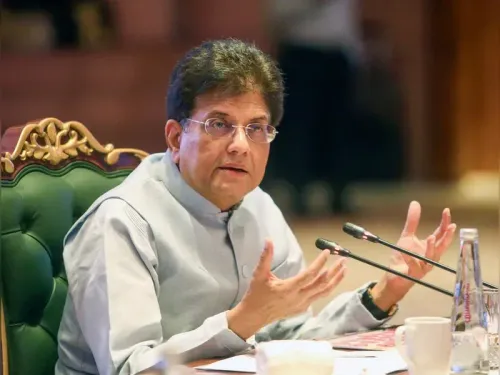
The NSTCC is designed as an integrated analytics hub that will monitor and analyse India's international trade in real time. According to Minister Goyal, the centre will enable 'evidence-based decision-making and more proactive, transparent and responsive trade governance' — a mandate that places live data at the heart of export and import policy.
The initiative sits under the Ministry of Commerce and Industry, which anchors India's foreign trade policy, export promotion architecture and engagement with the World Trade Organization. By housing the command centre at Vanijya Bhawan, the ministry signals a direct line between trade intelligence and the officials who act on it.
India's long march toward digital trade administration
The NSTCC is not an isolated invention — it is the latest layer in a stack India has been building for years. The Directorate General of Foreign Trade portal and customs single-window systems have progressively digitised trade clearance and compliance. Each step has aimed to cut transaction costs, reduce dwell times at ports, and give policymakers sharper sight lines into trade patterns.
What the NSTCC adds is a dedicated command centre model — aggregating signals from across those platforms into a single analytical interface built explicitly for strategic decision-making, rather than operational processing alone. Exporters and trade policymakers stand to be the earliest beneficiaries, with the potential for faster, evidence-backed responses to shifts in global demand or supply-chain disruptions.
What to watch as the centre becomes operational
The launch is the visible milestone; the real test lies in execution. Key questions include how data flows will be integrated across ministries, which agencies will feed the NSTCC's analytics engine, and how quickly the centre can produce actionable trade intelligence reports. Early policy outputs — whether on export competitiveness gaps, import concentration risks or sector-specific trade trends — will reveal the centre's true operational scope.
India is targeting ambitious goods and services export figures over the coming years, and a functional real-time command centre could sharpen the government's ability to track progress, identify bottlenecks and respond before small frictions become large losses. The NSTCC is, in that sense, as much a policy-delivery tool as a monitoring one.
Point of View
Intelligence-led governance. Placing a real-time analytics command centre within the Ministry of Commerce signals that the government wants data sovereignty over trade signals, not just compliance records. This fits into a broader pattern under the current administration of using digital infrastructure as a policy lever, whether in taxation, logistics or now trade. The centre's real value will hinge on how quickly it delivers actionable intelligence that shapes actual export or import decisions — moving the needle from launch optics to measurable trade-facilitation outcomes.
NationPress
15 Oct 2026
Frequently Asked Questions
What is the National Strategic Trade Command Centre (NSTCC)?
The NSTCC is a dedicated data analytics hub launched by the Ministry of Commerce and Industry to monitor and analyse India's international trade flows in real time, supporting evidence-based trade policy decisions.
Where is the NSTCC located?
The NSTCC is located at Vanijya Bhawan in New Delhi, which serves as the headquarters of the Ministry of Commerce and Industry.
Who launched the NSTCC and when?
Union Commerce and Industry Minister Piyush Goyal launched the NSTCC on Thursday, October 15, 2026.
How will the NSTCC benefit Indian exporters?
The NSTCC is expected to enable faster, data-backed policy responses to shifts in global trade conditions, potentially reducing bottlenecks and improving the government's ability to support exporters with timely intelligence.
How does the NSTCC fit into India's existing trade digitalisation efforts?
The NSTCC builds on existing digital trade platforms such as the DGFT portal and customs single-window systems, adding a strategic command centre layer that aggregates trade data for real-time analysis and policy use.