Piyush Goyal: India grows with the world, not at its cost
Synopsis
Commerce Minister Piyush Goyal reaffirmed India's non-zero-sum growth doctrine on October 13, 2026, declaring the country grows 'with the world and for the world' — a crisp restatement of the partnership-first trade philosophy that has anchored India's economic diplomacy since Atmanirbhar Bharat.
Key Takeaways
Union Commerce and Industry Minister Piyush Goyal posted on October 13, 2026 that India does not grow at anyone's cost.
The post articulates India's trade philosophy as non-zero-sum: growth 'with the world and for the world.' The stance is consistent with the Atmanirbhar Bharat framework launched in 2020 , which framed self-reliance as compatible with global trade engagement.
India has maintained this position across WTO ministerials, G20 summits, and bilateral free-trade agreement negotiations.
Goyal, as Leader of the House in the Rajya Sabha , is the principal political voice for India's trade agenda.
In eight words, Union Commerce and Industry Minister Piyush Goyal distilled India's trade philosophy on Tuesday, October 13, 2026 — a compact but pointed assertion that the country's economic ambitions are built on partnership, not rivalry.
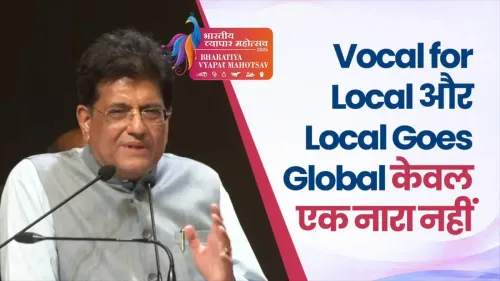
Posting on X, the minister wrote: 'We do not grow at anyone's cost. We grow with the world and for the world.' The framing is deliberate — a rebuttal, implicit but unmistakable, to any characterisation of India's rise as a threat to existing economic orders or trading partners.
The non-zero-sum doctrine India keeps returning to
This is not a new argument — it is a settled posture. Since the Atmanirbhar Bharat initiative was announced in 2020, India has consistently framed self-reliance not as a wall against the world but as a foundation from which to engage it more confidently. The apparent paradox — build at home, trade everywhere — has been the throughline of India's economic diplomacy across WTO ministerials, G20 presidencies, and bilateral free-trade negotiations.
Goyal, as the minister who steers India's trade agenda and as Leader of the House in the Rajya Sabha, is the natural voice for this message. Every FTA signed, every export-promotion scheme announced, every WTO position paper carries his signature.
Why the phrasing lands the way it does
The line 'for the world' is the sharper edge here. It signals not just co-existence but contribution — that India's growth generates demand, supply, and opportunity for others. It is the language of inclusive globalisation that New Delhi has championed in multilateral forums, positioning the country as a stabilising force in global trade rather than a disruptive one.
For Indian exporters and global trading partners watching India's next moves — at the WTO or in ongoing regional trade talks — the message is a floor, not a ceiling. The philosophy is settled. The deals are what's left to ink.
Point of View
New Delhi is signalling that it will not retreat into transactional bilateralism. The 'for the world' phrase is especially pointed: it moves India's pitch from passive coexistence to active contribution. For a minister overseeing a growing FTA pipeline and a high-stakes WTO calendar, that framing is both a strategic message to partners and a domestic anchor for the government's globalisation-friendly trade policy.
NationPress
13 Oct 2026
Frequently Asked Questions
What did Piyush Goyal post on X on October 13 2026?
Piyush Goyal posted that India does not grow at anyone's cost and that it grows 'with the world and for the world,' reaffirming India's non-zero-sum trade philosophy.
What is India's non-zero-sum growth philosophy in trade?
India's non-zero-sum growth philosophy holds that the country's economic expansion creates opportunity for global partners rather than coming at their expense — a position articulated through WTO participation, G20 statements, and bilateral free-trade agreements.
How does Atmanirbhar Bharat relate to India's global trade stance?
Atmanirbhar Bharat, launched in 2020, framed domestic self-reliance as a foundation for stronger global engagement rather than a retreat from it, making it consistent with the open-trade philosophy Goyal reiterated in his post.
What is Piyush Goyal's role in India's trade policy?
Piyush Goyal is the Union Minister of Commerce and Industry and Leader of the House in the Rajya Sabha. He is the primary government figure responsible for India's trade negotiations, export policy, and WTO positions.
What trade negotiations is India watching in 2026?
India's positions at the next WTO ministerial meeting and progress on bilateral and regional free-trade agreements under negotiation are the key forums where this stated philosophy is expected to be tested.