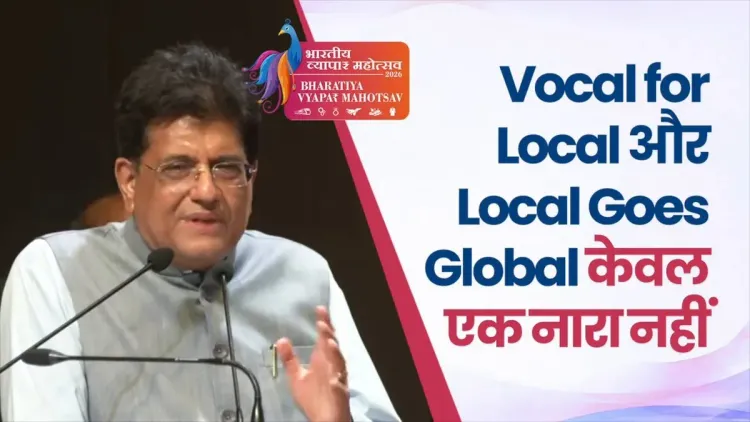
Goyal champions 'Vocal for Local' as India's global export engine
Synopsis
Union Commerce Minister Piyush Goyal reaffirmed on 12 August 2026 that 'Vocal for Local' and 'Local Goes Global' are the twin engines of India's manufacturing and export ambition, rooted in a decade of policy from Make in India to Atmanirbhar Bharat.
Key Takeaways
Piyush Goyal , Union Commerce and Industry Minister, posted on 12 August 2026 defending 'Vocal for Local' and 'Local Goes Global' as substantive policy, not just slogans.
The Vocal for Local campaign originated during the 2020 COVID lockdown as part of the broader Atmanirbhar Bharat self-reliance framework.
Make in India , launched in September 2014 , laid the manufacturing foundation that subsequent schemes have built upon.
The policy arc combines domestic consumer preference with production-linked incentives and an outward export push targeting global markets.
Key beneficiaries include MSME manufacturers and exporters , who are central to India's trade competitiveness goals.
The commerce ministry's next foreign trade policy review and export data release will test whether the 'Local Goes Global' promise is delivering results.
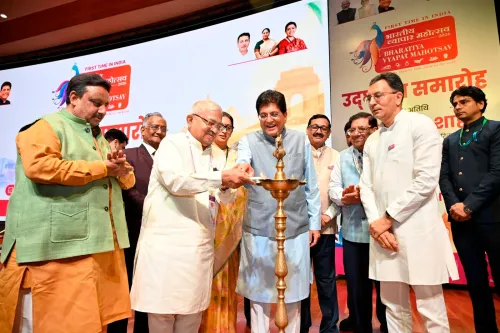
India's push to turn domestic manufacturing pride into global market share got a fresh voice on Wednesday, 12 August 2026, when Union Commerce and Industry Minister Piyush Goyal took to X to assert that 'Vocal for Local' and 'Local Goes Global' are far more than slogans — framing them as the twin pillars of India's economic transformation.
From slogan to strategy: what the campaign actually means
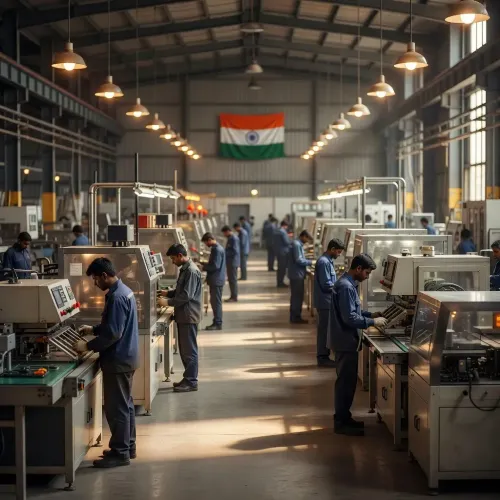
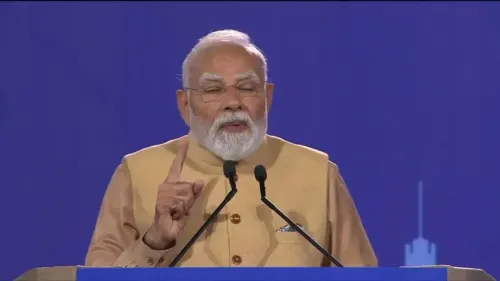
Vocal for Local began as a call by Prime Minister Narendra Modi during the 2020 COVID lockdown — a rallying cry for Indians to prefer domestically made goods. It quickly became embedded in the larger Atmanirbhar Bharat (self-reliant India) framework, which combined that consumer-side push with a supply-side overhaul: production-linked incentive schemes, reduced import dependence, and a systematic effort to build competitive domestic industries.
The companion phrase 'Local Goes Global' signals the next ambition — that products made in India should not merely substitute imports but should compete and win in international markets. For MSMEs and exporters, who form the backbone of India's manufacturing and trade ecosystem, that pivot from inward pride to outward competitiveness is the real policy bet.
A decade of manufacturing policy converging on this moment
The lineage runs deep. Make in India, launched in September 2014, positioned India as a global manufacturing destination. The Atmanirbhar Bharat package of May 2020 added fiscal muscle — incentives worth hundreds of billions of rupees across sectors from semiconductors to pharmaceuticals. Goyal's post places the current moment inside that continuum: each policy layer building toward an India that makes, buys, and sells on its own terms.
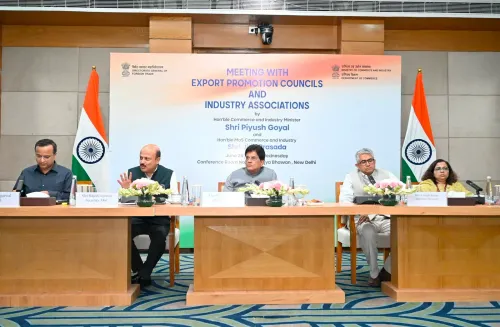
As Leader of the House in the Rajya Sabha and the minister who steers India's foreign trade policy, Goyal's framing carries institutional weight. The commerce ministry's next foreign trade policy review and quarterly export performance data will be the real scorecards for whether 'Local Goes Global' is translating from rhetoric into rupees and dollars.
The question is no longer whether India wants to manufacture for the world — it is whether the world is ready to buy what India makes. Goyal's message is that the answer is already yes.
Point of View
Atmanirbhar Bharat, PLI schemes) under a single, voter-friendly brand ahead of what will likely be a period of heightened scrutiny on India's export performance. By insisting the slogans are 'more than slogans,' he is pre-empting criticism that the campaigns have been heavy on optics and light on outcomes. The real test lies in the data: whether India's export growth trajectory justifies the confidence, or whether the commerce ministry will need to pivot its messaging once the next quarterly numbers land.
NationPress
27 Sept 2026
Frequently Asked Questions
What does 'Vocal for Local' mean in India?
'Vocal for Local' is a government campaign urging Indian consumers and businesses to prefer domestically manufactured goods, launched as part of the Atmanirbhar Bharat self-reliance drive in 2020.
What is 'Local Goes Global' in Indian trade policy?
'Local Goes Global' is the export-facing complement to 'Vocal for Local' — the ambition that products made in India should compete in and win international markets, not just substitute imports domestically.
What is Piyush Goyal's role in India's trade policy?
Piyush Goyal is the Union Minister of Commerce and Industry and Leader of the House in the Rajya Sabha, making him the principal minister responsible for India's foreign trade policy, export strategy, and industrial promotion.
How does Atmanirbhar Bharat relate to Make in India?
Make in India, launched in September 2014, focused on attracting investment and positioning India as a manufacturing hub. Atmanirbhar Bharat, announced in May 2020, built on that foundation by adding production-linked incentives and a stronger push to reduce import dependence.
Who benefits from India's Vocal for Local policy?
MSME manufacturers and exporters are the primary beneficiaries, as the policy creates domestic demand for their products and opens pathways for them to scale up for international markets.