Piyush Goyal Marks 12 Years of Modi Govt's India-First Vision
Synopsis
Commerce Minister Piyush Goyal marked twelve years of the Modi government on June 19, 2026, citing self-reliance, Swadeshi production, and public welfare as pillars of a new India under the #12YearsOfIndiaFirst banner.
Key Takeaways
Piyush Goyal posted on June 19, 2026 to mark twelve years of the BJP-led government under PM Narendra Modi .
The post highlighted Atmanirbharta (self-reliance), Swadeshi production, and creation of new opportunities as defining achievements.
The Make in India initiative was launched in September 2014 to boost domestic manufacturing and attract investment.
The Atmanirbhar Bharat Abhiyan was announced in May 2020 to reduce import dependence and support MSMEs during the COVID-19 pandemic.
Production-Linked Incentive (PLI) schemes across multiple sectors have been a core instrument of the self-reliance policy framework.
The hashtag #12YearsOfIndiaFirst signals a coordinated party effort to highlight the government's governance record at the twelve-year milestone.
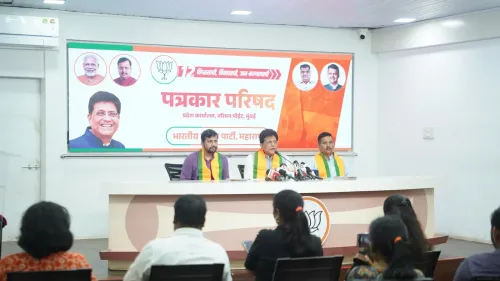
Union Commerce and Industry Minister Piyush Goyal on Friday, June 19, 2026, marked twelve years of the BJP-led government under Prime Minister Narendra Modi, celebrating the period as one defined by trust, development, and public welfare, with self-reliance and indigenous production at its core.
Context
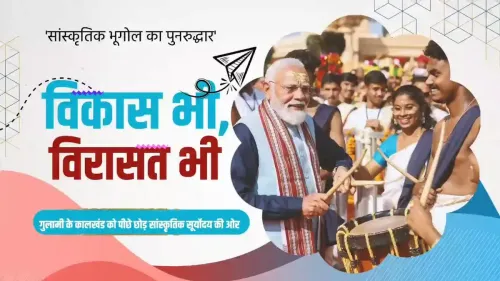
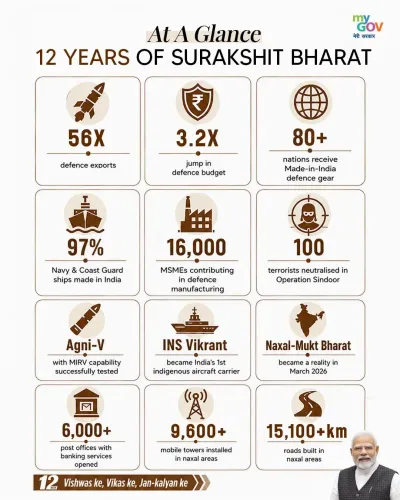
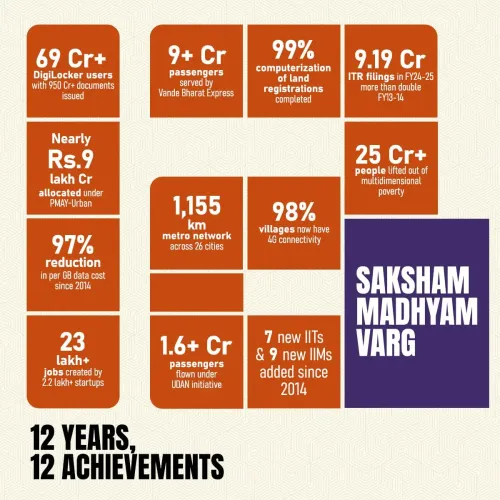
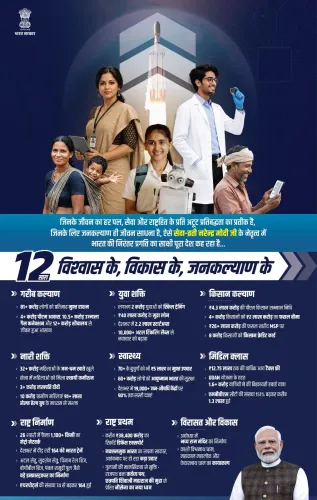
Goyal's post, shared under the hashtag #12YearsOfIndiaFirst, declared in Hindi: '12 saal vishwas ke, vikas ke, jankallyan ke' — 'Twelve years of trust, development, and public welfare.' He credited Atmanirbharta (self-reliance), Swadeshi production, and the creation of new opportunities with laying a 'strong foundation for a new India.' The post was accompanied by a video, underscoring the celebratory nature of the message.
The BJP government led by Prime Minister Narendra Modi first came to power in May 2014, and the twelve-year milestone falls in June 2026. Senior party leaders have been marking the occasion across platforms, with Goyal — who also serves as Leader of the House in the Rajya Sabha — amplifying the government's record on economic self-sufficiency.
Policy Backdrop
The twin pillars Goyal invoked — self-reliance and Swadeshi production — trace directly to two flagship government programmes. The Make in India initiative, launched in September 2014, aimed to position India as a global manufacturing hub by attracting domestic and foreign investment and generating large-scale employment.
The Atmanirbhar Bharat Abhiyan, announced in May 2020 amid the COVID-19 pandemic, built on that foundation with stimulus packages designed to reduce import dependence, support MSMEs, and integrate Indian industry into global supply chains. Together, these schemes form the economic-nationalist spine of the government's twelve-year narrative.
Production-Linked Incentive (PLI) schemes rolled out across sectors — from electronics and pharmaceuticals to textiles and automobiles — have been a key instrument in translating the Atmanirbhar Bharat vision into measurable output and export growth.
Stakeholders and Impact
The beneficiaries of the policy arc Goyal described span a wide spectrum: Indian manufacturers, micro, small and medium enterprises (MSMEs), and domestic industries that have sought to capture market share previously held by imports. The government has consistently argued that Swadeshi production creates upstream and downstream employment, particularly in labour-intensive sectors.
Critics have periodically questioned the pace of job formalisation and the extent to which manufacturing's share of GDP has grown relative to targets. However, the government's position — reflected in Goyal's post — is that the structural groundwork laid over twelve years has created durable conditions for long-term growth.
What's Next
With the twelve-year mark now publicly celebrated, attention will turn to the next phase of the government's economic agenda. Progress on PLI schemes across sectors, new manufacturing and export targets, and the direction signalled in upcoming economic surveys or Union Budgets will be closely watched by industry and investors alike.
As Commerce and Industry Minister, Goyal is expected to remain central to articulating India's trade and manufacturing ambitions — both domestically and in ongoing bilateral and multilateral negotiations — as the government seeks to build on the foundation it says has been laid over the past twelve years.
Point of View
Designed to consolidate the BJP's governance narrative around self-reliance and public welfare ahead of any future electoral cycle. By anchoring the twelve-year celebration to economic-nationalist pillars — Make in India and Atmanirbhar Bharat — the government is signalling continuity of purpose rather than a course correction. The invocation of 'trust' alongside 'development' and 'welfare' is telling: it attempts to fuse economic performance with an emotional compact with voters. This fits a consistent pattern in which senior ministers amplify a unified party line on governance anniversaries, reinforcing the brand rather than announcing new policy.
NationPress
20 Sept 2026
Frequently Asked Questions
Why is Piyush Goyal posting about 12 years of the Modi government?
June 2026 marks twelve years since the BJP-led government under PM Narendra Modi first came to power in May 2014 . Senior leaders including Commerce Minister Piyush Goyal are marking the milestone by highlighting the government's record on development, self-reliance, and public welfare under the hashtag #12YearsOfIndiaFirst .
What is Atmanirbhar Bharat and why is it significant?
Atmanirbhar Bharat Abhiyan , announced in May 2020 , is a government policy initiative aimed at making India self-reliant by promoting domestic manufacturing, reducing import dependence, and supporting MSMEs . It was launched with stimulus packages during the COVID-19 pandemic and has since become a central pillar of India's economic strategy.
What is Make in India and when was it launched?
Make in India was launched in September 2014 by the Modi government to encourage domestic and foreign companies to manufacture in India, attract investment, and create large-scale employment. It is considered one of the foundational economic initiatives of the BJP government's twelve-year tenure.
What are PLI schemes and how do they relate to self-reliance?
Production-Linked Incentive (PLI) schemes offer financial incentives to manufacturers in targeted sectors — including electronics, pharmaceuticals, and textiles — to boost domestic output and exports. They are a key instrument of the Atmanirbhar Bharat vision, translating the self-reliance policy into sector-specific manufacturing growth.
What is Piyush Goyal's role in the Indian government?
Piyush Goyal is the Union Minister of Commerce and Industry and a senior BJP leader. He also serves as the Leader of the House in the Rajya Sabha , making him one of the most prominent faces of the Modi government's economic and trade agenda.