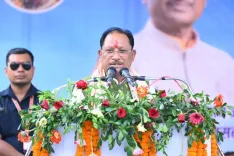
Piyush Goyal launches NSTCC to power data-driven trade governance
Synopsis
India just got a war room for trade. The NSTCC — launched by Commerce Minister Piyush Goyal at Vanijya Bhawan — consolidates real-time dashboards across DGFT functions, SCOMET approvals, and export schemes into a single analytics platform. Goyal's call for weekly inter-ministerial meetings to clear the SCOMET backlog signals the Centre is treating trade processing delays as a governance emergency, not just an administrative inconvenience.
Key Takeaways
Commerce Minister Piyush Goyal launched the National Strategic Trade Command Centre (NSTCC) at Vanijya Bhawan, New Delhi on 15 October 2026 .
The platform integrates dashboards for IEC , Advance Authorisation , EPCG , Certificate of Origin , and SCOMET regulatory processes.
Goyal called for weekly Inter-Ministerial Committee meetings to clear the backlog of pending SCOMET applications.
The NSTCC supports three governance dimensions: consolidated visibility, scheme benchmarking, and bottleneck identification for policy reform.
The platform leverages existing DGFT systems and the Trade Connect ePlatform , with phased expansion to ministries, states, and Export Promotion Councils planned.
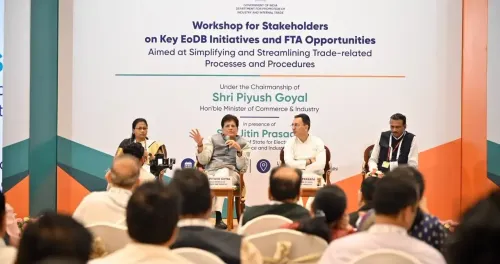
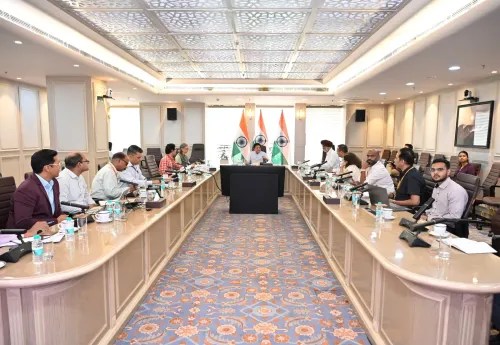
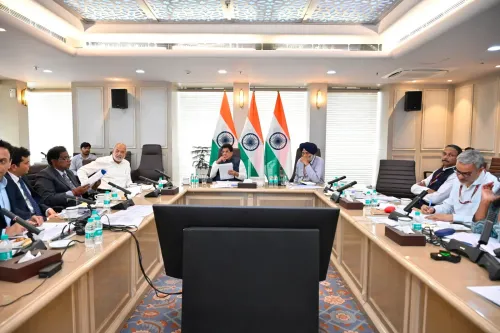
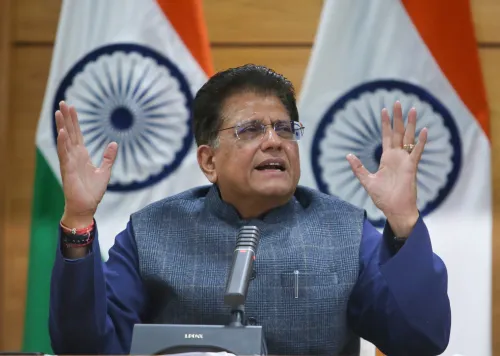
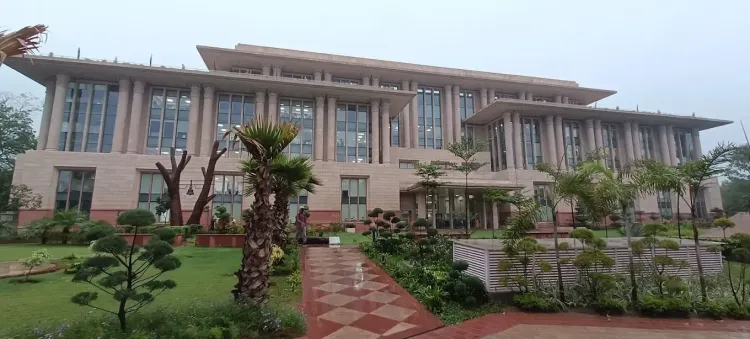
Commerce and Industry Minister Piyush Goyal on Thursday, 15 October 2026, launched the National Strategic Trade Command Centre (NSTCC) at Vanijya Bhawan in New Delhi, marking a significant step toward integrating data analytics and evidence-based decision-making into India's international trade governance framework. The platform is designed to give senior policymakers a consolidated, real-time view of the country's trade ecosystem.
What the NSTCC Does
At its core, the NSTCC is an integrated analytics and visualisation platform that transforms trade-related data into actionable policy insights. It provides interactive dashboards covering key indicators such as scheme performance, application pendency, processing timelines, regional trends, and compliance-related parameters.
In its initial phase, the Command Centre consolidates dashboards across major Directorate General of Foreign Trade (DGFT) functions, including the Importer-Exporter Code (IEC), Advance Authorisation, Export Promotion Capital Goods (EPCG), Certificate of Origin (CoO), and the SCOMET (Special Chemicals, Organisms, Materials, Equipment and Technologies) regulatory framework. Role-based access permissions allow analysis at multiple levels — from national trade performance down to individual applications.
Goyal's Key Directives
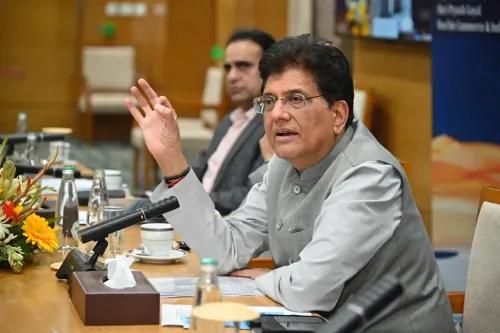
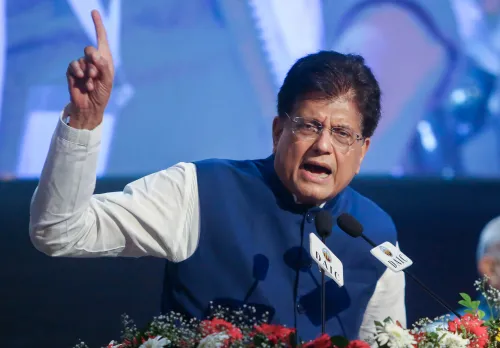
While reviewing the SCOMET dashboard, Goyal called for regular meetings of the Inter-Ministerial Committee — weekly if needed — to clear the backlog of pending applications and ensure expeditious processing. He praised the platform for enabling data-driven, evidence-based trade decisions, describing the launch as a structural upgrade in how India monitors and governs its export and import frameworks.
Notably, the push for faster SCOMET approvals carries strategic significance: SCOMET items relate to dual-use technologies and materials, and processing delays can affect both defence exports and high-technology trade partnerships.
Three Pillars of Trade Governance
The NSTCC is designed around three key governance dimensions. First, it provides consolidated visibility into trade trends, application processing, pendency, and emerging risks. Second, it enables monitoring and benchmarking of schemes and regional authorities against defined performance indicators. Third, it helps identify recurring bottlenecks and procedural complexities to support policy simplification and targeted trade facilitation.
The platform leverages existing digital infrastructure, including DGFT systems and the Trade Connect ePlatform, while providing a framework for progressive integration of additional datasets from other departments and trade-related agencies.
Strengthening India's Trade Intelligence
Beyond operational monitoring, the NSTCC is intended to strengthen India's trade intelligence capabilities through product-wise and market-wise analysis, assessment of trade agreement utilisation, identification of export opportunities, and tracking of India's positioning across international markets. This comes amid India's broader push to boost merchandise and services exports as part of its ambition to become a $1 trillion export economy.
What Comes Next
Going forward, the Command Centre is envisaged to evolve into a whole-of-government decision-support mechanism, with phased access extended to authorised stakeholders including relevant ministries, state governments, Export Promotion Councils, and other institutions. Its analytical capabilities are expected to be progressively enhanced through additional data integration, automated alerts, and advanced analytics.
Point of View
But its value will be measured by whether dashboards translate into faster decisions — not just better visibility. India's SCOMET backlog has been a persistent friction point for defence and dual-use exporters; Goyal's weekly-meeting directive suggests the problem is more acute than public data reveals. The real test is whether role-based access and automated alerts survive bureaucratic inertia once the launch spotlight fades. Trade intelligence platforms have been announced before; what India's exporters need is a culture of accountability that the data alone cannot create.
NationPress
15 Oct 2026
Frequently Asked Questions
What is the National Strategic Trade Command Centre (NSTCC)?
The NSTCC is an integrated analytics and visualisation platform launched by Commerce Minister Piyush Goyal on 15 October 2026 at Vanijya Bhawan, New Delhi. It consolidates trade-related data from multiple DGFT systems into interactive dashboards to support evidence-based policymaking and real-time monitoring of India's international trade ecosystem.
What functions does the NSTCC cover in its initial phase?
In its initial phase, the NSTCC covers key DGFT domains including Importer-Exporter Code (IEC), Advance Authorisation, Export Promotion Capital Goods (EPCG), Certificate of Origin (CoO), SCOMET regulatory approvals, and restricted imports and exports. These dashboards enable monitoring of scheme utilisation, processing timelines, and operational performance across regional authorities.
Why did Goyal call for weekly Inter-Ministerial Committee meetings?
While reviewing the SCOMET dashboard at the launch, Goyal identified a backlog of pending applications under the SCOMET (Special Chemicals, Organisms, Materials, Equipment and Technologies) framework. He directed that the Inter-Ministerial Committee meet weekly, if required, to ensure all applications are cleared expeditiously and without delay.
Who will have access to the NSTCC going forward?
Access to the NSTCC is governed by role-based permissions and is set to expand in phases to authorised stakeholders including relevant central ministries, state governments, Export Promotion Councils, and other trade-related institutions. Advanced analytics and automated alerts are also planned as the platform matures.
How does the NSTCC fit into India's broader trade strategy?
The NSTCC is designed to strengthen India's trade intelligence capabilities by enabling product-wise and market-wise analysis, assessing trade agreement utilisation, and identifying export opportunities. It is part of a broader effort to make India's trade governance more data-driven as the country works toward significantly expanding its merchandise and services exports.