Shenzhen University AI model predicts depression risk up to 4 years early
Synopsis
Shenzhen University scientists claim their AI model can predict Major Depressive Disorder up to four years before onset using MRI scans and clinical data from European adolescent trials — one of the longest predictive windows ever reported for psychiatric risk screening.
Key Takeaways
Shenzhen University researchers developed an AI model capable of predicting Major Depressive Disorder risk up to four years in advance.
Major Depressive Disorder affects more than 332 million people globally, according to the research team.
The model was trained on data from two European clinical trials on adolescent depression, including the Stratify and Imagen cohort studies.
Participants underwent MRI scans , blood tests, and questionnaires at ages 16 , 19 , and 23 to track depression onset longitudinally.
The research represents one of the longest predictive windows yet demonstrated for AI-based psychiatric risk screening.
Clinical deployment faces hurdles including cross-population validation and regulatory approval for AI psychiatric tools.
Researchers at Shenzhen University have developed an artificial intelligence model that could predict an individual's risk of developing Major Depressive Disorder (MDD) up to four years before onset, potentially opening a new frontier in preventive mental health care. The findings were published on 16 August 2026 and represent one of the longest predictive windows yet demonstrated for depression screening using brain-imaging data.
Why It Matters
Major Depressive Disorder affects more than 332 million people worldwide, according to the research team, and remains notoriously difficult to treat once fully established. Early identification of at-risk individuals could allow clinicians to intervene with preventive measures before symptoms become debilitating, delivering a meaningful public health benefit at scale.
How the Model Was Built
The Shenzhen University team trained their model on data drawn from two clinical trials focused on adolescent depression conducted across several European countries, including the large-scale Stratify study. Participants in one trial underwent follow-up examinations — comprising MRI scans, blood tests, and standardised questionnaires — at ages 16, 19, and 23, enabling longitudinal tracking of depression onset. The Chinese scientists analysed this multi-modal dataset to train and validate the predictive AI model.
The Technology Behind the Prediction
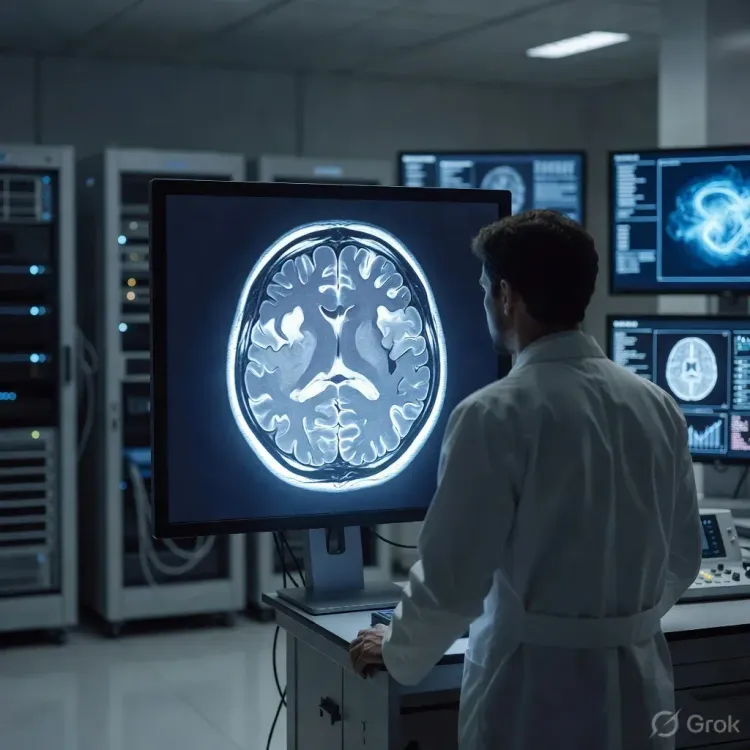
The model leverages neuroimaging data from MRI scans — often described informally as 'brain-reading' — alongside biological and self-reported markers to generate a composite risk profile. By correlating structural and functional brain signatures with later depression diagnoses, the system reportedly identifies patterns invisible to conventional clinical assessment. The use of Imagen cohort data, a major European adolescent brain study, underpins the model's cross-population validity.
Competitive Backdrop
The research sits within a rapidly expanding global effort to apply machine learning to psychiatric prediction, an area where Chinese institutions have been accelerating investment. Rival teams in the United States, United Kingdom, and Japan are pursuing similar neuroimaging-based approaches, but a four-year predictive horizon is notably ambitious compared to most published models, which typically target windows of one to two years. The study's reliance on European clinical trial data also raises questions about generalisability to diverse Asian and global populations.
What's Next
The team's work, according to the researchers, lays a foundation for real-world screening tools that could be integrated into adolescent health programmes. Key open questions include whether the model's accuracy holds across ethnically diverse cohorts and whether health systems can operationalise MRI-based depression screening at population scale given cost and infrastructure constraints. Regulatory pathways for AI-driven psychiatric risk tools remain nascent in most jurisdictions, meaning clinical deployment is still likely years away.
Point of View
But the model's dependence on Imagen and Stratify cohorts, which are predominantly white European adolescents, is a significant blind spot that mainstream coverage is glossing over. If the tool is ever commercialised, its accuracy for South Asian, East Asian, or African populations remains entirely unvalidated. Investors and health ministries watching China's push into AI-driven psychiatry should note that regulatory clearance — not algorithmic performance — will be the decisive bottleneck.
NationPress
1 Oct 2026
Frequently Asked Questions
What did Shenzhen University's AI model achieve in depression research?
Researchers at Shenzhen University developed an AI model that can reportedly predict the risk of Major Depressive Disorder up to four years before symptoms emerge. The model uses data from MRI brain scans , blood tests, and questionnaires drawn from European adolescent clinical trials.
How was the AI depression prediction model trained?
The model was built using data from two clinical trials on adolescent depression conducted in several European countries , including the Stratify and Imagen studies. Participants were examined at ages 16 , 19 , and 23 with MRI scans , blood tests, and standardised questionnaires.
Why does early depression prediction matter?
Major Depressive Disorder affects over 332 million people worldwide and is difficult to treat once established, according to the research team. Predicting risk years in advance could allow preventive interventions that reduce the disease's global burden significantly.
Is the AI depression model ready for clinical use?
Not yet. The model still requires validation across ethnically diverse populations beyond the European cohorts used in training. Regulatory frameworks for AI-based psychiatric screening tools are also nascent in most countries, meaning widespread clinical deployment remains years away.
How does this compare to other AI mental health tools?
A four-year predictive horizon is notably longer than most published AI psychiatric models, which typically target one-to-two-year windows. Competing research teams in the United States , United Kingdom , and Japan are pursuing similar neuroimaging approaches, making this an increasingly contested field.