Karnataka CM Shivakumar announces CSR monitoring team, urges industry to adopt schools
Synopsis
At the Global CSR and Sustainability Summit 2026, Karnataka CM D.K. Shivakumar announced a dedicated state team to monitor over 10,000 CSR projects — and challenged corporates to move beyond cheque-writing, urging them to physically adopt schools and deploy skilled staff to fix primary education in rural Karnataka.
Key Takeaways
Shivakumar announced a dedicated government team to monitor 10,000+ CSR projects across districts including Mysuru and Hubballi .
He urged companies to adopt schools, build infrastructure, and deploy skilled personnel — citing Toyota as a model.
Bengaluru 's population has nearly doubled to 1.4 crore from 70 lakh during the S.M.
Krishna era; Karnataka's urban population now stands at 43% .
Karnataka's IT sector employs 26 lakh people ; around 6 lakh of the 13 lakh engineers in California are reportedly from the state.
The state has 71 medical colleges producing nearly 13,900 doctors and 1 lakh other medical professionals annually.
Karnataka hosts 38 of India's 140 international schools , but the CM called for quality education to reach rural districts.
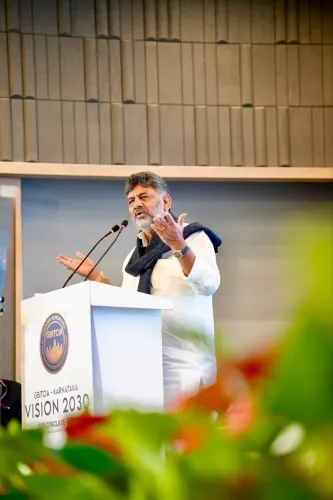
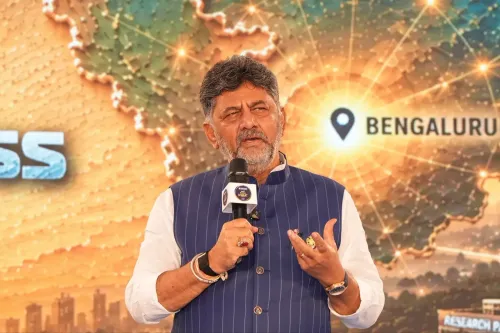
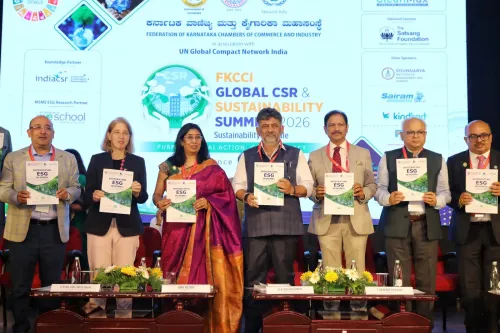
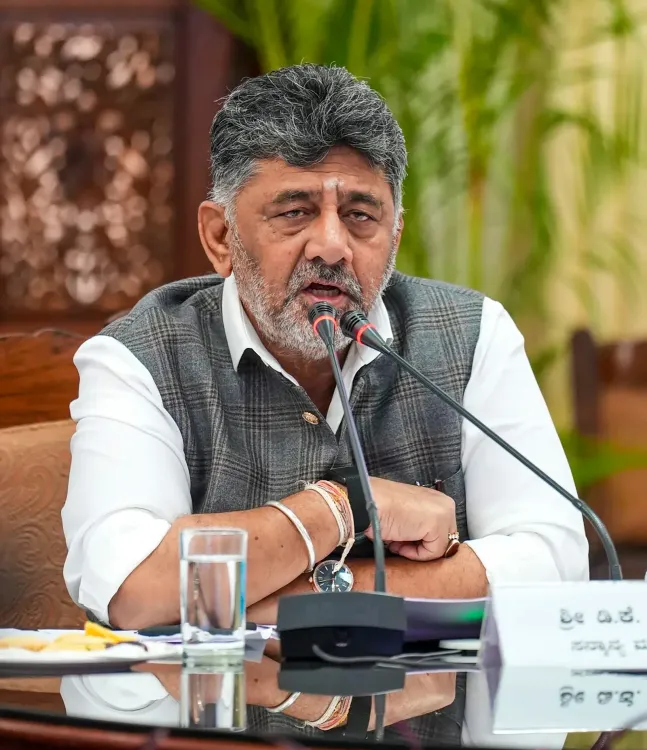
Karnataka Chief Minister D.K. Shivakumar on Thursday, 23 July 2026, called on corporate India to redirect Corporate Social Responsibility (CSR) spending toward strengthening primary education and announced that the state government would establish a dedicated team to oversee the roughly 10,000 CSR initiatives currently active across Karnataka's districts. The announcement came at the Global CSR and Sustainability Summit 2026 in Bengaluru, organised by the Federation of Karnataka Chambers of Commerce and Industry (FKCCI).
The CSR Monitoring Announcement
Shivakumar said the new government team would track CSR projects across districts including Mysuru, Hubballi, and other regions, signalling a more structured state-level oversight of corporate social spending. He framed the push as essential to ensure funds reach intended beneficiaries rather than remaining on paper. The Chief Minister credited former Union Finance Minister Pranab Mukherjee with institutionalising the CSR framework in India, and argued that the concept had evolved well beyond philanthropy. 'CSR is not charity; it is an investment in sustainable development,' he said.
Focus on Primary Education and Rural Schools
The Chief Minister made a pointed appeal to corporates to adopt government schools, build educational infrastructure, and deploy skilled personnel — not just funds — to support learning outcomes. 'Your priority should be primary education. I want you to adopt schools and build infrastructure. Companies like Toyota are already building schools, and I want more industries to follow that example,' Shivakumar said. He stressed that students in rural Karnataka should not be compelled to migrate to Bengaluru for quality schooling, a pattern he said he had personally experienced. The Chief Minister noted that Karnataka hosts around 38 of the country's 140 international schools, but argued that quality education must be distributed more evenly across the state.
Bengaluru's Growth and Regional Imbalance
Shivakumar drew attention to the pace of Bengaluru's urbanisation, noting that the city's population had roughly doubled from around 70 lakh during his earlier tenure as a minister under the late S.M. Krishna to nearly 1.4 crore today, with approximately 1.30 lakh vehicles now on its roads. Karnataka's urban population has reached 43 per cent, he said, underscoring the pressure on the capital. Calling for balanced regional development, he said the state must now look beyond Bengaluru. He also recalled that former Prime Minister Atal Bihari Vajpayee had predicted Bengaluru would become a preferred destination for global leaders — a forecast Shivakumar said had come true, with world leaders now visiting the city ahead of Delhi, Mumbai, or Chennai.
Karnataka's Talent and Industry Ecosystem
The Chief Minister cited figures to underscore Karnataka's outsized contribution to India's knowledge economy: the state's IT sector employs around 26 lakh people, and of the 13 lakh engineers working in California, approximately six lakh are reportedly from Karnataka. He also noted that Karnataka has about 71 medical colleges producing nearly 13,900 doctors and around one lakh other medical professionals annually, though he acknowledged that a significant share of this talent eventually emigrates. Shivakumar highlighted the growth of Electronic City, ITPL, and the manufacturing sector as evidence of FKCCI's long-term role in the state's economic rise.
Labour Welfare and the Road Ahead
On labour policy, the Chief Minister urged a balanced approach, stating that employers and employees were equally indispensable. 'If there is no employer, there are no employees. We should maintain a balance and ensure workers are supported without burning out,' he said. Concluding his address, Shivakumar acknowledged that while Bengaluru had outgrown its Garden City identity, it remained more affordable than several other metros, including Mumbai, and continued to attract talent from across the world. With AI rapidly transforming industry, he said the government's immediate priorities would be primary education and sustainability — both areas where he expects corporate India to step up.
Point of View
Now over a decade old, has long been criticised for poor district-level tracking and urban concentration of spending. Directing that scrutiny toward primary education is politically smart in a state where rural-urban migration is visibly straining Bengaluru's infrastructure. But the announcement raises a question mainstream coverage is skipping: will the monitoring team have teeth — audit powers, public dashboards, penalty mechanisms — or will it be another coordination body that files reports no one reads? Karnataka's 10,000 CSR initiatives are a large canvas; without binding disclosure norms, the new team risks becoming a bureaucratic layer rather than a genuine accountability check.
NationPress
21 Oct 2026
Frequently Asked Questions
What did Karnataka CM Shivakumar announce at the Global CSR Summit 2026?
CM D.K. Shivakumar announced that the Karnataka government would establish a dedicated team to monitor over 10,000 CSR projects across districts including Mysuru and Hubballi. He also urged industries to prioritise primary education by adopting schools and providing skilled personnel.
Why is the Karnataka government setting up a CSR monitoring team?
The government aims to ensure that CSR funds are tracked and deployed effectively across the state, particularly in districts outside Bengaluru. Shivakumar framed it as a move toward structured accountability for corporate social spending.
What role did Pranab Mukherjee play in India's CSR framework, according to Shivakumar?
CM Shivakumar credited former Union Finance Minister Pranab Mukherjee with introducing the CSR legislative framework in India. He described CSR as 'an investment in sustainable development' rather than charity.
How large is Karnataka's contribution to India's IT and engineering workforce?
According to CM Shivakumar, Karnataka's IT sector employs around 26 lakh people. He also cited data suggesting that of the 13 lakh engineers working in California, approximately six lakh are from Karnataka.
What is the Global CSR and Sustainability Summit 2026?
It is an industry event organised by the Federation of Karnataka Chambers of Commerce and Industry (FKCCI) in Bengaluru, focused on corporate social responsibility and sustainability practices. The 2026 edition was addressed by Karnataka CM D.K. Shivakumar on 23 July.