Karnataka Legislative Council Chair Advocates for Three-Language Policy, Rejects Hindi Grading
Synopsis
Karnataka's Legislative Council Chairman, Basavaraj Horatti, urges the government to maintain the three-language formula in schools and voices strong opposition to the switch from a marks system to grading for Hindi. His concerns include potential job loss for teachers and the importance of multilingualism for student success.
Key Takeaways
Horatti advocates for the three-language formula to promote multilingualism in education.
Upcoming changes in the evaluation of Hindi may impact student performance and teacher job security.
Research supports that learning multiple languages enhances cognitive development.
Concerns raised about the potential negative effects on communication skills.
Horatti emphasizes the need to protect the status of Hindi in educational frameworks.
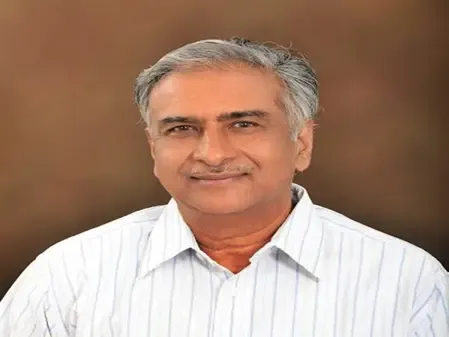
Bengaluru, April 6 (NationPress) The Chairman of the Karnataka Legislative Council, Basavaraj Horatti, has reached out to Chief Minister Siddaramaiah, Education Minister Madhu Bangarappa, and the Chief Secretary of Karnataka, advocating for the preservation of the three-language formula in schools. He expresses strong opposition to the proposed shift from a marks system to a grading system for evaluating Hindi.
Starting from the academic year 2025–26, the Karnataka government plans to modify the Class 10 (SSLC) Hindi evaluation from a marks-based approach to a grading system (A to D). While Hindi will still be a required subject, it will not contribute to the total score, effectively lowering the overall marks to 525.
In his correspondence, Horatti emphasized that language serves as a vital medium for conveying emotions and pointed to psychological research indicating that acquiring multiple languages supports brain development. He highlighted that the three-language formula has been instrumental in fostering multilingualism and national unity in India since its inception in 1961.
Referencing insights from language specialists, he asserted that being multilingual is advantageous for students and does not impede their learning process. Horatti argued that this approach enhances communication abilities and opens doors to educational and job opportunities in other states, aligning with the principles of fraternity and linguistic diversity as outlined in the Constitution.
Horatti cautioned that adopting a two-language policy could hinder communication capabilities due to insufficient language skills. He mentioned that several representatives from the state struggle in Parliament due to inadequate Hindi proficiency.
Addressing employment concerns, he queried the future of approximately 15,000 teachers in government and aided high schools, as well as Hindi instructors in private institutions, who are already facing low wages. Horatti warned that many potential teachers with B.Ed. degrees might find themselves unemployed, and he labeled the grading system as inequitable for students.
He also pointed out that even Union Ministers have been compelled to hire teachers to assist with learning Hindi, underscoring the significance of language skills. He argued that abandoning the three-language framework could deprive future generations of valuable opportunities.
Regarding academic performance, Horatti highlighted that over 17,909 students in the state achieved perfect scores in Hindi during the SSLC examinations, a figure exceeding those in any other subject. He asserted that Hindi has played a crucial role in enhancing overall student performance.
He expressed concern that substituting the third language with the National Skills Qualification Framework (NSQF) has already diminished the status of Hindi. According to him, this change could reduce student enthusiasm for learning additional languages, demotivate teachers, and weaken awareness of linguistic diversity and culture.
With the third-language examination set for March 31, 2026, Horatti cautioned that this decision could adversely affect students' mental health. He proposed that instead of replacing Hindi, the NSQF could be offered as an extra subject, allowing students to benefit from both.
Horatti referenced the Kothari Commission (1964–1966), which advocated for the three-language formula as a fundamental strategy for promoting multilingualism and national integration, later adopted in the 1968 National Policy on Education.
He urged the government to uphold the three-language formula, protect Hindi, and ensure the job security of numerous teachers. Furthermore, he called for the retention of the existing marks system instead of transitioning to grading, while emphasizing the importance of Kannada and English in administrative frameworks.
Point of View
The push for a three-language formula resonates deeply with India's commitment to multilingualism and cultural diversity. The concerns raised by Basavaraj Horatti reflect a broader dialogue about educational policies that shape the intellectual landscape and employment opportunities in the country.
NationPress
29 Jul 2026
Frequently Asked Questions
What is the three-language formula?
The three-language formula is an educational policy in India that encourages students to learn three languages, typically including their mother tongue, Hindi, and English, to foster multilingualism.
Why is there a push against the grading system for Hindi?
The push against the grading system for Hindi stems from concerns that it may undermine the importance of the language, impact students' academic performance, and affect teachers' job security.
What are the potential consequences of changing to a grading system?
Changing to a grading system could lead to reduced motivation among students to learn Hindi, potential job losses for teachers, and a decline in overall linguistic proficiency.
When will the changes to the Hindi evaluation system take effect?
The changes to the Hindi evaluation system are set to take effect starting from the academic year 2025–26.
What does Basavaraj Horatti suggest instead of a grading system?
Basavaraj Horatti suggests that the National Skills Qualification Framework (NSQF) could be introduced as an additional subject rather than replacing Hindi.