KTR flags farmer distress at Nagarkurnool market yard
Synopsis
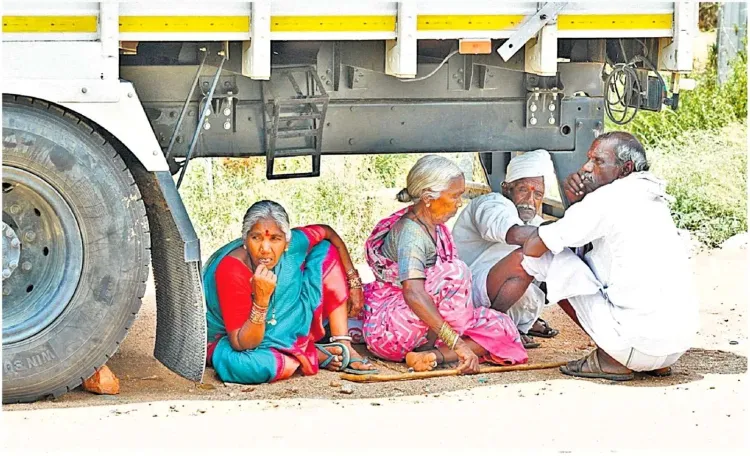
BRS working president K. T. Rama Rao on 25 May 2026 shared a photograph of farmers sheltering under a truck at Indrakal village, Nagarkurnool, accusing the Telangana Congress government of prolonged procurement delays that are leaving cultivators stranded in a severe heat wave.
Key Takeaways
BRS working president K.
Rama Rao posted on 25 May 2026 highlighting farmer distress at a market yard in Indrakal village, Tadur mandal, Nagarkurnool district .
Farmers are reportedly waiting days and even weeks at market yards for the state government to procure their grain.
A severe heat wave and unseasonal rains are compounding the hardship, with the image showing farmers sheltering under a parked truck.
Rama Rao blamed the Telangana Congress government , which has been in power since December 2023 , for the procurement delays.
Procurement delays at Telangana market yards have been a recurring logistical challenge, but peak summer arrivals heighten the risk of grain damage and farmer health hazards.
The post is part of a broader BRS opposition campaign under the hashtag #CongressFailedTelangana .
BRS working president K. T. Rama Rao on Monday, 25 May 2026, shared a photograph of farmers sheltering under a truck at Indrakal village in Tadur mandal, Nagarkurnool district, highlighting what he described as prolonged waiting at market yards due to delayed grain procurement by the Telangana Congress government. The post, accompanied by the hashtag #CongressFailedTelangana, accused the ruling party of leaving farmers stranded amid a severe heat wave and unseasonal rains.
Context
Rama Rao's post describes farmers being 'forced to spend days and even weeks in market yards, waiting for the Congress government to procure their grain.' The image, attributed to a Telangana-based publication, shows farmers crouched under the chassis of a parked truck — a visual that has drawn attention to conditions at rural procurement centres during the current summer harvest season. Nagarkurnool district, located in the southern part of Telangana, is a significant producer of paddy and coarse grains.
The BRS leader further noted that 'untimely rains are only adding to the misery of these hapless farmers,' pointing to a combination of extreme heat during the day and unseasonal precipitation as compounding the hardship faced by cultivators waiting for their produce to be lifted.
Policy Backdrop
Since the Congress party's victory in the December 2023 Telangana assembly elections, the state government has been responsible for Minimum Support Price (MSP)-based grain procurement through its civil supplies and food department machinery. The incoming administration inherited a procurement infrastructure built partly during the BRS government's tenure from 2014 to 2023, which had expanded direct procurement centres and introduced the Rythu Bandhu farm investment support scheme.
Procurement delays at market yards — driven by inadequate storage, transport logistics, and staffing at purchase centres — have been a recurring challenge in Telangana across successive governments. However, when delays coincide with peak summer arrivals, grain left in the open is vulnerable to both heat damage and rain spoilage, directly affecting the price farmers can realise.
Stakeholders and Impact
The farmers most affected are smallholders who transport grain to government-designated market yards and must wait on-site until procurement officials weigh, grade, and issue payment orders for their produce. Extended stays mean additional costs for labour, transport detention, and food, while exposure to heat poses a direct health risk. Market yard operators and licensed commission agents are also under pressure when arrivals outpace the state's lifting capacity.
For the BRS, now in opposition, episodes of visible farmer distress serve as a platform to contest the Congress government's 'six guarantees' narrative, which had included farmer-welfare promises ahead of the 2023 polls. Rama Rao has consistently used social media to amplify ground-level grievances since the party lost power.
What's Next
Attention will now turn to whether the Telangana government responds with announcements on additional procurement centres, accelerated lifting schedules, or weather-related compensation for grain damaged during the current season. Any official statement on heatwave relief for farmers working at or travelling to market yards will be closely watched by farmer organisations and opposition parties alike. The coming weeks, as summer harvest arrivals peak, will test the state administration's procurement capacity and its ability to address the distress flagged in posts like Rama Rao's.
Point of View
Stark image to condense a systemic procurement complaint into a shareable moment of human distress. It fits a well-established pattern where Indian state-level opposition parties amplify ground-level agricultural grievances during harvest seasons to erode the ruling party's farmer-welfare narrative. For the Congress government in Telangana, procurement efficiency is politically sensitive because farmer support was central to its 2023 election mandate. The post also signals that BRS, despite its 2023 defeat, remains active in framing the governance conversation around rural Telangana ahead of future electoral cycles.
NationPress
11 Oct 2026
Frequently Asked Questions
Why are Telangana farmers waiting at market yards for weeks?
Farmers are waiting at government-designated market yards because the state civil supplies machinery has not lifted their grain quickly enough, a delay BRS leader K. T. Rama Rao attributes to poor planning by the Telangana Congress government. Procurement bottlenecks — including insufficient storage, transport, and staffing — have historically slowed the process during peak harvest arrivals.
What is MSP procurement and how does it work in Telangana?
Minimum Support Price (MSP) procurement means the state government purchases farmers' grain at a government-fixed floor price through designated market yards, protecting cultivators from distress sales. In Telangana, the civil supplies and food department manages this process, and farmers must bring their produce to registered yards and wait for officials to weigh, grade, and issue payment orders.
What did KTR post about Nagarkurnool farmers?
K. T. Rama Rao shared a photograph on 25 May 2026 showing farmers sheltering under a truck at Indrakal village in Tadur mandal, Nagarkurnool district, while waiting for crop procurement. He stated farmers were being forced to spend days and even weeks at market yards amid a severe heat wave and unseasonal rains.
What is the Rythu Bandhu scheme and is it still active?
Rythu Bandhu is a farm investment support scheme launched by the BRS government that provided direct cash transfers to farmers per acre per season. It was introduced during BRS rule from 2014 to 2023; the Congress government that came to power in December 2023 has its own farmer-welfare commitments, and the status of Rythu Bandhu continuity under the new administration has been a subject of political debate.
Is heat wave damage to grain a concern during procurement delays?
Yes. When harvested grain is left in the open at market yards during peak summer, high temperatures combined with unseasonal rains can damage quality and reduce the price farmers receive. Extended outdoor storage also poses direct health risks to farmers who remain on-site waiting for their produce to be procured.