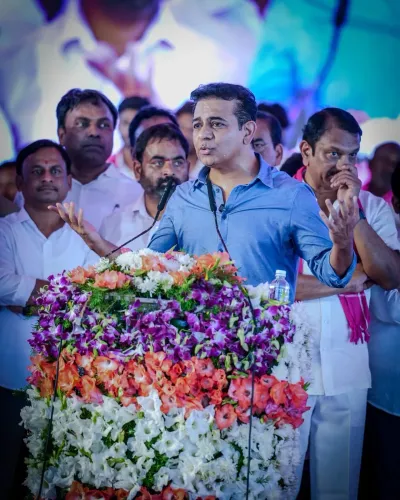
KTR marks World Tribal Day, lists BRS welfare record for STs
Synopsis
On World Tribal Day 2026, BRS working president K. T. Rama Rao outlined the party's Adivasi welfare record under KCR, highlighting a 6%-to-10% ST reservation hike, the Kumram Bheem Asifabad district renaming, the Adivasi Bhavan in Hyderabad, and schemes spanning gurukuls, overseas scholarships, and tribal entrepreneurship.
Key Takeaways
BRS working president K.
Rama Rao posted on World Tribal Day, August 9, 2026 , cataloguing tribal welfare measures under former CM K.
The BRS government passed an assembly resolution raising ST reservations from 6% to 10% in Telangana, backed by a government order.
Adilabad district was renamed Kumram Bheem Asifabad in 2016 , and a memorial park was set up at Jodeghat .
The Kumram Bheem Adivasi Bhavan was built in Banjara Hills, Hyderabad as a cultural centre for Adivasi communities.
Key programmes listed include ST gurukul expansion , the Ambedkar Overseas Scholarship , the CMSTEI entrepreneurship scheme , and drinking-water supply to tribal hamlets.
The post doubles as political positioning: BRS is now in opposition after the 2023 Telangana assembly election loss.
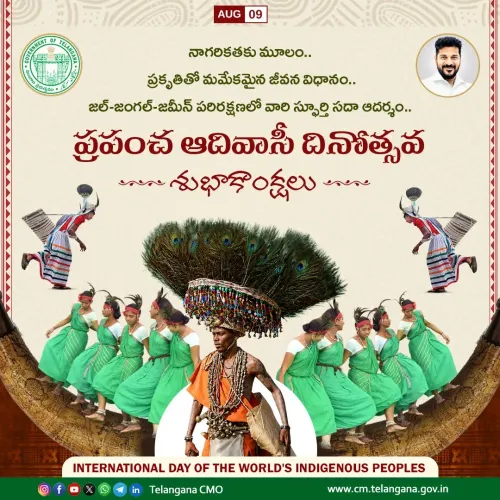
On World Tribal Day, Sunday, August 9, 2026, BRS working president K. T. Rama Rao invoked the battle cry of tribal icon Kumram Bheem — 'Jal, Jungle, Zameen' (water, forest, land) — to frame a sweeping account of what the BRS government delivered for Scheduled Tribe communities during its decade in power in Telangana.
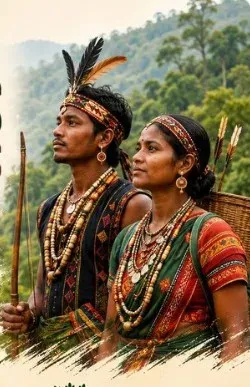
Adivasis, KTR wrote, are the original custodians of nature — people who love and revere forests, trees, termite mounds, and animals. He cast them as living embodiments of Kumram Bheem's defiance, the early-twentieth-century tribal commander who rallied against colonial forest laws and whose three-word slogan still anchors Adivasi political identity across India.
The 10% reservation push and what it meant
The most consequential claim in the post: under Chief Minister K. Chandrashekar Rao, the Telangana assembly passed a resolution raising ST reservations from 6% to 10%, followed by a government order giving it legal force. Reservation enhancement is the sharpest political instrument a state can reach for — and moving the needle by four percentage points signals a deliberate bid to expand Adivasi share of public employment and education in a state where tribal populations are concentrated in forest-belt districts.
The BRS government also converted thandas (Lambada/Banjara hamlets) and girijana gudems (forest-area villages) into formal gram panchayats — giving these settlements their own elected local bodies for the first time, and with them, access to central and state development funds they had previously been excluded from.
Kumram Bheem's name etched across Telangana's map
Symbolic recognition ran alongside the policy moves. The BRS government renamed Adilabad district as Kumram Bheem Asifabad in 2016, placing the tribal hero's name on Telangana's administrative map permanently. At Jodeghat — the forest village where Bheem made his last stand — the government established a memorial park. And at the geographic and commercial heart of Hyderabad, in Banjara Hills, it constructed the Kumram Bheem Adivasi Bhavan, a dedicated cultural centre designed to project Adivasi self-respect from the city's most visible address.
Scholarships, gurukuls, and the CMSTEI entrepreneurship push
KTR's post lists a cluster of welfare programmes that ran through the KCR era: clean drinking water pipelines to thandas and gudems; expansion of ST residential gurukul schools and colleges; the Ambedkar Overseas Scholarship for tribal students seeking education abroad; and the CMSTEI scheme — the Chief Minister's Scheduled Tribe Entrepreneurship and Innovation initiative — aimed at converting tribal youth into first-generation entrepreneurs rather than job-seekers.
Together, the measures represent a layered strategy: constitutional entitlement (reservation), administrative recognition (panchayat status), symbolic pride (renamed district, Adivasi Bhavan), and economic mobility (scholarships, entrepreneurship). Whether implementation matched announcement is a question that future budget audits and ground-level surveys will answer — but the political architecture of the argument is deliberate and dense.
World Tribal Day, observed every August 9 since the United Nations designated it in 1994, gives regional parties a ready-made calendar moment to consolidate their Adivasi identity credentials. For BRS — now in opposition after losing the 2023 Telangana assembly election — KTR's post is as much a reminder of a governance record as it is a statement of political intent. The fight over who speaks for jal, jungle, zameen in Telangana is far from settled.
Point of View
Gram panchayat status for thandas, symbolic infrastructure) mirrors the playbook regional parties across India have used to consolidate ST vote banks through a mix of constitutional entitlement and cultural recognition. With the 10% ST reservation order potentially facing legal scrutiny — reservation hikes above constitutional ceilings have been struck down by courts in other states — the claim is politically potent but legally contested terrain. For BRS in opposition, the post is a direct challenge to the Congress government in Hyderabad to either sustain these measures or own the rollback.
NationPress
9 Aug 2026
Frequently Asked Questions
What is World Tribal Day and when is it observed?
World Tribal Day, also called International Day of the World's Indigenous Peoples, is observed every August 9 . The United Nations designated the date in 1994 to promote and protect the rights of indigenous communities worldwide.
What did the BRS government do for ST reservations in Telangana?
The BRS government under CM K. Chandrashekar Rao passed an assembly resolution increasing ST reservations from 6% to 10% in Telangana, followed by a government order to implement the change.
Who was Kumram Bheem and why is he significant to Adivasi communities?
Kumram Bheem was a tribal leader from Telangana who fought against colonial forest laws and landlord oppression in the early twentieth century. His slogan 'Jal, Jungle, Zameen' — water, forest, land — remains a defining rallying cry for Adivasi rights movements across India.
What is the Kumram Bheem Adivasi Bhavan in Hyderabad?
The Kumram Bheem Adivasi Bhavan is a cultural centre built by the BRS government in Banjara Hills, Hyderabad , intended to serve as a hub for Adivasi cultural expression and self-respect in the heart of the state capital.
What is the CMSTEI scheme mentioned by KTR?
The CMSTEI — Chief Minister's Scheduled Tribe Entrepreneurship and Innovation — scheme was a Telangana government programme aimed at equipping tribal youth with skills and support to become entrepreneurs rather than solely seeking salaried employment.