Jal Shakti Minister Paatil hails Mahasamund's water conservation feat
Synopsis
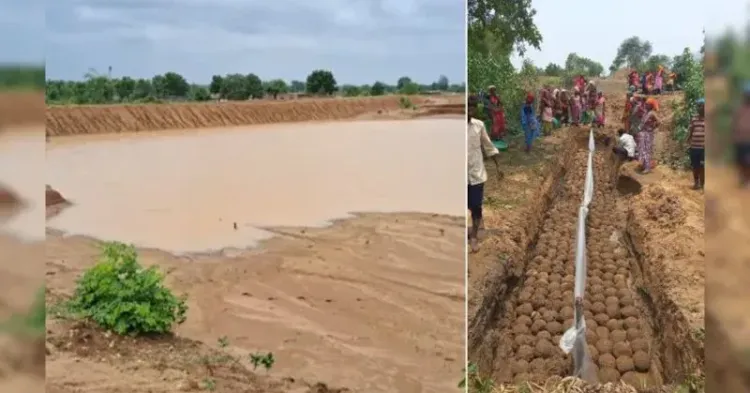
Union Jal Shakti Minister C. R. Paatil highlighted how 1,140-plus villages in Mahasamund, Chhattisgarh built 3.41 lakh rainwater harvesting structures in 15 days under the Jal Sanchay–Jan Bhagidari initiative, conserving an estimated 31 crore litres from the first monsoon shower.
Key Takeaways
3.41 lakh water conservation structures were built in just 15 days across 1,140-plus villages in Mahasamund, Chhattisgarh.
The drive covered 551 gram panchayats , with villagers and district administration working together.
The first monsoon rains filled the structures, conserving an estimated 31 crore litres of rainwater.
The effort is part of PM Modi's Jal Sanchay–Jan Bhagidari initiative and the broader Catch the Rain campaign launched in 2021.
Union Jal Shakti Minister C.
Paatil congratulated Mahasamund's 'water warriors' and district administration on August 9, 2026.
The Ministry of Jal Shakti , formed in 2019, coordinates such community-led conservation drives nationwide.
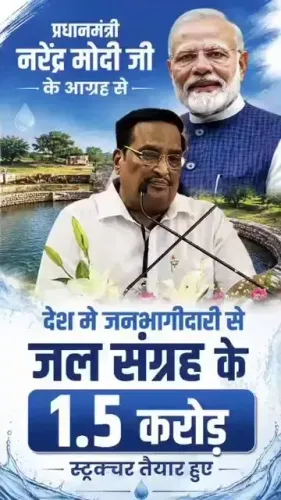
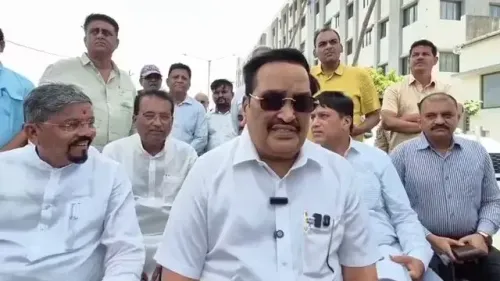
In 15 days, more than 1,140 villages across Mahasamund, Chhattisgarh built 3.41 lakh water conservation structures — and when the first rains arrived, they captured nearly 31 crore litres of rainwater. Union Jal Shakti Minister C. R. Paatil on Sunday, August 9, 2026 spotlighted this achievement on X, calling it a living proof of Prime Minister Narendra Modi's Jal Sanchay–Jan Bhagidari (Water Conservation through People's Participation) resolve.
Posting in Hindi, Paatil wrote: 'A new record of water conservation through public participation! This inspiring story from Mahasamund, Chhattisgarh, demonstrates the power of Prime Minister Narendra Modi's resolve of Jal Sanchay–Jan Bhagidari.' He extended warm congratulations to the 'water warriors of Mahasamund and the district administration' for the 'remarkable achievement.'
551 gram panchayats, one monsoon sprint
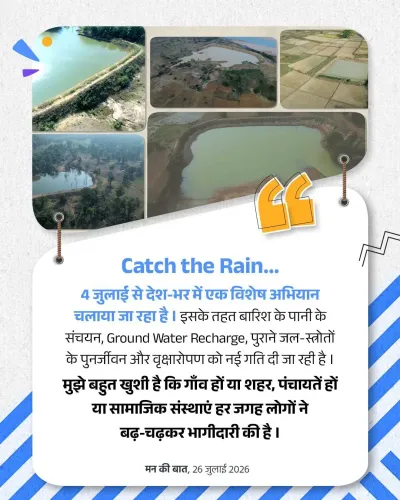
The scale is striking. Across 551 gram panchayats, villagers worked alongside local administration to erect 3,41,000 rainwater harvesting structures in a fortnight — a pace that underlines what time-bound, community-driven campaigns can unlock. The first monsoon shower then filled those structures, storing an estimated 31 crore litres of rainwater that would otherwise have run off. In a district that sits in the rain-shadow pockets of central India, that stored water is a buffer against dry spells that can devastate smallholder agriculture.The national scheme behind the sprint
Mahasamund's drive sits inside a larger architecture. The Ministry of Jal Shakti, formed in 2019 by merging water-related departments, was built precisely to coordinate efforts like this at scale. The Catch the Rain campaign, launched in 2021 under the Jal Shakti Abhiyan, urged every district to create rainwater harvesting infrastructure before the monsoon — the idea being that the best time to catch rain is before it falls. Mahasamund's 15-day blitz is that philosophy made concrete. The Jan Bhagidari (people's participation) framing is deliberate politics as much as policy: it positions communities as co-owners of outcomes, not passive recipients of government schemes. When rural households dig a check dam or restore a village pond with their own hands, the maintenance calculus changes. The structure is theirs.What Mahasamund's model signals for other districts
The government's broader pattern has been to identify districts where community mobilisation is strong, run a concentrated campaign, document the outcome, and use that story as a template elsewhere. Paatil's post — amplified from the ministerial handle — is part of that documentation loop. Whether the 31 crore litre figure translates into measurable groundwater recharge and crop-season resilience in Mahasamund will be the real test when post-monsoon data comes in. For now, one district in Chhattisgarh has handed the Jal Shakti ministry its sharpest campaign image of the 2026 monsoon season. The water warriors of Mahasamund dug fast. Whether the rest of the country digs deep enough remains the open question.Point of View
Mobilise gram panchayats, then publicise the metric. For Jal Shakti Minister Paatil, amplifying this story serves a dual purpose: it validates the ministry's decentralised approach ahead of monsoon-season scrutiny, and it builds political capital in Chhattisgarh, a state the BJP recaptured in 2023. The 31 crore litre figure, if borne out by independent measurement, would give the Catch the Rain campaign its most quotable district-level proof point of the year. The real policy question is whether these rapidly built structures are maintained through the dry season — community ownership is the theory; post-monsoon data will be the verdict.
NationPress
23 Sept 2026
Frequently Asked Questions
What is the Jal Sanchay–Jan Bhagidari initiative?
Jal Sanchay–Jan Bhagidari is a Central government campaign under the Ministry of Jal Shakti that promotes community participation in building rainwater harvesting and water conservation structures, especially before and during the monsoon season.
What did Mahasamund district achieve in water conservation?
Mahasamund district in Chhattisgarh built over 3.41 lakh water conservation structures across 1,140-plus villages in just 15 days, and conserved an estimated 31 crore litres of rainwater from the first monsoon shower.
What is the Catch the Rain campaign?
The Catch the Rain campaign was launched in 2021 under the Jal Shakti Abhiyan. It encourages districts across India to create rainwater harvesting infrastructure before the monsoon, with the goal of maximising water storage at the local level.
Who is C. R. Paatil?
C. R. Paatil is the Union Minister of Jal Shakti, a senior BJP leader, and former president of the BJP's Gujarat state unit.
How many gram panchayats were involved in Mahasamund's water drive?
551 gram panchayats participated in the campaign, with rural communities and district administration jointly building the conservation structures.