KTR sends legal notice to Telugu daily over false passport seizure report
Synopsis
BRS working president K. T. Rama Rao has served a legal notice on a 50-year-old Telugu daily for conflating an ACB investigating officer's procedural memo with an actual court order to seize his passport — a distinction that could significantly shape public perception of his legal exposure in the Formula E race case. The newspaper has 48 hours to withdraw, apologise, and correct across all platforms or face civil, criminal, and Press Council proceedings.
Key Takeaways
BRS working president K.
Rama Rao served a legal notice on a prominent Telugu daily over an allegedly false report published on 29 September .
The disputed report claimed an ACB court had ordered temporary seizure of Rama Rao's passport in the Formula E race case — which the notice says is factually incorrect.
The Regional Passport Office had issued a show-cause notice on 28 September under Section 10(3)(e) of the Passports Act , giving Rama Rao 15 days to respond.
Advocate N Lalita Reddy served the notice on the newspaper's editor, publisher, printer, resident editor, and the reporter concerned.
The newspaper has been given 48 hours to withdraw the report, publish an equally prominent correction, and issue an unconditional apology across print and digital platforms.
Non-compliance could trigger civil and criminal defamation proceedings and a complaint to the Press Council of India .
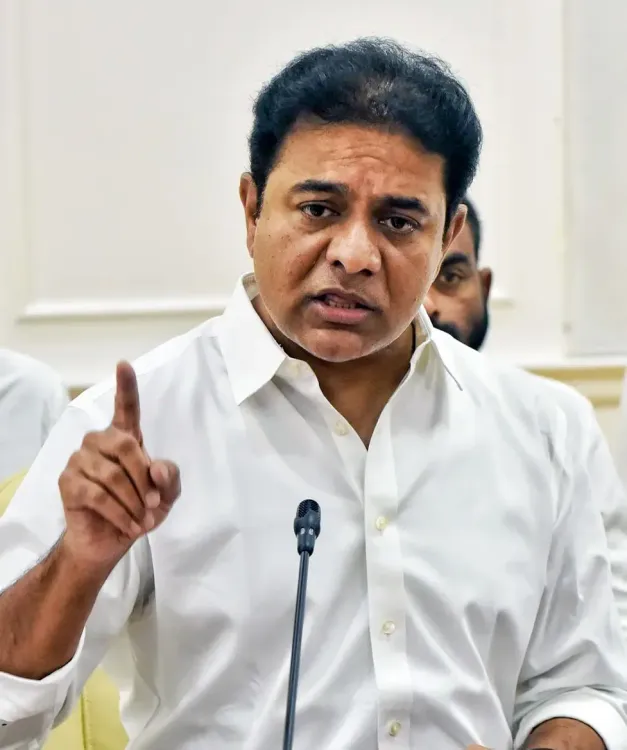
Bharat Rashtra Samithi (BRS) working president K. T. Rama Rao has sent a legal notice to a prominent Telugu-language newspaper for allegedly publishing factually incorrect news claiming that an Anti-Corruption Bureau (ACB) court had ordered the temporary seizure of his passport in connection with the Formula E race case. The notice was dispatched on behalf of Rama Rao by advocate N Lalita Reddy and gives the publication 48 hours to respond or face civil and criminal defamation proceedings.
What the Disputed Report Said
The Telugu daily published a report dated 29 September claiming that the ACB special court had ordered the temporary seizure of Rama Rao's passport. According to the legal notice, the report was factually incorrect: what actually occurred was that the ACB's investigating officer filed a memo before the special court seeking appropriate orders regarding the passport — a procedural step that falls well short of an actual court directive.
The notice stated clearly that the special court had not issued any orders for the passport's temporary seizure. Separately, the Regional Passport Office had issued a show-cause notice on 28 September under Section 10(3)(e) of the Passports Act, granting Rama Rao a 15-day period to submit an explanation — a routine administrative step distinct from any court order.
KTR's Response and Social Media Post
Rama Rao posted on X (formerly Twitter) that his lawyer had formally served the legal notice, describing it as 'regrettable' that a publication with 50 years of history would publish unverified news. 'I demand that the said false news be immediately withdrawn from all media and an unconditional apology be issued,' he said.
The notice was addressed to the newspaper's editor, publisher, printer, resident editor, and the reporter who authored the disputed article — a broad sweep designed to establish institutional accountability.
Key Demands in the Legal Notice
The notice demanded the immediate withdrawal of the published report and the publication of a correction with equal prominence. It also called for an unconditional public apology to Rama Rao. Beyond the print edition, the notice required the newspaper to rectify the story across all digital platforms — including online portals, e-papers, websites, social media handles, and digital archives.
Additionally, the notice sought the disclosure of information sources used for the report and demanded clarity on whether the reporter had actually examined the relevant court records. The newspaper was also directed to preserve all related materials — including WhatsApp messages, emails, notes, recordings, documents, drafts, and other electronic records.
Consequences of Non-Compliance
The legal notice made explicit that failure to take appropriate action within 48 hours would result in civil and criminal defamation proceedings, as well as a formal complaint to the Press Council of India. The broad nature of demands — spanning print, digital, and archival corrections — signals that Rama Rao's legal team is building a comprehensive record ahead of possible litigation.
This comes amid ongoing legal scrutiny of Rama Rao in the Formula E race case, making accurate media reporting on court proceedings particularly consequential for public perception. The episode underscores the fine but critical distinction between a procedural memo filed by an investigating officer and an enforceable court order — a nuance that, critics argue, newsrooms must rigorously verify before publication.
Point of View
The legal notice serves a dual purpose: correcting the factual record and publicly framing the narrative around his legal exposure ahead of potential proceedings. The demand to preserve WhatsApp messages and electronic drafts suggests his legal team is not just seeking a correction — it is building an evidentiary foundation for litigation if the paper does not comply.
NationPress
6 Oct 2026
Frequently Asked Questions
Why did KTR send a legal notice to the Telugu newspaper?
K. T. Rama Rao sent the legal notice because the newspaper published a report on 29 September claiming an ACB court had ordered the temporary seizure of his passport in the Formula E race case — a claim his legal team says is factually false. According to the notice, what actually happened was that the ACB's investigating officer filed a memo before the court seeking appropriate orders, which is distinct from an actual court directive.
What is the Formula E race case involving KTR?
The Formula E race case refers to legal proceedings involving K. T. Rama Rao in connection with the organisation and finances of the Formula E electric racing event held in Hyderabad. The Anti-Corruption Bureau has been investigating aspects of the case, and the passport issue arose from the ACB's investigative proceedings before a special court.
What has the Regional Passport Office actually done regarding KTR's passport?
The Regional Passport Office issued a show-cause notice on 28 September under Section 10(3)(e) of the Passports Act, granting Rama Rao a 15-day period to submit an explanation. This is an administrative step and is separate from any court order on the passport.
What does KTR's legal notice demand from the newspaper?
The notice demands the immediate withdrawal of the disputed report, publication of a correction with equal prominence, an unconditional public apology, and rectification of the story across all platforms including online portals, e-papers, social media, and digital archives — all within 48 hours.
What happens if the newspaper does not comply within 48 hours?
If the newspaper fails to act within 48 hours, Rama Rao's legal team has indicated it will initiate civil and criminal defamation proceedings and lodge a formal complaint with the Press Council of India. The notice also requires the preservation of all related electronic and print records, signalling preparation for potential litigation.