KTR demands accountability over NEET paper leak
Synopsis
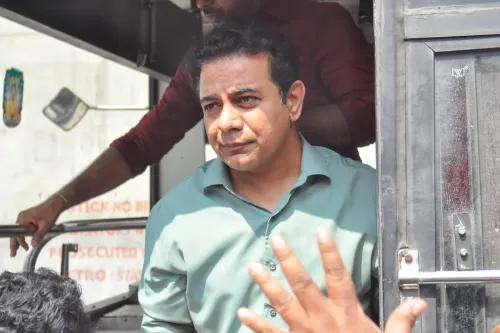
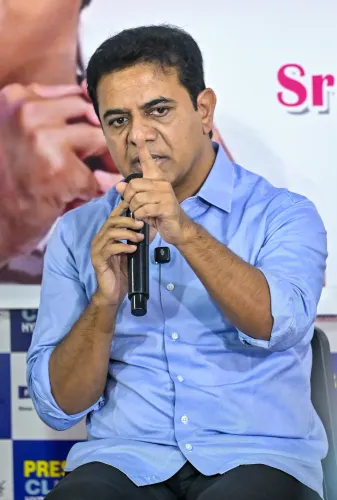
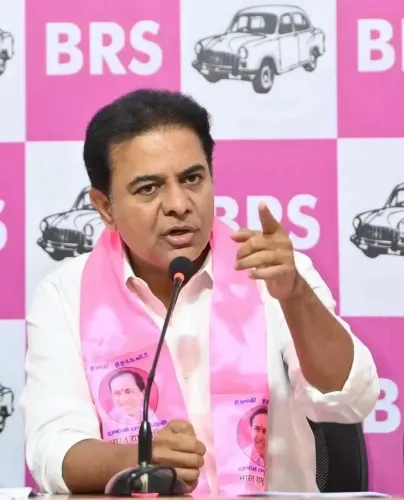
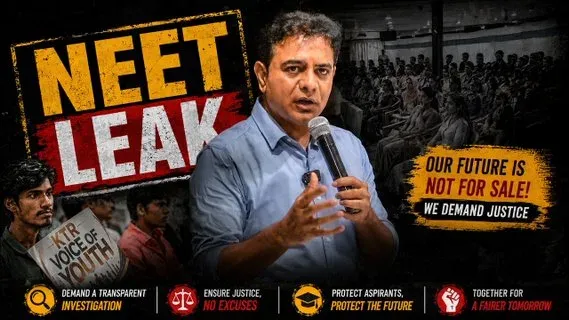
BRS working president K. T. Rama Rao on June 7, 2026, called the NEET-UG paper leak a 'national disgrace,' demanded Union government accountability, and released a video addressing medical aspirants directly about the controversy.
Key Takeaways
KTR on June 7, 2026 publicly condemned the alleged NEET-UG paper leak as a 'national disgrace.' He demanded accountability from the Union government and questioned why no responsibility has been fixed.
NEET-UG is conducted by the National Testing Agency under the Union Ministry of Education and is the sole medical entrance test nationwide.
A prior NEET-UG 2024 paper-leak controversy had already triggered a CBI probe and Supreme Court -mandated review of the NTA .
Regional opposition parties, including BRS , have framed centralised testing as Union overreach into education, a Concurrent List subject.
KTR released a video directly addressing NEET aspirants , escalating political pressure on the Centre to respond.
BRS working president K. T. Rama Rao on Sunday, June 7, 2026, launched a sharp attack on the Union government over what he called a 'national disgrace' — fresh allegations of a paper leak in the National Eligibility cum Entrance Test (NEET-UG), demanding accountability from the Centre and justice for lakhs of medical aspirants across the country.
Context
Posting on X, KTR wrote: 'The NEET paper leak is a national disgrace! Where's the accountability? Why is there no responsibility from the Centre? Who will deliver justice to lakhs of students?' He also shared a video in which he said he 'spoke my heart out to NEET aspirants about the truth behind the paper leak.'
The statement reflects mounting frustration among opposition leaders and students over the integrity of NEET-UG, the sole undergraduate medical entrance examination conducted by the National Testing Agency (NTA) under the Union Ministry of Education.
Policy Backdrop
NEET-UG became the mandatory national medical entrance test following Supreme Court orders in 2016, effectively replacing multiple state-level examinations. The National Testing Agency, established in 2017, was tasked with administering the exam each year for millions of aspirants.
Allegations of a large-scale paper leak and irregularities in NEET-UG 2024 had already triggered Central Bureau of Investigation (CBI) probes, nationwide student protests, and a Supreme Court-mandated review of the NTA's processes. Opposition parties, including the Bharat Rashtra Samithi, have consistently framed centralised entrance testing as an example of Union overreach into education — a subject that falls on the Concurrent List of the Constitution.
Stakeholders and Impact
At the centre of the controversy are lakhs of medical aspirants — students who spend years preparing for a single examination that determines admission to MBBS and BDS programmes across the country. Any credible leak directly undermines the merit-based selection process and can cost deserving candidates their seats.
State governments, particularly those not ruled by the Bharatiya Janata Party, have long argued that a centralised testing model concentrates risk and leaves states with little recourse when failures occur. KTR's intervention amplifies this federal dimension, positioning the issue as one of Union accountability rather than administrative error alone.
The NTA and the Ministry of Education face renewed pressure to demonstrate systemic reforms — including secure question-paper printing and distribution protocols — to restore confidence in the examination ecosystem.
What's Next
Attention will now turn to whether the Supreme Court takes up fresh petitions related to the latest leak allegations, and whether the CBI files new charge-sheets. Legislative proposals to restructure the NTA or introduce state-level safeguards for paper security remain a live debate in Parliament.
With KTR directly addressing students through video and social media, the political pressure on the Centre to respond publicly is likely to intensify in the days ahead — making the government's next move on NEET reform a key test of its accountability on education governance.
Point of View
BRS repositions itself as a champion of student welfare and state rights simultaneously. The video format, addressed directly to aspirants, signals an attempt to build grassroots resonance beyond traditional political audiences. This follows a well-worn opposition playbook: use high-stakes examination controversies to question the credibility of centralised institutions the BJP-led Centre controls. If fresh legal or investigative action follows, the political cost to the government could extend well beyond the education ministry.
NationPress
21 Oct 2026
Frequently Asked Questions
What is the NEET paper leak controversy in 2026?
Allegations have emerged of a paper leak in the NEET-UG examination conducted by the National Testing Agency, prompting opposition leaders including BRS working president KTR to demand accountability from the Union government.
What did KTR say about the NEET paper leak?
KTR called it a 'national disgrace,' questioned why the Centre has not fixed responsibility, and released a video addressed directly to NEET aspirants explaining his position on the controversy.
Who conducts NEET-UG in India?
NEET-UG is conducted by the National Testing Agency, an autonomous body established in 2017 under the Union Ministry of Education, and serves as the sole entrance test for MBBS and BDS admissions nationwide.
Has there been a NEET paper leak before?
Yes. Allegations of large-scale paper leaks and irregularities in NEET-UG 2024 led to a CBI investigation and a Supreme Court-mandated review of the National Testing Agency's processes.
Why do regional parties oppose centralised NEET?
Regional and non-BJP parties argue that education is a Concurrent List subject and that a single centralised exam concentrates risk, leaving state governments with no recourse when the system fails students.