Pralhad Joshi Inaugurates KVS AI, Parent and Alumni Portals
Synopsis
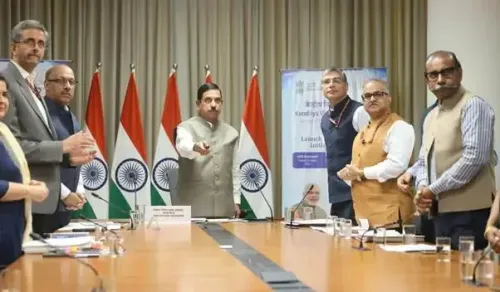
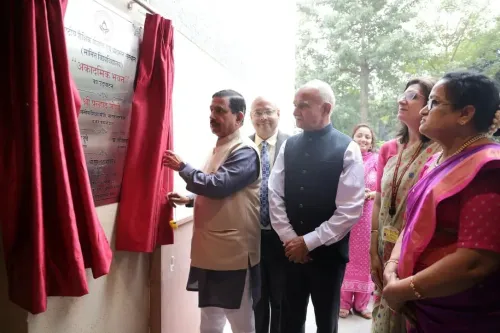
Union Minister Pralhad Joshi inaugurated three in-house KVS digital platforms on 12 November 2026 — an AI monitoring centre, a parent connect app and an alumni portal — marking a concrete step in delivering the NEP 2020 technology roadmap to India's central government school network.
Key Takeaways
Kendriya Vidyalaya Sangathan launched three digital platforms on 12 November 2026 : the AI-enabled Vidya Samiksha Kendra, the KVS Samvaad Parent Connect App, and the KVS Alumni Connect Portal.
The Vidya Samiksha Kendra uses artificial intelligence to track student attendance and learning outcomes in real time and flag gaps for early intervention.
All three platforms were built entirely in-house by KVS , embodying the Swadeshi and Aatmanirbhar Bharat self-reliance framework.
The initiatives align with the National Education Policy 2020 mandate for technology-enabled learning outcome monitoring and stronger parental engagement in schools.
Union Minister Pralhad Joshi framed the launch around educational equity — ensuring 'no child goes unnoticed, no parent feels disconnected and no alumnus is forgotten.' The Digital India programme, launched in 2015 , provides the broader infrastructure and policy context within which these school-level platforms operate.
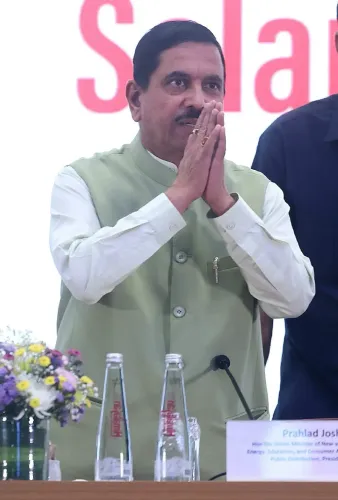
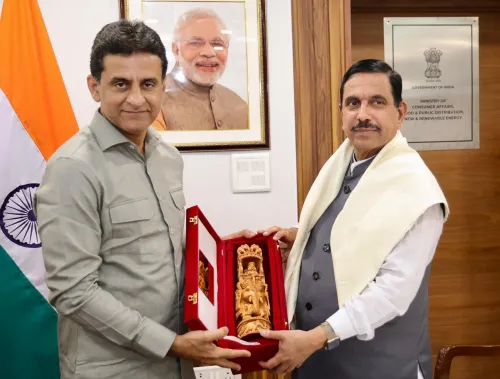
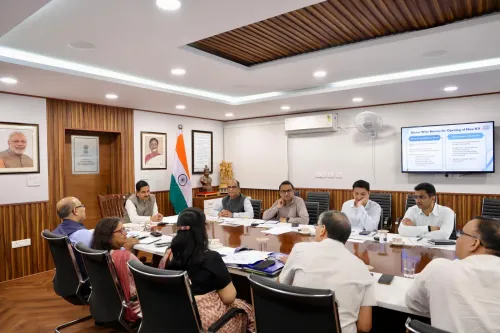
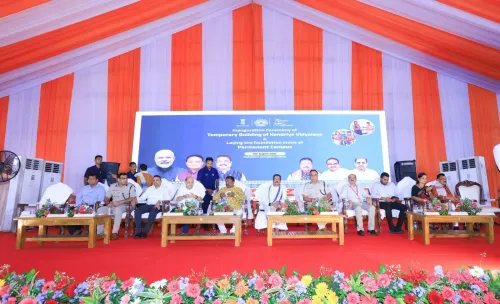
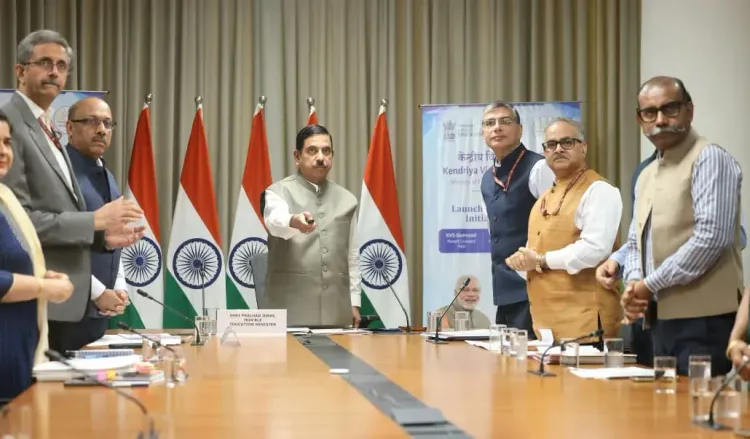
Three digital tools built entirely in-house by Kendriya Vidyalaya Sangathan (KVS) went live on Thursday, 12 November 2026, promising to put artificial intelligence to work in India's central government school network — tracking whether children are learning, whether parents are informed, and whether alumni stay connected. Union Minister Pralhad Joshi, who holds the Consumer Affairs and New and Renewable Energy portfolios, addressed the inauguration ceremony and framed the moment as a milestone in making Indian public education 'more connected, responsive and future-ready.'
Three platforms, one integrated vision
The AI-enabled Vidya Samiksha Kendra is the centrepiece: a monitoring hub designed to track student attendance and learning outcomes in real time, flagging gaps early enough for timely intervention. Alongside it, the KVS Samvaad Parent Connect App opens a live channel between teachers and families, addressing the persistent problem of parents feeling shut out of their child's school life. The third platform, the KVS Alumni Connect Portal, is built to bring former Kendriya Vidyalaya students back into the fold as mentors for current pupils — turning institutional memory into active support.
All three were developed entirely within KVS, a detail Joshi highlighted explicitly. 'Proudly developed in-house by KVS,' he posted on X, invoking both the Swadeshi ethos and the Aatmanirbhar Bharat framework — the central government's self-reliance push that has increasingly shaped how public institutions approach technology procurement and development.
NEP 2020's digital blueprint, now in classrooms
The launch lands squarely within the roadmap set by the National Education Policy 2020, which explicitly called for technology-enabled monitoring of learning outcomes and stronger mechanisms for parental engagement in government schools. For KVS — an autonomous body under the Ministry of Education operating a vast network of central government schools across India — these platforms represent a concrete translation of that policy into functional infrastructure.
The broader trend is visible across the education sector. Since 2020, AI-driven monitoring centres have been piloted in other central school systems and several state education departments. KVS's decision to build rather than buy puts it in a distinct category: a government institution choosing indigenous development at a time when EdTech procurement has drawn scrutiny over cost and accountability.
The minister's framing: 'No child goes unnoticed'
Joshi's language at the inauguration was deliberately inclusive. 'I firmly believe that technology must serve a larger purpose in education, ensuring that no child goes unnoticed, no parent feels disconnected and no alumnus is forgotten,' he said — a three-part formulation that maps precisely onto the three platforms unveiled. It signals that the government intends to position these tools not as administrative upgrades but as equity instruments: technology that catches children who might otherwise slip through the cracks of a large, distributed school system.
The next critical test will be rollout: how quickly these platforms scale across all KVS regions, and whether usage data and learning-outcome metrics eventually make their way into parliamentary reporting or Ministry of Education reviews. The infrastructure is live. Whether it delivers on its promise is a question the classroom will answer.
Point of View
Translating a six-year-old policy document into functional school infrastructure — a move that strengthens the government's claim that education reform has moved from paper to practice. The in-house development angle is politically deliberate: it reinforces the Aatmanirbhar Bharat narrative in a domain — EdTech — where private and foreign vendors have dominated. Joshi's choice to attend and speak at a KVS ceremony, despite holding Consumer Affairs and Energy portfolios rather than Education, suggests the BJP is using multiple senior faces to amplify the education-technology message ahead of potential state election cycles. The real test, however, lies in whether learning-outcome data from the Vidya Samiksha Kendra surfaces in parliamentary accountability forums, converting launch optics into verifiable impact.
NationPress
12 Nov 2026
Frequently Asked Questions
What is the KVS Vidya Samiksha Kendra?
The KVS Vidya Samiksha Kendra is an AI-enabled monitoring hub launched by Kendriya Vidyalaya Sangathan to track student attendance and learning outcomes in real time and identify gaps for timely intervention in central government schools.
What is the KVS Samvaad Parent Connect App?
The KVS Samvaad Parent Connect App is a newly launched mobile platform that enables real-time engagement between parents and Kendriya Vidyalaya schools, designed to keep families informed and connected to their child's education.
What is the KVS Alumni Connect Portal?
The KVS Alumni Connect Portal is a digital platform that links former Kendriya Vidyalaya students with current pupils, enabling alumni to serve as mentors and maintain ties with their school network.
How do these KVS platforms relate to NEP 2020?
The National Education Policy 2020 explicitly called for technology-driven monitoring of learning outcomes and stronger parental engagement in government schools; the three KVS platforms are a direct institutional response to that policy mandate.
Who inaugurated the KVS digital initiatives in November 2026?
Union Minister Pralhad Joshi, who holds the Consumer Affairs, Food and Public Distribution and New and Renewable Energy portfolios, addressed and inaugurated the three KVS digital platforms on 12 November 2026.