Sachin Pilot Slams AAP's Punjab Tenure, Pitches Congress as 2027 Answer
Synopsis
Congress general secretary Sachin Pilot has declared AAP's Punjab government a failure, saying five years of the state's development and youth opportunities were lost. He called Congress the only credible alternative and signalled a full-scale party push ahead of the 2027 Punjab assembly elections.
Key Takeaways
Congress leader Sachin Pilot posted a bilingual (Punjabi and Hindi) attack on AAP's Punjab government on 12 November 2026 .
Pilot accused AAP of wasting 'five precious years' of Punjab's development and youth opportunity after winning a large mandate in 2022 .
He described shifting public trust — badalta bharosa — as proof that Punjab wants change, and declared Congress 'fully prepared' to lead it.
The post was co-tagged to @INCIndia and @INCPunjab , confirming it as coordinated national party messaging.
Punjab assembly elections are due in 2027 , making this a clear opening salvo in Congress's pre-election narrative campaign.
AAP won Punjab in 2022 with a commanding majority, defeating the then-incumbent Congress government.
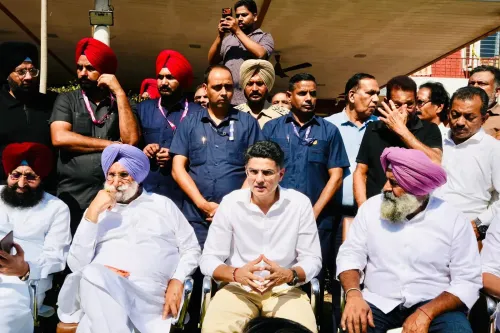
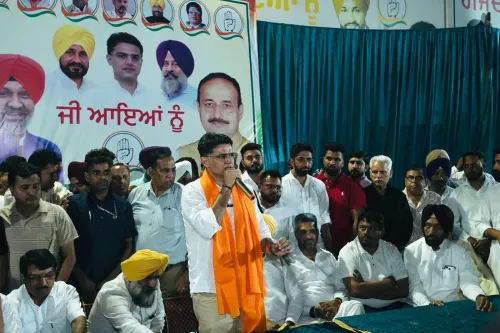
Five years wasted — that is Congress leader Sachin Pilot's blunt verdict on the Aam Aadmi Party's government in Punjab. The INC general secretary and Chhattisgarh in-charge posted a sharp bilingual broadside on Thursday, 12 November 2026, arguing that AAP squandered the massive mandate Punjab's voters handed it in 2022 and that Congress alone can steer the state back to growth.
The Verdict Pilot DeliversWriting in both Punjabi and Hindi, Pilot did not pull his punches. 'Yeh sirf ek sarkar ki vifalta nahin' (This is not merely one government's failure), he wrote — framing AAP's tenure as a collective loss inflicted on Punjab's development, its youth, and the aspirations of ordinary people. 'Five precious years,' he argued, had been 'snatched away' from Punjab's progress and from the futures of its young people.
The post calls the shifting public mood a signal — 'badalta bharosa' (changing trust) — and positions Congress as 'fully prepared' to lead that change. The tagging of @INCIndia and @INCPunjab signals this is coordinated party messaging, not a solo moment of candour.
What AAP Won — and What Congress Lost — in 2022The backdrop matters. In the February 2022 Punjab assembly elections, AAP delivered one of the most decisive verdicts in the state's modern political history, routing the incumbent Congress government and winning a commanding majority in the 117-seat Vidhan Sabha. Congress was reduced to a distant second, its own internal turbulence — including the very public fallout involving Pilot's contemporaries — widely seen as a contributing factor to the rout.
That defeat stung deeply. Punjab had been Congress's last major state government in northern India at the time, and losing it to a party that had never previously governed a large state reshaped the opposition landscape in one evening.
The 2027 Clock Is Already TickingPilot's post lands as Punjab's political calendar starts to matter again. Punjab assembly elections are due in early 2027, and both parties know that the narrative war begins now — not six months before polling day. Opposition parties across India have consistently used the mid-term window to bank governance-failure stories, stacking them into an electoral case by the time voters queue up.
Congress's argument here follows a recognisable playbook: frame the ruling party's tenure as a broken promise, claim the mantle of 'real alternative,' and rally a diaspora of disappointed voters who backed AAP on hope. Whether that case lands will depend on what Punjab's voters actually feel about jobs, drug menace containment, farm-debt relief, and infrastructure — the tangible tests AAP set for itself in 2022.
Pilot's voice carries extra weight in this context: as a general secretary, his Punjab pitch signals that the party's national leadership is actively investing in a state-level comeback, not leaving it to the state unit alone.
Punjab's next chapter is being written now — and Congress has just made clear it intends to hold the pen.
Point of View
And claim the 'change' narrative before the campaign formally begins. With Punjab elections due in 2027, Congress is clearly moving to consolidate the disappointed-voter bloc early. Notably, Pilot's national-secretary imprimatur elevates this beyond routine state-unit criticism — it signals that the INC high command is treating Punjab as a priority recovery target. The unanswered question is whether Congress can convert rhetorical momentum into organisational ground strength in a state where it lost badly just four years ago.
NationPress
12 Nov 2026
Frequently Asked Questions
What did Sachin Pilot say about AAP's Punjab government?
Sachin Pilot declared that AAP's Punjab government failed to deliver on its mandate, calling its tenure a loss of 'five precious years' for the state's development and youth. He argued Congress is the only credible alternative to lead Punjab back to progress.
When are the next Punjab assembly elections?
Punjab assembly elections are due in early 2027. Pilot's post is widely seen as an early Congress salvo ahead of that electoral contest.
How did AAP come to power in Punjab?
AAP won a commanding majority in the February 2022 Punjab assembly elections, decisively defeating the incumbent Congress government to form the state's government for the first time.
What is Sachin Pilot's role in the Congress party?
Sachin Pilot is a general secretary of the Indian National Congress and serves as the party's Chhattisgarh in-charge. He is also a former Deputy Chief Minister of Rajasthan.
Why is Congress targeting AAP in Punjab now?
With Punjab elections approaching in 2027, Congress is in the mid-term window typically used to build an opposition narrative around governance failures. Positioning itself as the primary alternative to AAP is central to the party's state-comeback strategy.