Mahua Moitra questions ECI's self-fact-check move

Synopsis
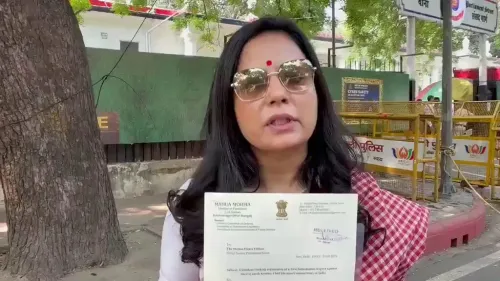
TMC MP Mahua Moitra on 12 November 2026 sharply mocked the Election Commission of India for fact-checking itself, comparing it to Election Commissioner Gyanesh Kumar standing guard over the ballot box — reigniting the opposition's long-running challenge to ECI's institutional independence after the disputed 2023 appointment law.
Key Takeaways
Mahua Moitra , TMC Lok Sabha MP from Krishnanagar , posted a pointed critique of the Election Commission of India on 12 November 2026 .
She mocked the ECI for conducting a self-directed fact-check exercise, calling it akin to Gyanesh Kumar acting as a 'guard dog outside the ballot box.' Gyanesh Kumar's appointment as Election Commissioner has been contested since the Chief Election Commissioner and other Election Commissioners (Appointment, Conditions of Service and Term of Office) Act, 2023 was passed.
The 2023 law replaced a Supreme Court-mandated collegium with a selection panel giving the government a 2-to-1 majority , drawing opposition criticism.
Opposition parties have repeatedly cited ECI conduct on model code enforcement and complaint handling as evidence of eroding institutional independence under Article 324 .
The ECI had not publicly responded to Moitra's post at the time of publication.
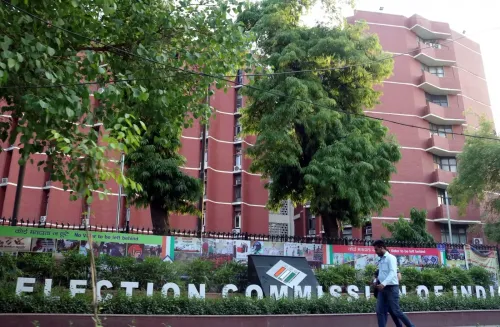
When the Election Commission of India decides to fact-check itself, the institution designed to be democracy's referee is essentially blowing its own whistle — and TMC MP Mahua Moitra is making sure nobody misses the irony. On Thursday, 12 November 2026, the Krishnanagar MP fired a sharp broadside at the country's apex electoral body on X, drawing laughter and scrutiny in equal measure.
Moitra's post pulls no punches: 'ECI doing a 'Fact Check' on itself…? Sort of like Gyanesh being a guard dog outside the ballot box.' The reference to Gyanesh Kumar — the Election Commissioner whose appointment has drawn sustained opposition fire since 2023 — crystallises a broader argument that the fox, in the opposition's view, has been left to guard the henhouse.
The 2023 appointment law at the heart of the debate
The controversy over Gyanesh Kumar is inseparable from the Chief Election Commissioner and other Election Commissioners (Appointment, Conditions of Service and Term of Office) Act, 2023. That law scrapped the Supreme Court-mandated collegium system and replaced it with a selection committee composed of the Prime Minister, a Union Cabinet Minister, and the Leader of Opposition — a 2-to-1 government majority that opposition parties immediately called a structural conflict of interest. Critics argued the moment a sitting government controls the appointment of the umpires, the pitch is already compromised.
Moitra's post today is the latest in a steady stream of opposition challenges to the ECI's institutional autonomy. The pattern has held across model code enforcement disputes, complaint-handling timelines, and election-schedule announcements — each episode becoming a fresh data point in the opposition's case that the Election Commission of India has drifted from the constitutional independence Article 324 was designed to guarantee.
Self-policing and the credibility problem
The specific fact-check exercise Moitra references — an ECI initiative to counter misinformation about its own decisions or processes — lands in particularly contested territory. An institution adjudicating claims about its own conduct faces an obvious credibility deficit: the act of self-verification, however well-intentioned, invites exactly the kind of ridicule Moitra deploys. The punchline writes itself, and she writes it cleanly.
Opposition MPs across parties have made ECI credibility a recurring campaign theme, particularly ahead of state assembly elections. The question of who watches the watchmen — and whether the answer can ever be 'the watchmen themselves' — goes directly to public trust in electoral outcomes.
The Election Commission has not publicly responded to Moitra's post. With state election calendars continuing to crowd the political horizon, the pressure on the ECI to demonstrate procedural independence — not just assert it — will only intensify.
Point of View
She personalises an institutional critique in a way that lands harder than a formal press statement. The rhetorical move reflects a broader opposition strategy of using social media to keep ECI credibility live as a voter-facing issue ahead of election cycles. Whether the ECI's silence or any formal rebuttal shapes that narrative will be the real test of institutional communication.
NationPress
12 Nov 2026
Frequently Asked Questions
Why is Mahua Moitra criticising the Election Commission of India?
Moitra is criticising the ECI for conducting what she describes as a self-directed fact-check exercise, arguing that an institution verifying claims about itself cannot be credible — a position tied to the opposition's broader challenge to ECI independence since the 2023 appointment law.
Who is Gyanesh Kumar and why is he controversial?
Gyanesh Kumar is an Election Commissioner of India whose appointment under the Chief Election Commissioner and other Election Commissioners (Appointment, Conditions of Service and Term of Office) Act, 2023 has been questioned by opposition parties, who argue the law's selection committee gives the ruling government a structural majority in choosing election commissioners.
What did the 2023 Election Commissioner appointment law change?
The 2023 law replaced the Supreme Court-mandated collegium system with a three-member selection committee comprising the Prime Minister, a Union Cabinet Minister, and the Leader of Opposition — giving the government two of three votes and drawing immediate opposition criticism.
What is the ECI's constitutional basis and mandate?
Under Article 324 of the Indian Constitution, the Election Commission of India is the independent constitutional body vested with superintendence, direction and control of elections to Parliament, state legislatures, and the offices of President and Vice-President.
Has the opposition raised ECI credibility issues before?
Yes. Opposition MPs across parties have repeatedly questioned the ECI's impartiality on model code enforcement, complaint-handling timelines, and election-schedule announcements — a pattern that has intensified since the 2023 amendment to commissioner appointment procedures.