How Do Labour Reforms Prepare Workers in Hazardous Sectors for a Safer Future?
Synopsis
Discover how the new Labour Codes are revolutionizing safety in hazardous sectors across India. With an emphasis on health and safety, these reforms ensure a future-ready workforce. Learn about the implications for workers in mining, chemicals, and more.
Key Takeaways
New Labour Codes enhance workplace safety in hazardous sectors.
Mandatory annual health check-ups promote early disease detection.
Digital health records improve transparency and accessibility.
Workers are entitled to comprehensive social security benefits.
Stronger safety protocols are established under the OSH&WC Code.
New Delhi, Dec 12 (NationPress) For employees engaged in hazardous sectors, the newly introduced Labour Codes signify a significant transformation towards safer, fairer, and more accountable work environments, as stated by the government.
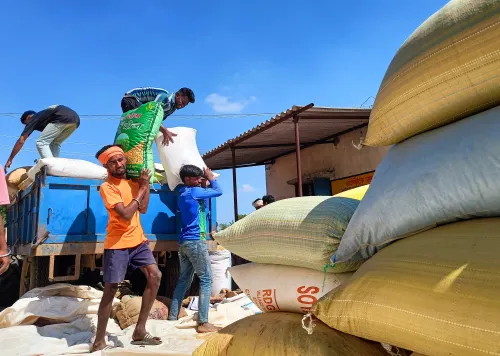
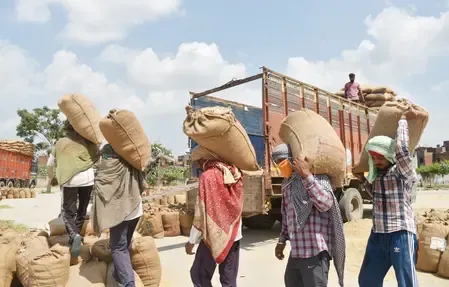
Sectors like mining, petroleum, metallurgy, chemicals, and heavy manufacturing are crucial to India's economic development, with many workers operating in high-risk settings.
Recognizing the urgency for a more robust, future-ready safety framework for workers, the government has rolled out new Labour Codes that consolidate 29 Central labour laws into 4 comprehensive Labour Codes.
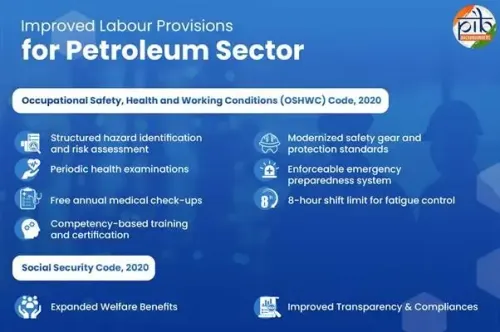
Under The Occupational Safety, Health and Working Conditions Code, 2020 (OSH&WC), a more cohesive, preventive safety framework has been established, featuring risk assessments, complimentary annual health check-ups, training, personal protective equipment (PPE), emergency planning, and more.
These reforms enhance safety protocols, enforce risk-mitigation strategies, and boost accountability while providing employers with clearer, simpler, and more predictable regulatory routes.
“Importantly, the new framework aims to ensure safer worksites, greater protections, and more dignified conditions for India’s workforce in hazardous sectors,” an official statement emphasized.
All workers involved in hazardous processes or industries—including chemical, explosive, gas, radiation, mining, construction, dock, and heavy engineering sectors—are thoroughly covered under OSH&WC.
Previously, medical and health records were kept manually, lacking portability and long-term traceability.
Now, health records are compulsory and accessible to employees and inspectors, fostering transparency and long-term portability.
Furthermore, the new Codes mandate pre-employment, periodic, and post-exposure medical examinations, along with a complimentary annual health check-up for all workers. This ensures the early identification of occupational diseases, which lowers medical expenses and promotes a healthier, more productive workforce.
To facilitate efficient social security provisions, immediate compensation for occupational diseases or accidents is guaranteed under the Social Security Code, 2020 (SS)/ESIC.
Moreover, workers are entitled to ESIC benefits (medical, occupational disease, injury, disability, dependents’ benefits).
Additional perks such as provident fund, gratuity, maternity leave, compensation for employment injuries, and old-age protection (pension) are also included, alongside digital health and social security records that enhance transparency and portability.
“With improved safety standards, universal social security, welfare facilities, and emergency response systems, India is constructing a labour ecosystem where security is not a privilege but a guarantee,” the statement noted.
Point of View
We recognize the pivotal role of these reforms in enhancing workplace safety and accountability. The government’s initiative to consolidate and update labour laws is a step in the right direction, ensuring that workers in hazardous sectors are protected and empowered. Such measures reflect our commitment to a safer and more equitable working environment.
NationPress
27 Sept 2026
Frequently Asked Questions
What are the new Labour Codes?
The new Labour Codes are a consolidation of 29 Central labour laws into 4 comprehensive Codes aimed at enhancing workplace safety and accountability.
Who is covered under the OSH&WC Code?
All workers engaged in hazardous processes or industries, including sectors like chemicals, mining, and heavy engineering, are covered under the OSH&WC Code.
What benefits do workers receive under the new Codes?
Workers are entitled to various benefits, including mandatory health check-ups, ESIC benefits, and protections related to occupational diseases and injuries.
How will these reforms improve workplace safety?
The reforms introduce an integrated safety system with risk assessments, training, and emergency planning, enhancing overall workplace safety.
What is the significance of digital health records?
Digital health records ensure transparency and portability, allowing employees and inspectors to access necessary health information efficiently.