Has Meghalaya CM Resolved Decades-Long Land Dispute?
Synopsis
Meghalaya's CM Conrad K. Sangma has taken a transformative step by distributing land pattas to Tura residents through long-term leases, aiming to resolve historic land disputes. This initiative promises clarity and security for both government and citizens, marking a milestone in urban development.
Key Takeaways
The CM of Meghalaya has introduced long-term lease agreements for residents in Tura.
Land pattas aim to resolve decades-long disputes with the General Administration Department.
The initiative retains state ownership while providing security to residents.
This approach is based on a successful model from Williamnagar.
Only localities that voluntarily agree will be included in the first phase.
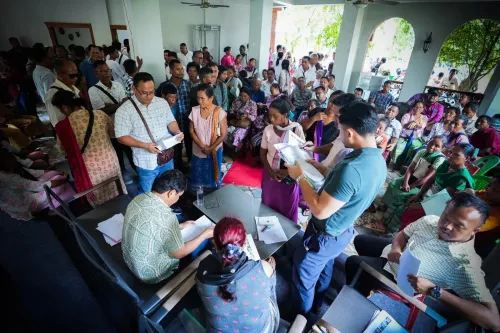
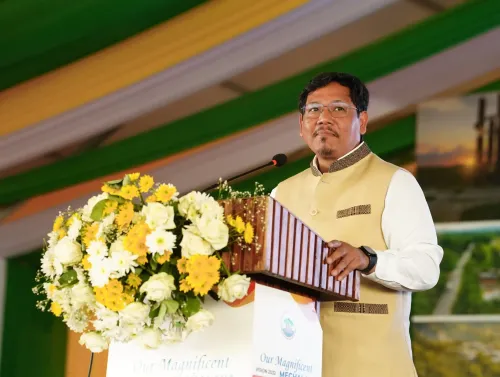
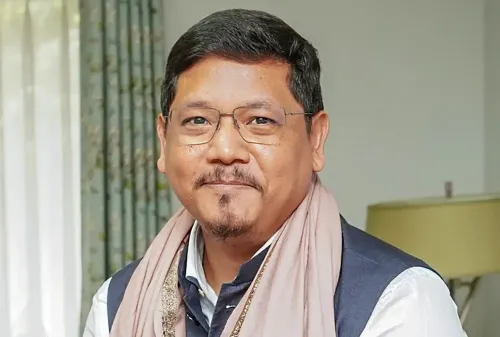
Shillong, Dec 12 (NationPress) The Chief Minister of Meghalaya, Conrad K. Sangma, revealed on Friday the transfer of land pattas via long-term lease agreements to residents of eight neighborhoods in Tura. This pivotal move aims to address land conflicts that have plagued the area for years between the public and the General Administration Department (GAD).
These disputes originated from continuous encroachments on government properties and office spaces in Tura, resulting in numerous court battles, eviction operations, and ongoing law-and-order issues.
CM Sangma stated that the choice to provide structured long-term leases followed careful evaluation and was inspired by a successful initiative in Williamnagar implemented two to three years ago.
"For many years, various government properties and office spaces have been encroached upon, leading to legal complications and social issues. By applying the Williamnagar model, we opted to resolve these matters through long-term lease agreements," CM Sangma told the media after the pattas were distributed.
Under this new framework, the land will remain classified as government revenue land, maintaining full ownership with the state.
However, families currently residing on these properties will be granted leases based on clear and transparent criteria, ensuring both legal clarity and security.
CM Sangma expressed that this approach balances public welfare and administrative duties while minimizing future disputes.
"Our goal is to provide clarity and security for both the government and the public. The lease pattas guarantee that residents have recognized tenure while the state continues to hold ownership, facilitating more predictable future development and planning," he added.
The Chief Minister mentioned that the first phase encompasses only those localities that willingly opted to engage in the process.
In the last two years, these areas have undergone comprehensive surveys, drone mapping, digital land evaluations, and public consultations to ensure a fair and well-documented settlement.
CM Sangma emphasized that no locality would be compelled to join the scheme, indicating that areas not yet participating will be addressed in a second phase once a consensus is formed.
"This is a voluntary and consultative initiative. No area will be forced to engage," he stated.
Describing the initiative as a "significant advancement" towards organized urban development, the Chief Minister affirmed that this regularization would enable systematic growth throughout Tura and alleviate long-standing administrative tensions between the government and residents.
Point of View
This initiative by the Meghalaya government reflects a crucial effort to resolve long-standing land disputes. The balance between public welfare and governmental authority is essential in fostering trust and cooperation between residents and authorities. Such proactive measures should be recognized as steps towards sustainable urban development, paving the way for improved governance and community relations.
NationPress
23 Sept 2026
Frequently Asked Questions
What is the purpose of the land pattas?
The land pattas are intended to provide legal clarity and security for residents living on government land, while ensuring the state retains ownership.
How many localities are affected by this initiative?
The initiative initially covers eight localities in Tura.
Will residents be forced into the lease agreements?
No, participation in the scheme is entirely voluntary.