Lalan Singh hits back at Congress over Election Commission row
Synopsis
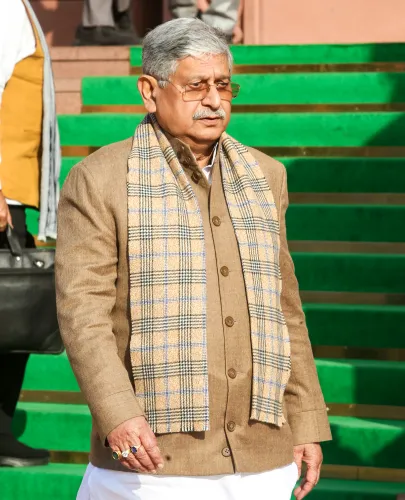
Union Minister Lalan Singh on 25 September 2026 accused Congress of 'creating a ruckus' over a media report on the Election Commission, saying the party should examine its own electoral defeats and has no genuine issue against PM Modi.
Key Takeaways
Lalan Singh (Union Minister, JD(U)) hit back at Congress on 25 September 2026 over a media report concerning the Election Commission of India .
He accused Congress of making 'a ruckus across the country' without examining the real reasons for its own defeats.
He stated that 'attacking constitutional institutions has been a tradition of the Congress party.' He argued Congress has 'no issue' against Prime Minister Narendra Modi , framing the controversy as purely tactical opposition.
The exchange reflects a recurring BJP-NDA pattern of countering election-related criticism by questioning the opposition's motives rather than engaging on specifics.
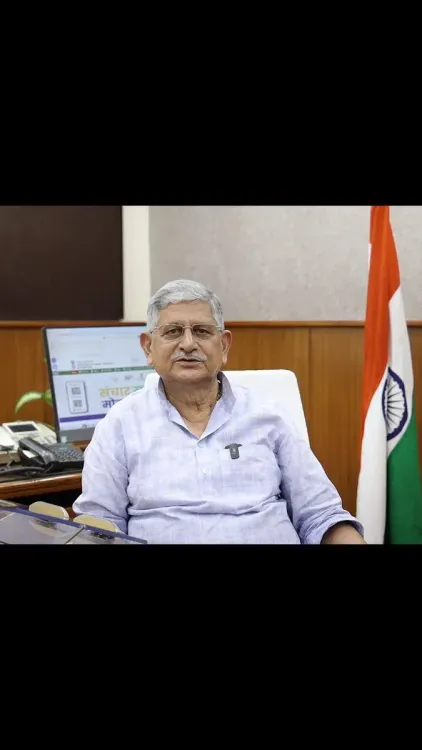
A media report about the Election Commission of India has ignited a fresh political firefight — and Union Panchayati Raj and Fisheries Minister Rajiv Ranjan Singh, the senior Janata Dal (United) leader popularly known as Lalan Singh, moved fast on Friday, 25 September 2026, to put the ruling coalition's counter-argument on record.
Posting in Hindi on X, the minister said Congress was 'creating a ruckus across the country' — 'पूरे देश में हो हल्ला मचा रही है' — over the report, and turned the charge squarely back on the opposition. 'Congress should review the real reasons for its own defeat,' he wrote, before adding the sharper line: 'Attacking constitutional institutions has been a tradition of the Congress party.'
The constitutional-institution charge and its political weight
The accusation that Congress undermines independent bodies is not new — it has been a recurring weapon in BJP-NDA messaging across multiple election cycles. What gives the charge fresh traction here is that Lalan Singh, a non-BJP partner leading JD(U), is the one delivering it, signalling unity across the ruling alliance on the pushback.
The Election Commission of India is a constitutionally mandated body under Article 324, charged with the superintendence, direction, and control of all elections. Criticism of its conduct — from any party — carries instant constitutional sensitivity, which is precisely why such exchanges rarely stay confined to social media.
Congress vs the Election Commission: a longer pattern
Opposition parties, including Congress, have periodically raised concerns about the Commission's independence, particularly after electoral setbacks. The ruling alliance's standard response has been to frame that criticism as institutional sabotage rather than legitimate oversight. Lalan Singh's post fits squarely into that frame — and his closing line sharpens it further: 'Congress has no issue against Prime Minister Narendra Modi.'
That framing is deliberate. It positions every Congress move — from demanding probe reports to questioning poll bodies — as tactical noise rather than substantive opposition.
Whether Congress responds formally, and whether the Election Commission itself addresses the referenced report, will determine how long this particular flashpoint burns.
Point of View
Underlining the NDA's internal coordination on messaging. The dual charge — that Congress attacks institutions and lacks a genuine political agenda — is a well-tested deflection that shifts the debate from the substance of the media report to the credibility of the critic. This pattern tends to succeed when the opposition cannot produce a unified, factual counter-narrative quickly. The absence of a named, specific report in the post also gives the ruling alliance rhetorical room: Congress is forced to either prove the report's veracity in public or concede the framing.
NationPress
25 Sept 2026
Frequently Asked Questions
What did Lalan Singh say about Congress and the Election Commission?
Lalan Singh said Congress was creating a nationwide uproar over a media report about the Election Commission, accused the party of making a tradition of attacking constitutional institutions, and argued it should instead examine why it keeps losing elections.
What is the Election Commission of India?
The Election Commission of India is a constitutional body established under Article 324, responsible for superintendence, direction, and control of elections to Parliament and state legislatures.
Why does Congress keep questioning the Election Commission?
Congress and other opposition parties have periodically raised concerns about the Election Commission's independence, particularly following electoral setbacks. The ruling alliance frames such criticism as attacks on constitutional institutions.
What did Lalan Singh say about PM Modi?
Lalan Singh stated that Congress has no genuine issue against Prime Minister Narendra Modi, suggesting the party's criticism of constitutional bodies is a substitute for a credible political agenda.