Lalan Singh Slams Opposition for Fleeing Parliament Debate
Synopsis
Union Minister Lalan Singh on 23 July 2026 accused the opposition of hypocrisy, saying it originally demanded debate in Parliament but is now fleeing discussion and imposing fresh conditions, calling the conduct 'entirely irresponsible' during the ongoing session.
Key Takeaways
Lalan Singh accused the opposition on 23 July 2026 of being 'entirely irresponsible' for avoiding Parliamentary debate.
He said the opposition originally made debate its 'singular demand' but is now attaching new conditions to participation.
The government, Singh stated, had 'clearly' expressed readiness for discussion from the outset.
He questioned whether Parliamentary discussion can legitimately be held hostage to preconditions.
The post was tagged #ParliamentSession and #Opposition , signalling a deliberate public-messaging effort by the ruling coalition.
The standoff follows a recurring pattern of government-opposition deadlocks documented across multiple Lok Sabha terms since 2009 .
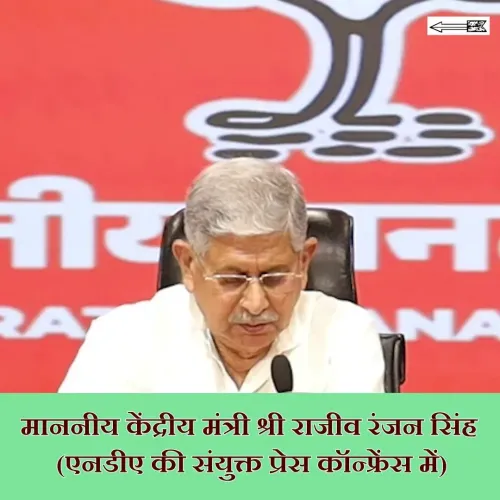
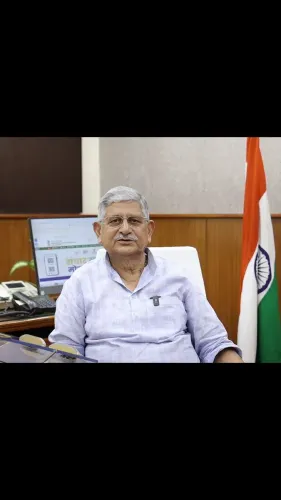
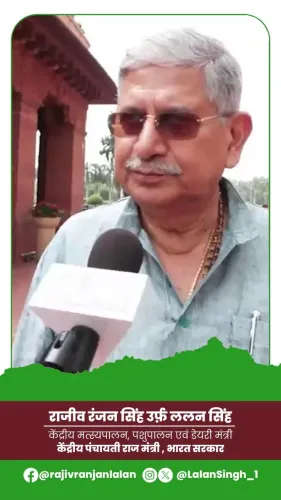
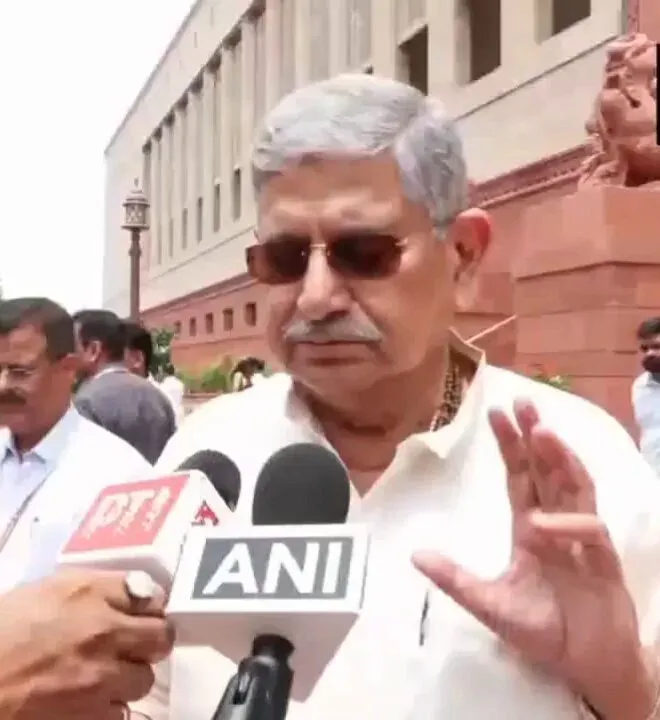
Union Panchayati Raj and Fisheries Minister Rajiv Ranjan Singh, popularly known as Lalan Singh, on Thursday, 23 July 2026, accused the opposition of behaving irresponsibly by avoiding substantive discussion in Parliament after having originally demanded it.
Context
In a pointed post on X, the senior Janata Dal (United) leader charged that the opposition's conduct was 'entirely irresponsible' (puri tarah se gair-zimmedarana). He argued that opposition parties had initially made debate their singular demand, only to retreat from it once the government signalled its readiness to engage.
Singh wrote: 'The opposition's behaviour is completely irresponsible. This is because the opposition does not actually want to discuss any issue. They feel that if a discussion happens, their cover will be blown.'
Policy Backdrop
The exchange reflects a well-documented pattern in Indian parliamentary history. Since at least the 15th Lok Sabha (2009–2014), opposition parties have repeatedly conditioned their participation in debates on preconditions such as demands for joint parliamentary committees, ministerial statements, or specific agenda changes — a dynamic that has recurred across governments of different political hues.
Ruling coalitions, in turn, have routinely declared themselves ready for discussion while pointing to opposition preconditions as the reason for deadlock. Singh's post fits squarely within this structural feature of India's adversarial legislative process.
He stated: 'The government clearly said it is ready for discussion, but now the opposition itself is running away from discussion and putting forward new conditions one after another. After all, does discussion in the House happen on the basis of conditions?'
Stakeholders and Impact
The immediate stakeholders are opposition MPs across parties in both the Lok Sabha and Rajya Sabha, whose legislative leverage depends significantly on their ability to force or withhold debate. When sessions are disrupted, it is ordinary legislative business — bills, budget discussions, question hours — that is deferred, affecting the broader public interest.
For the ruling National Democratic Alliance, projecting the government as willing to debate while framing the opposition as obstructionist serves a clear political purpose ahead of any potential public scrutiny of policy decisions. Singh's post, tagged #ParliamentSession and #Opposition, appears calibrated to shape that narrative in the public domain.
What's Next
Attention will now turn to whether the Lok Sabha Speaker or Rajya Sabha Chairman convenes all-party meetings to break the impasse, a mechanism that has historically been used to restore order during prolonged disruptions. The trajectory of the current session will depend on whether opposition parties choose to return to the floor on terms acceptable to the Chair, or persist with their stated preconditions.
If the deadlock continues, key legislative business scheduled for the Monsoon Session 2026 could face delays, with both sides likely to intensify their public messaging to hold the other accountable in the court of public opinion.
Point of View
Making any precondition look like an excuse rather than a principled stand. This fits a broader arc in which the NDA has consistently sought to project legislative disruptions as opposition-manufactured rather than government-driven. The real test is whether the Speaker's office steps in with a structured debate format that removes the pretext for continued stonewalling on either side.
NationPress
22 Oct 2026
Frequently Asked Questions
What did Lalan Singh say about the opposition in Parliament?
Lalan Singh said the opposition's behaviour is 'entirely irresponsible' because, despite originally demanding debate, it is now avoiding discussion and attaching new conditions to its participation in Parliamentary proceedings.
Why is Parliament session disrupted in July 2026?
According to Lalan Singh, the disruption stems from the opposition imposing fresh preconditions on debate after the government had already agreed to hold discussions, though the specific issues under contention have not been officially confirmed.
What is the government's position on Parliamentary debate?
The government, as stated by Minister Lalan Singh, has clearly expressed its readiness for discussion and argues that Parliamentary debate cannot be conducted on the basis of conditions set by the opposition.
Who is Lalan Singh and why does his statement matter?
Lalan Singh is the popular name for Rajiv Ranjan Singh , Union Minister of Panchayati Raj, Fisheries, Animal Husbandry and Dairying and a senior Janata Dal (United) leader. As a key NDA ally, his public statements carry weight in framing the ruling coalition's legislative strategy.
Has this kind of Parliament deadlock happened before in India?
Yes. Government-opposition standoffs over debate conditions have been documented since at least the 15th Lok Sabha (2009–2014) and recur across governments, reflecting structural incentives in India's adversarial legislative process.