Lalan Singh Reviews Sikkim Fisheries, Siri Cattle Push
Synopsis
Union Minister Rajiv Ranjan Singh visited Sikkim on 2 November 2026, inspecting a wellness sub-centre, viewing a Siri cattle and local products exhibition, and distributing fish feed to cooperative members at the Mangshila live fish vending centre under the PMMSY framework.
Key Takeaways
Lalan Singh visited the Ramthang PHSC and Wellness Centre in Sikkim on 2 November 2026 .
He viewed an exhibition of Siri cattle and local products, highlighting central support for indigenous Himalayan breeds.
At the Mangshila Live Fish Vending Centre , he interacted with members of a fisheries cooperative society.
Fish feed was distributed directly to fish farmers affiliated with the cooperative.
The visit reflects the ministry's convergence approach — linking Panchayati Raj institutions with fisheries and animal husbandry schemes.
The Pradhan Mantri Matsya Sampada Yojana (2020) funds live fish vending centres and cooperative input support in states like Sikkim.
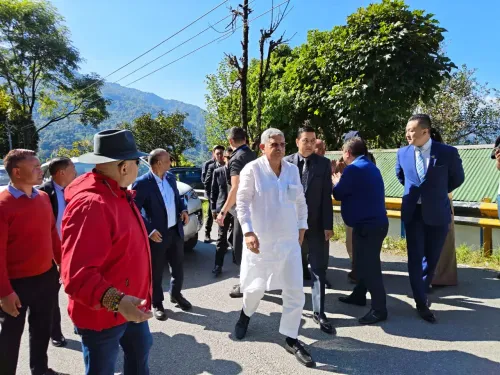
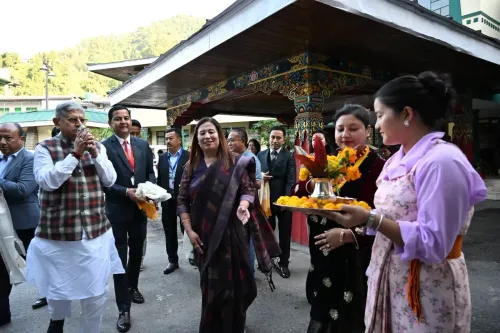
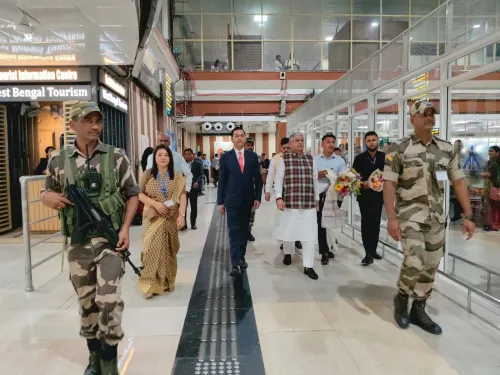
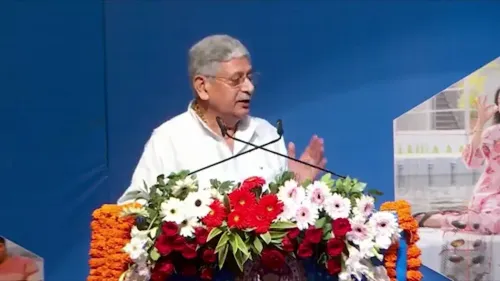
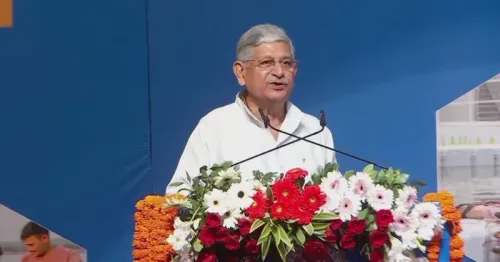
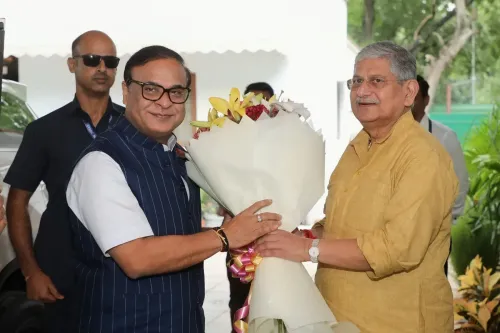
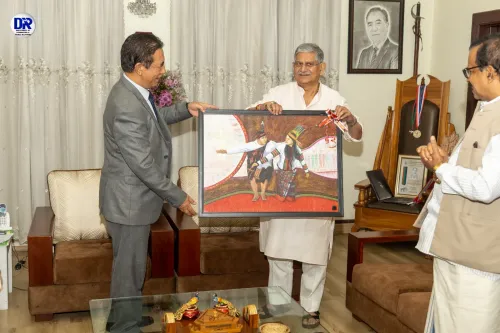
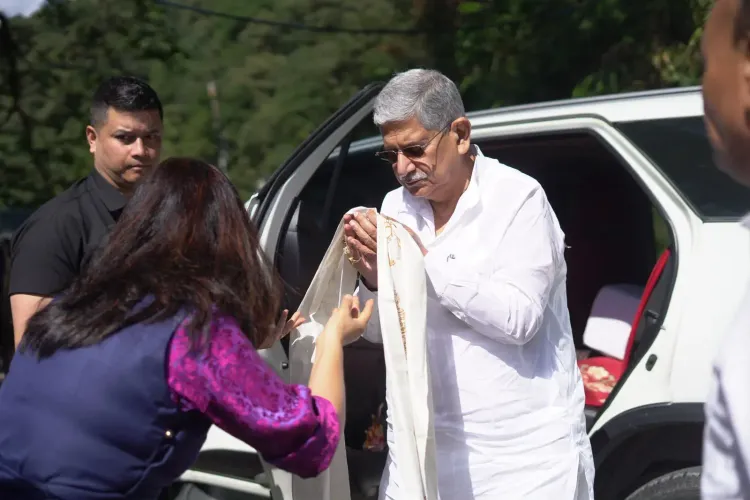
High in the Himalayas, Union Panchayati Raj and Fisheries Minister Rajiv Ranjan Singh took his ministry's agenda directly to ground level on Monday, 2 November 2026 — visiting a primary health and wellness sub-centre, inspecting an exhibition of indigenous Siri cattle and local products, and distributing fish feed to cooperative members at a live fish vending centre in Sikkim.
Posting on X, the minister — widely known as Lalan Singh — described his itinerary: a visit to the Ramthang Primary Health and Sub-Centre (PHSC) and Wellness Centre, followed by an interaction with members of a fisheries cooperative society at the Mangshila Live Fish Vending Centre, where fish feed was distributed to fish farmers affiliated with the cooperative.Siri cattle and the case for indigenous breeds
The Siri is a compact, hardy breed native to the Himalayan foothills of Sikkim and parts of Darjeeling — resilient in terrain that would challenge most commercial cattle. The exhibition of Siri cows alongside local products is in keeping with central livestock missions that have, since the early 2010s, worked to promote indigenous breeds in hilly northeastern states. The National Programme for Dairy Development and allied livestock schemes have channelled support specifically to preserve and scale up such breeds, which are better suited to local agro-climatic conditions than exotic varieties.
Mangshila's live fish vending centre and the PMMSY pipeline
The Pradhan Mantri Matsya Sampada Yojana (PMMSY), launched in 2020, is the backbone of India's fisheries modernisation push — funding cold-chain infrastructure, vending centres, and input support to cooperatives. Live fish vending centres like the one at Mangshila are a direct output of that scheme, designed to cut post-harvest losses and give small producers a reliable, hygienic retail channel. In a landlocked Himalayan state like Sikkim, where logistics are inherently difficult, cooperative structures do much of the heavy lifting — aggregating supply, sharing inputs, and absorbing market risk that individual farmers cannot.
Distributing fish feed directly to cooperative members during such visits is a deliberate signal: that central support is arriving at the last mile, not stopping at the state capital. It also reinforces the convergence logic that underpins the ministry's approach — tying Panchayati Raj institutions to livelihood schemes in a single administrative frame.
Northeast outreach as a governance template
The Northeast has become a recurring stop for central ministers reviewing scheme delivery — partly because the region's geography makes on-ground verification harder and partly because cooperative-led models in states like Sikkim have emerged as genuine templates for hilly terrain. The combination of a wellness sub-centre visit and a fisheries cooperative interaction in a single day reflects the ministry's stated goal of demonstrating convergence: health infrastructure, animal husbandry, and fisheries aligned under one administrative visit.
With the next budget session approaching, utilisation rates at PMMSY-funded vending centres in Himalayan states are likely to attract parliamentary scrutiny — making ministerial ground visits both a policy check and a political statement.
Sikkim's fish farmers now have feed in hand and a minister's attention on record. Whether the infrastructure behind them scales fast enough is the question the next audit will have to answer.
Point of View
But it also signals a substantive push to demonstrate last-mile delivery under PMMSY ahead of a budget cycle. By combining a health sub-centre stop with a fisheries cooperative interaction, the ministry is reinforcing its convergence thesis — that Panchayati Raj institutions and livelihood schemes can be made to work in tandem even in logistically hostile terrain. For a senior JD(U) minister whose base is Bihar, sustained engagement with the Northeast also carries political arithmetic: coalition goodwill in a region where the NDA has invested heavily. The real test will come when utilisation data from vending centres like Mangshila land before a parliamentary committee.
NationPress
2 Nov 2026
Frequently Asked Questions
What is the Pradhan Mantri Matsya Sampada Yojana?
The Pradhan Mantri Matsya Sampada Yojana (PMMSY) is a central government scheme launched in 2020 to modernise India's fisheries sector — funding infrastructure such as live fish vending centres, cold chains, and input support including fish feed to cooperatives.
Why did Lalan Singh visit Sikkim?
Union Minister Lalan Singh visited Sikkim on 2 November 2026 to inspect a primary health sub-centre, view an exhibition of indigenous Siri cattle and local products, and interact with fisheries cooperative members at the Mangshila live fish vending centre, where he also distributed fish feed.
What is a live fish vending centre?
A live fish vending centre is a PMMSY-funded facility that provides a hygienic, organised retail channel for fresh fish, reducing post-harvest losses and giving small producers direct market access — particularly important in landlocked states like Sikkim.
What is the Siri cattle breed?
Siri is an indigenous cattle breed native to the Himalayan foothills of Sikkim and parts of Darjeeling, known for its hardiness in high-altitude terrain. Central livestock missions have promoted the breed as part of efforts to support indigenous varieties suited to northeastern agro-climatic conditions.
Which ministry does Lalan Singh head?
Rajiv Ranjan Singh, popularly known as Lalan Singh, is the Union Minister for Panchayati Raj, Fisheries, Animal Husbandry and Dairying — a senior Janata Dal (United) leader from Bihar.