Lateef Bhat killed in Kashmir encounter, crippling Lashkar's strike network
Synopsis
A year-long hunt for Lateef Bhat — the Lashkar-linked militant who evaded detection by hiding among civilians rather than forests — ended on 18 November when security forces cornered and killed him in Kashmir. His elimination dismantles a key node in Lashkar's painstakingly rebuilt local network, arriving at a moment when the outfit was already reeling from losses after Article 370's abrogation and Operation Sindoor.
Key Takeaways
Lateef Bhat , a high-value Lashkar-e-Taiba -linked terrorist, was killed in an encounter in Kashmir on 18 November 2026 .
Bhat was responsible for multiple attacks, including the killing of head constable Ashiq Hussain in Anantnag on 22 July and the deaths of two migrant workers in Kulgam on 31 July .
He operated under The Resistance Front (TRF) , a proxy of LeT , and was in regular contact with Pakistan-based handler Sajjad Gul .
His unusual tactic of blending into civilian areas after attacks made him exceptionally difficult to track over nearly a year.
His killing reportedly deals a major blow to Lashkar's efforts to rebuild its local strike network in the Valley following losses after Article 370 's abrogation and Operation Sindoor .
Pakistan-based handlers had reportedly used Bhat as a motivational model for new recruits, likening his profile to that of Burhan Wani .
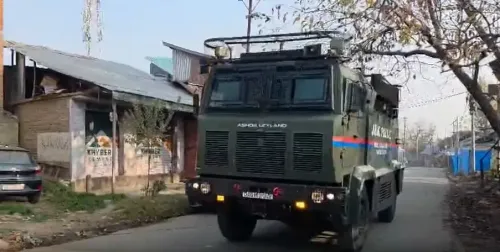
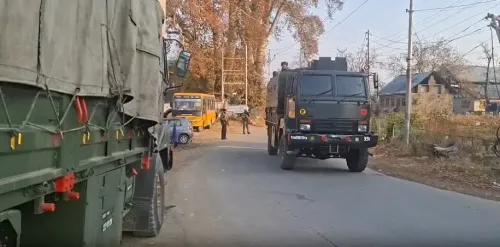
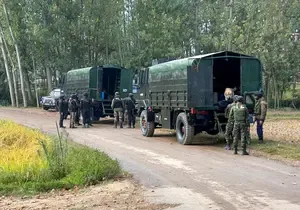
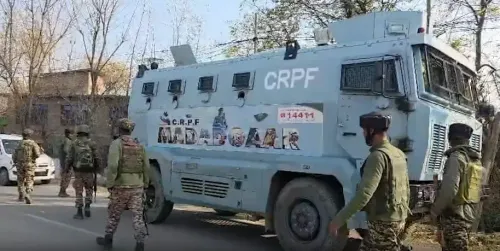
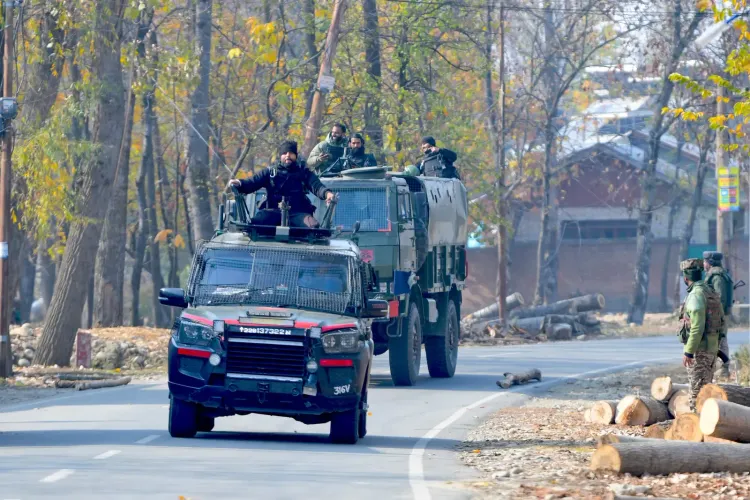
Security forces in Jammu and Kashmir on Wednesday, 18 November 2026, killed Lateef Bhat, one of the most wanted terrorists operating in the Valley, ending a manhunt that had stretched nearly a year. Bhat, linked to multiple attacks including the recent Kulgam assault in which three CRPF personnel were injured, was cornered in an encounter and shot dead after he took refuge inside a mosque and opened fire on security personnel.
How the Operation Unfolded
After being surrounded by security forces, Bhat refused to surrender and instead opened fire from inside the mosque, triggering a retaliatory response in which he was killed. Officials described it as a textbook counter-terror operation, made more complex by Bhat's unusual evasion strategy.
Unlike most militants who retreat into forests after an attack, Bhat reportedly returned to civilian areas and blended into local communities — a tactic that made him exceptionally difficult to track. 'After carrying out an attack, Bhat would not necessarily take refuge in the forests. Instead, he would return to civilian areas and mingle with the local people. This made it difficult for security agencies to track him, as nobody would suspect that a terrorist was moving freely among the public,' an official said.
Who Was Lateef Bhat
Bhat hailed from Khrewan Shader village in Kulgam district and studied at the Government Higher Secondary School in Ashumji. He later enrolled in the Government Degree College for a bachelor's degree but dropped out before completing the course and worked briefly as a glazier before leaving home in early 2025.
He went missing in November 2025, after which the Kashmir Revolutionary Army (KRA) — a proxy of Lashkar-e-Taiba (LeT) — announced his recruitment. Officials say he had drawn inspiration from Zakir Ahmad Ani, a Lashkar operative, and upon recruitment was brought into contact with Sajjad Gul, a Pakistan-based handler.
An Intelligence Bureau official described Bhat's elimination as one of the most significant counter-terror operations in the Valley in recent times. 'He was a high-value target capable of carrying out attacks with ease. He quickly blended into the Lashkar-e-Taiba ecosystem, while continuing to operate under the banner of the outfit's proxy, The Resistance Front (TRF),' the official said.
His Attack Record and Strategic Role
Bhat's operational trail included several targeted strikes. On 22 July this year in Anantnag, he killed head constable Ashiq Hussain. On 31 July, two migrant workers were attacked at a block kiln in Kilam village, Kulgam; both workers later succumbed to their injuries. His final recorded attack was the Kulgam firing in which three CRPF personnel were wounded.
Officials noted that Bhat was ideologically motivated rather than financially driven — a factor that made him more dangerous and harder to compromise. Pakistan-based handlers reportedly cited him as a motivational example during recruitment drives, drawing comparisons to Hizbul Mujahideen commander Burhan Wani, who had attained cult status in the Valley. The speed of his indoctrination, recruitment, and training, according to officials, was itself a marker of his ideological commitment.
Blow to Lashkar's Rebuilding Effort
Bhat's killing comes at a particularly sensitive moment for terror networks in the Valley. Following the abrogation of Article 370 and Operation Sindoor, outfits including Lashkar-e-Taiba (LeT), Jaish-e-Mohammed (JeM), and Hizbul Mujahideen had reportedly suffered major losses and were struggling to rebuild local networks and resume infiltration from launchpads across Pakistan-occupied Kashmir (PoK).
Officials say Bhat had served as a critical stopgap — sustaining Lashkar's operational tempo through a string of small but high-impact attacks while the outfit worked to reconstitute its infrastructure. His elimination, according to security officials, has dealt a significant blow to that effort and also sends a sharp message to the wider terror ecosystem in the region. How quickly LeT can find a comparable asset will be a key intelligence indicator in the weeks ahead.
Point of View
Younger operatives who are harder to profile. The speed of Bhat's own radicalization — from glazier to high-value asset in under a year — is a warning that the pipeline has not dried up, only changed shape.
NationPress
18 Nov 2026
Frequently Asked Questions
Who was Lateef Bhat and why was he considered a high-value target?
Lateef Bhat was a Lashkar-e-Taiba-linked terrorist from Kulgam district in Jammu and Kashmir, wanted in connection with multiple attacks including the killing of a CRPF head constable in Anantnag and the deaths of two migrant workers in Kulgam. Intelligence officials called him a high-value target because of his ability to execute targeted attacks independently while evading detection by blending into civilian populations.
How was Lateef Bhat finally killed?
Security forces cornered Bhat on 18 November 2026 after a manhunt lasting nearly a year. He took refuge inside a mosque and refused to surrender, instead opening fire on security personnel, who responded and killed him in the encounter.
What was Bhat's connection to Lashkar-e-Taiba and The Resistance Front?
Bhat was recruited into Lashkar-e-Taiba's network after going missing in November 2025, with the Kashmir Revolutionary Army (KRA) announcing his joining. He operated publicly under The Resistance Front (TRF), an LeT proxy, while remaining in contact with Pakistan-based handler Sajjad Gul.
Why does Bhat's killing matter for security in Kashmir?
Bhat served as a critical operational asset for Lashkar at a time when the outfit was struggling to rebuild its local network following the abrogation of Article 370 and Operation Sindoor. His elimination removes a key node sustaining Lashkar's attack tempo and reportedly deals a significant blow to the outfit's reconstitution efforts in the Valley.
What attacks was Lateef Bhat responsible for?
Bhat was linked to the killing of head constable Ashiq Hussain in Anantnag on 22 July, the fatal shooting of two migrant workers at a block kiln in Kilam village, Kulgam on 31 July, and a firing incident in Kulgam in which three CRPF personnel were injured — his last known attack before his death.