TRF commander Lateef Bhatt killed in Kulgam: Defence experts call it major success
Synopsis
The last known commander of The Resistance Front in Kashmir, Lateef Bhatt, has been eliminated in Kulgam — a development defence experts are calling the most significant counter-terror success in the Valley in recent memory. The operation has also ignited a political storm, with retired officers pushing back hard against politicians they say are undermining the forces with unfounded allegations.
Key Takeaways
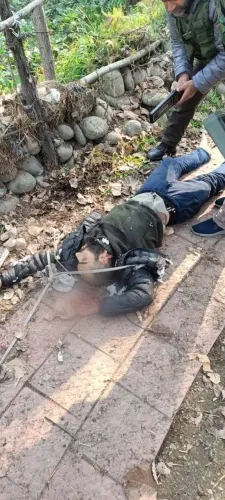
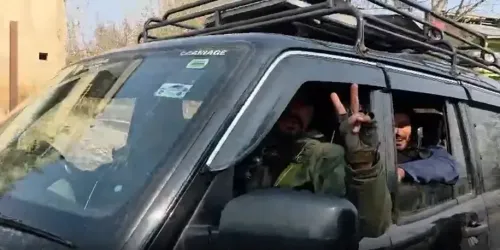
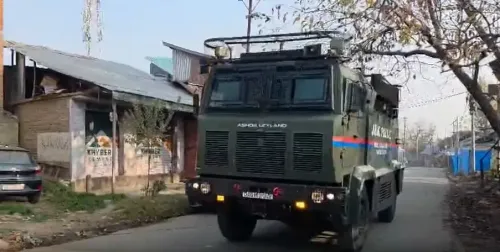
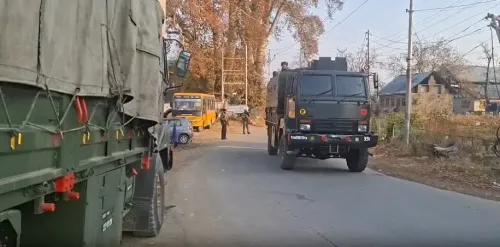
TRF commander Lateef Bhatt was killed in a security operation in Kulgam, Jammu and Kashmir on 18 November 2026 .
Retired Colonel Ajay Raina described Bhatt as the last surviving TRF commander in Kashmir.
Bhatt was allegedly hiding inside a mosque ; security forces offered him a chance to surrender before neutralising him.
Retired Captain Anil Gaur alleged Bhatt had attacked migrant labourers in Kulgam and a CRPF checkpost .
Defence experts sharply criticised politicians — including a former Chief Minister and Congress leader Tariq Hameed Karra — for questioning the forces.
Colonel Raina noted only three militant attacks occurred in Jammu and Kashmir in 2026 , compared to three per week in 2018–2019 .
The elimination of The Resistance Front (TRF) commander Lateef Bhatt in a security operation in Kulgam, Jammu and Kashmir, on 18 November 2026 marks a significant achievement for Indian security forces, according to retired Army officers and defence analysts. Experts praised the operation as a demonstration of continued vigilance while sharply criticising political attempts to cast doubt on the forces.
Who Was Lateef Bhatt
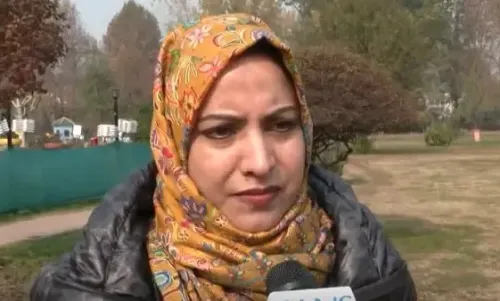
Retired Colonel Ajay Raina described Bhatt as the last surviving commander of the TRF in Kashmir, making his elimination particularly consequential. According to Raina, Bhatt was a carpenter and college dropout who was allegedly honey-trapped before rising through the ranks to lead the proscribed outfit. Retired Captain Anil Gaur added that Bhatt had previously operated as an underground operative, been arrested and jailed, and subsequently took up arms. Gaur alleged Bhatt was involved in firing on migrant labourers in Kulgam and had recently attacked a Central Reserve Police Force (CRPF) checkpost.
How the Operation Unfolded
Bhatt was reportedly hiding inside a mosque when security forces located him. According to Colonel Raina, the forces demonstrated restraint by offering Bhatt an opportunity to surrender, in view of the religious sensitivity of the site. A video reportedly showing an Army officer urging Bhatt to surrender was cited by Captain Gaur as evidence of the forces' commitment to human rights and their effort to avoid unnecessary casualties. Bhatt did not surrender, and was subsequently neutralised.
The Political Controversy
The operation has drawn political reactions that experts found troubling. Colonel Raina referred to remarks by a former Chief Minister and their daughter questioning why Kulgam was under scrutiny, with the former Chief Minister reportedly claiming 'no one is hiding there.' He also addressed a controversy involving a Bharatiya Janata Party (BJP) MLA who allegedly claimed that information about the movement of Special Police Officers (SPOs) had been shared from a mosque — a remark that drew objections for its communal framing. Congress leader Tariq Hameed Karra separately alleged that security forces had killed SPOs, a charge Raina termed 'unacceptable.' He called for action against those spreading false information that could undermine public trust in the armed forces.
Broader Security Picture
Colonel Raina contextualised the operation within a markedly improved security environment in Jammu and Kashmir. 'In 2026, there were only three attacks, compared to 2018–2019, when three attacks used to happen in a single week,' he said. He distinguished between eliminating individual terrorists and dismantling the ideology sustaining militancy, cautioning that the latter 'takes years.' He also warned against what he described as a tendency to sensationalise incidents in the region, arguing that 'Kashmir sells' as a media narrative. Raina confirmed that all militants involved in the August 5 incident had been eliminated in Operation Mahadev and Operation Sindoor.
Call for Public Cooperation
Captain Gaur stressed the importance of community participation in countering terrorism, urging local residents to share information with the Jammu and Kashmir Police about both underground and overground terror operatives. He warned that repeated political statements questioning the forces risk eroding their morale at a critical time. With the TRF's last known commander now eliminated, analysts say the focus will shift to dismantling the outfit's support network and preventing new recruitment.
Point of View
At least in its current form. What is equally notable is the political backlash it has exposed: when a former Chief Minister publicly questions why a district is under security scrutiny and the charge sticks in the news cycle, it signals a troubling normalisation of doubt about institutional credibility. Defence experts are right to flag the morale dimension, but the deeper problem is the absence of a transparent, authoritative post-operation briefing that could pre-empt speculation. The security gains since 2019 are real and measurable, but the narrative battle around each operation remains poorly managed.
NationPress
18 Nov 2026
Frequently Asked Questions
Who was Lateef Bhatt and why does his killing matter?
Lateef Bhatt was the commander of The Resistance Front (TRF), a proscribed militant outfit operating in Kashmir, and was described by retired Colonel Ajay Raina as its last surviving commander in the Valley. His elimination is seen as a significant blow to the TRF's operational structure in Jammu and Kashmir.
Where and how was Lateef Bhatt killed?
Bhatt was killed in a security operation in Kulgam, Jammu and Kashmir, on 18 November 2026. He was reportedly hiding inside a mosque when security forces located him; they offered him an opportunity to surrender before neutralising him.
Why have defence experts criticised politicians over this operation?
Retired officers objected to remarks by a former Chief Minister questioning security activity in Kulgam, and to Congress leader Tariq Hameed Karra's allegation that security forces had killed Special Police Officers. Experts said such statements spread false information and undermine public trust and troop morale.
What was Lateef Bhatt's background before joining militancy?
According to retired Colonel Ajay Raina, Bhatt was a carpenter and college dropout who was allegedly honey-trapped before being recruited into the TRF. Retired Captain Anil Gaur added that Bhatt had previously been arrested and jailed before eventually taking up arms.
How has the security situation in Jammu and Kashmir changed in recent years?
According to retired Colonel Raina, Jammu and Kashmir recorded only three militant attacks in 2026, a sharp decline from 2018–2019 when three attacks would occur in a single week. He attributed the improvement to sustained security force operations and better intelligence inputs.