Lashkar commander Lateef Bhat killed in Kulgam after 8-day manhunt, 600 questioned
Synopsis
An eight-day operation, 600 civilians questioned, and a tense standoff inside a mosque — that is what it took to eliminate Lashkar-e-Taiba commander Lateef Bhat in Kulgam. Officials say the operation has brought active local terrorists in South Kashmir to zero, dismantling the logistical backbone that foreign infiltrators depended on.
Key Takeaways
Lateef Bhat , alias Mohammad Bhat , a top Lashkar-e-Taiba commander, was killed on 18 November in Kulgam, Jammu and Kashmir .
The operation lasted eight days , with security forces questioning around 600 people to trace Bhat's OGW support network.
Bhat was cornered inside a mosque in Kulgam and refused to surrender before being killed in retaliatory fire.
His associate Umar Nisar Dar was killed separately on 16 November .
Officials say the number of active local terrorists in South Kashmir is now zero , dealing a major blow to LeT's local recruitment and logistics network.
Prior to his killing, Bhat had been linked to the murder of head constable Ashiq Hussain , two migrant workers , and the November 11 CRPF checkpoint attack that injured three personnel .
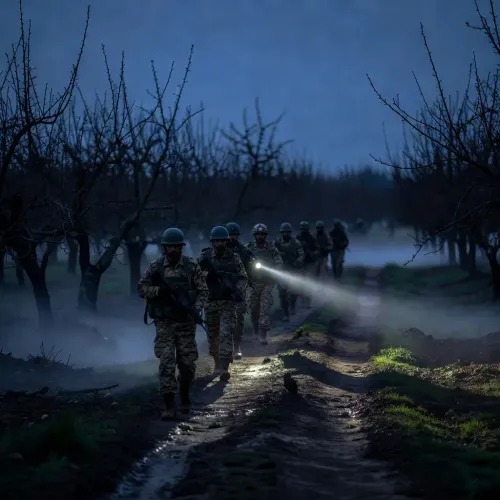
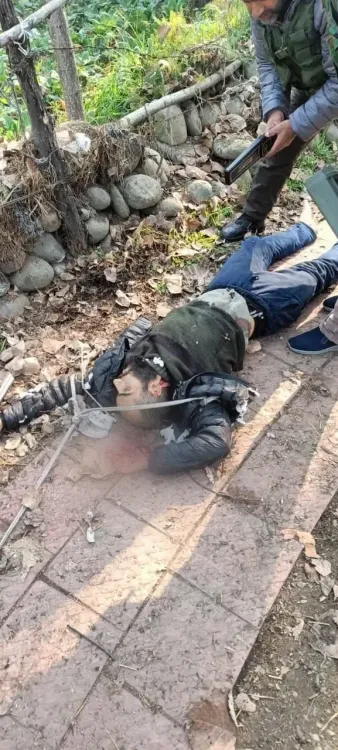
Lateef Bhat, alias Mohammad Bhat, one of Lashkar-e-Taiba's (LeT) most high-profile commanders operating in the Kashmir Valley, was killed on Wednesday, 18 November 2026, in a joint security operation in the Zangulpora/Laru area of Kulgam, Jammu and Kashmir. The operation was the culmination of an eight-day precision manhunt, driven by Grade A actionable intelligence, that saw security forces question around 600 civilians and comb orchards across multiple villages.
How the Operation Unfolded
The hunt for Bhat was triggered by a 11 November attack on a Central Reserve Police Force (CRPF) checkpoint in Kulgam, in which three CRPF personnel were injured. Following the attack, security agencies reviewed surveillance footage from 10 and 11 November, which revealed that Bhat and his associate Umar Nisar Dar had conducted reconnaissance across Mir Bazar, Akhran, Hablish and Kilam ahead of the strike.
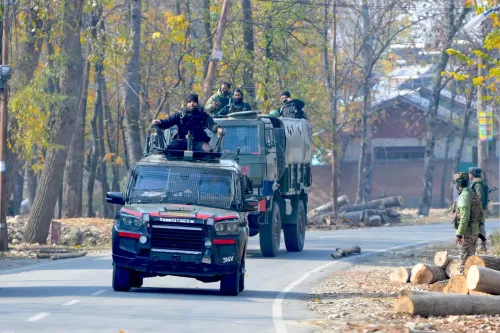
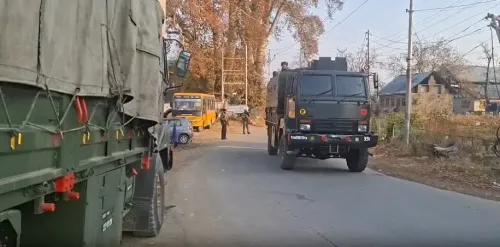
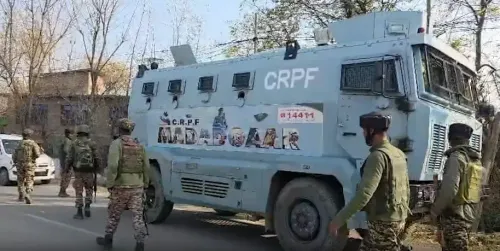
Joint teams of the Indian Army, CRPF, Jammu and Kashmir Police, and the National Investigation Agency (NIA) subsequently cordoned off several villages, established multi-layered checkpoints, and conducted door-to-door searches. Around 600 people were questioned to map the overground worker (OGW) network that had been sheltering and supporting Bhat.
The Final Encounter
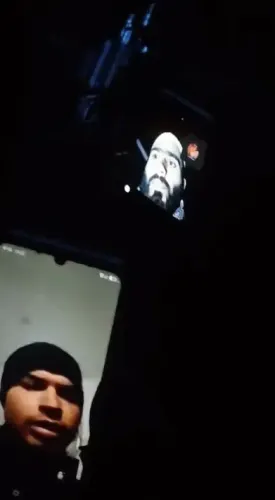
On Wednesday, Bhat was traced to a mosque in Kulgam, where he had taken shelter. Senior security officers attempted to persuade him to surrender through phone and video calls. When officers told him, 'We are with you,' Bhat replied, 'I want to meet Allah.' He refused to surrender, and an exchange of fire broke out, during which he was killed in retaliatory firing by security forces.
Officials said every effort was made to protect the religious structure. 'The security agencies ensured that the mosque remained unharmed and prevented any local unrest or propaganda that could have been triggered by damage to the religious structure,' an official said. Bhat's associate Umar Nisar Dar had been killed earlier on 16 November.
Background: A Trail of Violence
According to officials, Bhat had been linked to the killing of head constable Ashiq Hussain in July and the murder of two migrant workers in the same month, before the November 11 CRPF checkpoint attack. The successive strikes had mounted pressure on security agencies and prompted questions about how such attacks were being executed despite heightened security across the Valley.
An Intelligence Bureau official noted that Bhat had evaded security forces on multiple occasions prior to this operation and was 'gradually emerging as a hero among certain sections.' Officials were determined to prevent that perception from gaining traction, warning that 'such elements cannot be allowed to remain at large for long, as they can become role models for potential recruits in the Valley.'
Strategic Impact on LeT's Local Network
Officials said Bhat's elimination has brought the number of active local terrorists in South Kashmir down to zero. His role had been central to LeT's broader strategy of building a fully local terror network in Kashmir — one that could provide logistical support, safe houses, and local terrain knowledge to foreign operatives infiltrating the Valley from Pakistan.
Notably, Bhat had reportedly been in the process of recruiting locals to rebuild LeT's overground network. The most recent recruit he had reportedly inducted was 10-year-old Umar Nisar Dar — an indication of how far the recruitment effort had descended. With both Bhat and his known associate eliminated, security agencies say they can now focus exclusively on tracking foreign terrorists and their handlers operating from across the border.
Point of View
But the detail that deserves more scrutiny is his reported recruitment of a 10-year-old — a signal of how desperate and deep the radicalisation pipeline has become in parts of South Kashmir. Officials' claim that active local terrorists in the region are now at zero is notable, but such assessments have been made before; the real test is whether the OGW network that sustained Bhat has been genuinely dismantled or merely disrupted. The careful handling of the mosque standoff reflects a security establishment that has learned, perhaps painfully, that tactical wins can be undone by communal flashpoints. How long the 'zero local terrorists' window holds will depend on whether the factors driving recruitment — grievance, ideology, Pakistani handler pressure — are addressed alongside the kinetic campaign.
NationPress
18 Nov 2026
Frequently Asked Questions
Who was Lateef Bhat and why was he significant?
Lateef Bhat, alias Mohammad Bhat, was one of Lashkar-e-Taiba's most high-profile commanders operating in the Kashmir Valley. He was central to LeT's strategy of building a local terror network to support foreign infiltrators, and had been linked to the killing of a CRPF head constable, two migrant workers, and a November 11 attack on a CRPF checkpoint in Kulgam.
How was the Kulgam operation carried out?
Following the November 11 CRPF attack, joint teams of the Indian Army, CRPF, Jammu and Kashmir Police, and NIA analysed surveillance footage, cordoned off multiple villages, and questioned around 600 people over eight days. Bhat was eventually traced to a mosque in Kulgam on November 18, where he was killed after refusing to surrender.
What is the security impact of Bhat's elimination?
Officials say the operation has brought the number of active local terrorists in South Kashmir to zero. Since Pakistani infiltrators rely on local operatives for logistics, terrain navigation, and safe houses, Bhat's killing is expected to severely disrupt LeT's operational capacity in the region.
Why did security forces try to protect the mosque during the encounter?
Senior officials established phone and video contact with Bhat to encourage surrender and avoid damage to the religious structure. Officials said protecting the mosque was essential to prevent communal unrest and counter potential propaganda that could have been triggered by any harm to the site.
What was the significance of Umar Nisar Dar's involvement?
Umar Nisar Dar was Bhat's associate who conducted pre-attack reconnaissance with him and was killed on November 16, two days before Bhat. Officials also noted that Bhat had reportedly recruited a 10-year-old as part of his effort to rebuild LeT's overground network — an indication of the depths of the outfit's local recruitment drive.