Lashkar-e-Taiba finances under strain after key fundraiser Sarwar's death
Synopsis
Lashkar-e-Taiba's annual war chest has reportedly shrunk by up to 85% from its $100 million peak, and the death of its key Punjab fundraiser Chaudhry Muhammad Sarwar — under pressure to rebuild coffers after Operation Sindoor — is the latest sign that India's sustained targeting of terror finances, backed by FATF scrutiny and the 2016 demonetisation shock, is biting deep.
Key Takeaways
Chaudhry Muhammad Sarwar , alias Abu Hashim , a US-designated LeT founding member who ran the outfit's financial wing in Pakistan's Punjab , has died under unexplained circumstances.
LeT's estimated annual turnover has fallen by 75–85% from a reported $100 million around 2010 , according to intelligence officials.
Sarwar's death is the second blow to LeT's financial operations after Javed Khanani died in 2016 ; both men were under severe financial pressure at the time.
FATF scrutiny, asset freezes, and India's November 2016 demonetisation exercise have collectively crippled LeT's fundraising and counterfeiting networks.
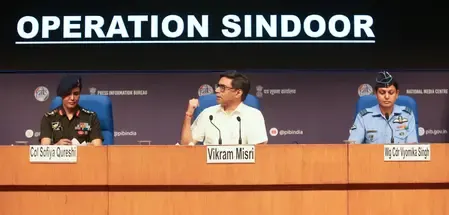
Operation Sindoor destroyed LeT assets including its primary training facility at Muridke ; Pakistan reportedly injected PKR 4 crore to support a post-Sindoor revival.
Internal rifts over finances have forced LeT into a low-cost proxy model, operating largely through The Resistance Front (TRF) .
Lashkar-e-Taiba (LeT), the Pakistan-based terror group responsible for the November 2008 Mumbai attacks, is facing mounting financial pressure following the death of Chaudhry Muhammad Sarwar, alias Abu Hashim — a US-designated founding member who oversaw the outfit's fundraising operations in Pakistan's Punjab province. Intelligence officials say Sarwar's death compounds a sustained squeeze on LeT's financial networks that has been building for years.
Who Was Sarwar and Why His Death Matters
Sarwar headed LeT's financial wing in Punjab, mobilising funds through Pakistan's formal financial system and leading delegations of businessmen to LeT facilities to solicit donations. Counterterrorism experts describe his death as the second significant blow to the outfit's financial operations after the 2016 death of Javed Khanani, who had headed the organisation's counterfeiting wing. Both men were playing central roles in the group's finances at the time of their respective deaths, according to analysts.
Pakistani agencies have not officially disclosed the cause of Sarwar's death. According to intelligence officials, he — like Khanani before him — was under severe pressure to raise funds, particularly as LeT sought to recover losses sustained during Operation Sindoor, which reportedly destroyed men, assets, and the outfit's primary training facility at Muridke.
A Financial Freefall: From $100 Million to a Fraction
The scale of LeT's financial deterioration is significant. Around 2010, the outfit reportedly operated with an annual turnover of approximately $100 million, of which $5.2 million was earmarked for military operations. According to intelligence officials, current estimates suggest that annual turnover has fallen by 75 to 85 per cent, leaving the organisation under considerable strain.
An Intelligence Bureau official noted that several compounding factors have damaged the outfit's financial health. 'Several factors have damaged the financial health of this outfit, putting considerable pressure on its top operatives, particularly those handling finances,' the official said.
FATF Scrutiny, Demonetisation, and the Proxy Shift
Pressure on LeT's finances intensified from 2016 onwards, when Indian agencies stepped up operations against both its ground networks and financial channels. Dossiers detailing the activities of the outfit and its financial proxy, Jamaat-ud-Dawah (JuD), were submitted to international watchdogs including the Financial Action Task Force (FATF). The subsequent scrutiny led to asset freezes and significantly restricted the group's ability to raise funds through established routes.
India's November 2016 demonetisation exercise dealt a separate blow, reportedly causing the near-collapse of LeT's counterfeit currency network and losses worth millions. 'Although the outfit has managed to revive a part of the trade, it is nowhere near the levels it had achieved before demonetisation in 2016,' an official said. Khanani, who led the counterfeiting wing, reportedly came under immense pressure following that decision — a dynamic officials say may have contributed to his death.
Unable to sustain large-scale financial operations, LeT pivoted to a low-cost proxy model, channelling activity through The Resistance Front (TRF) to minimise financial exposure and operational risk.
Internal Rifts and Pakistan's Financial Injection
The financial squeeze has reportedly triggered internal friction within the organisation. According to intelligence officials, rifts have emerged between ground operatives and the top leadership over resource allocation — tensions that have forced a shift toward lower-cost operations and generated resentment among field-level cadres.
In the aftermath of Operation Sindoor, Islamabad reportedly decided to inject PKR 4 crore into the group to support a resurgence. Intelligence agencies have also reported several meetings in recent months between members of LeT's financial wings and the Pakistani establishment. The Narendra Modi government has consistently maintained a policy of targeting terror financing alongside ground operations, a stance officials say has materially increased pressure on groups like LeT.
What Comes Next
With two key financial figures now dead within a decade, and internal cohesion under strain, analysts say LeT faces a structural challenge in rebuilding its fundraising infrastructure. The organisation's ability to recover will likely hinge on the extent of direct Pakistani state support and whether international scrutiny of its proxy networks intensifies further.
Point of View
Multi-vector financial strangulation that India and international watchdogs have quietly executed over years. What mainstream coverage often misses is how FATF grey-listing, demonetisation, and post-Operation Sindoor military pressure have converged into a compound crisis for the outfit. The pivot to TRF and low-cost operations is not a strategic evolution — it is an organisation rationing a shrinking budget. The real test now is whether Pakistan's reported PKR 4 crore injection marks a temporary stopgap or a deeper recommitment to rebuilding LeT, and whether India and its partners can pre-empt that reconstruction before it takes hold.
NationPress
19 Oct 2026
Frequently Asked Questions
Who was Chaudhry Muhammad Sarwar and what was his role in Lashkar-e-Taiba?
Chaudhry Muhammad Sarwar, alias Abu Hashim, was a US-designated founding member of Lashkar-e-Taiba who oversaw the outfit's financial wing in Pakistan's Punjab province. He mobilised funds through Pakistan's formal banking system and led delegations of businessmen to LeT facilities to solicit donations.
How significant is Sarwar's death for LeT's finances?
Counterterrorism experts describe it as the second major blow to LeT's financial operations in under a decade, following the 2016 death of Javed Khanani. Both men were reportedly under severe pressure to raise funds at the time of their deaths, pointing to a structural vulnerability at the top of the outfit's financial leadership.
By how much have Lashkar-e-Taiba's finances shrunk?
According to intelligence officials, LeT's annual turnover has fallen by an estimated 75 to 85 per cent from a reported $100 million around 2010. Of that earlier figure, $5.2 million was earmarked for military operations; current capacity is described as leaving the organisation under considerable strain.
What role did FATF and demonetisation play in weakening LeT?
From 2016, Indian agencies submitted detailed dossiers on LeT and its proxy Jamaat-ud-Dawah to international watchdogs including FATF, leading to asset freezes and restrictions on established fundraising channels. India's November 2016 demonetisation separately caused the near-collapse of LeT's counterfeit currency network, with losses reportedly worth millions.
What is The Resistance Front and why did LeT create it?
The Resistance Front (TRF) is a low-cost proxy created by LeT to reduce its financial exposure as mainstream fundraising channels came under increasing international scrutiny. Unable to sustain large-scale operations, LeT shifted to TRF as a way to continue activities while minimising traceable financial risk.