LG Manoj Sinha Launches Major Anti-Drug Drive in J&K's Samba
Synopsis
LG Manoj Sinha personally led J&K's 100-day Drug-Free campaign in Samba on April 25, linking the drug crisis directly to a neighbouring country's narco-terror strategy. With 85 days left, he set hard weekly targets — from seizures to rehabilitations — calling it a people's revolution, not a government order.
Key Takeaways
LG Manoj Sinha personally led the 100-day Drug-Free J&K (Nasha Mukt Jammu Kashmir Abhiyaan) rally in Samba district on April 25, 2025 .
The campaign has 85 days remaining , with strict weekly accountability targets set for Deputy Commissioners, SSPs, and enforcement agencies.
LG Sinha directly accused a neighbouring country (Pakistan) of engineering J&K's drug crisis to fund terrorism and destabilise society.
Every panchayat must be declared drug-free, and every police station must be cleared of drug traffickers under the campaign mandate.
The Samba Cricket Premier League was launched under the anti-drug mission to engage youth through sport.
A bike rally was also flagged off in Samba as part of the community awareness drive during the event.
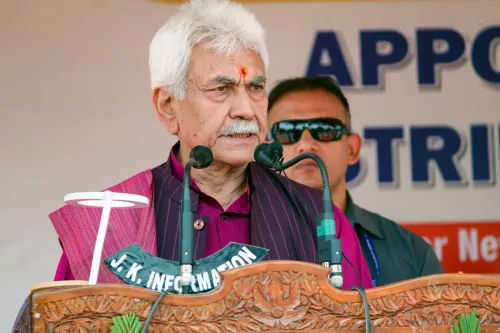
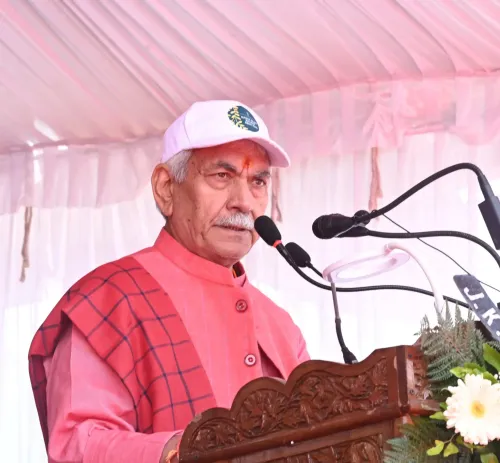
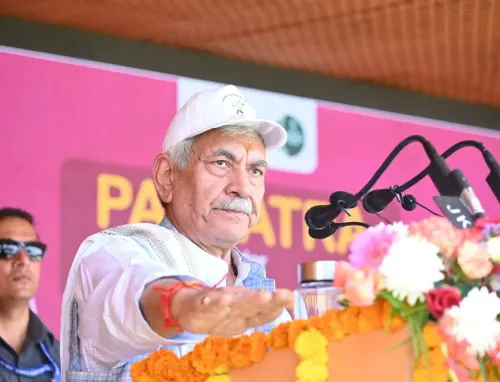
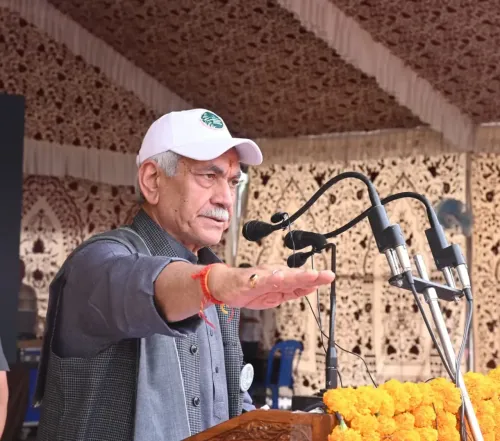
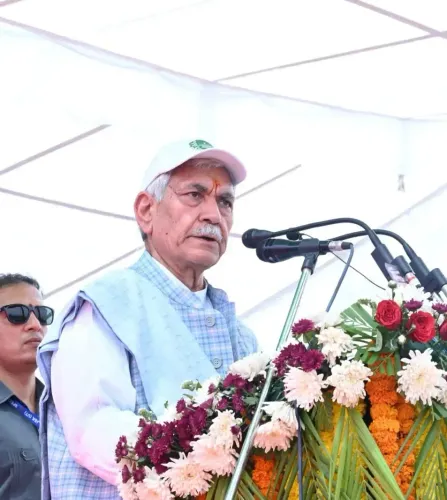
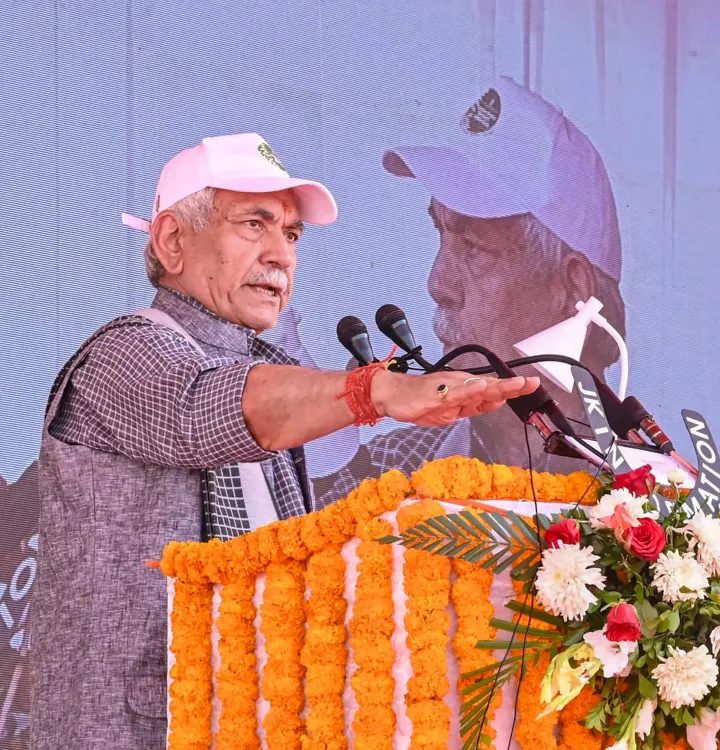
Jammu, April 25: Jammu and Kashmir Lieutenant Governor Manoj Sinha on Saturday took personal charge of the 100-day 'Drug-Free J&K' campaign in Samba district, addressing a massive public gathering and flagging off a bike rally as part of an intensified statewide crackdown on drug networks. The initiative represents one of the most ambitious anti-narcotics mobilisations in the Union Territory's recent history, combining law enforcement with grassroots community outreach.
LG Sinha's Strong Warning to Drug Networks
Lieutenant Governor Sinha minced no words while addressing the crowd in Samba, declaring that the administration would "strike hard against drug networks." He emphasised that legal action alone cannot eradicate the menace and that societal participation is equally critical.
"We are building a Jammu and Kashmir where drugs have no place. This fight must be won within society through awareness, cooperation and collective effort," the L-G stated firmly.
He stressed that the 100-day movement would "inspire future generations and stand as proof that when people rise together, they can change history."
Measurable Weekly Targets Set for 85 Remaining Days
LG Sinha outlined a clear accountability framework for the remaining 85 days of the campaign, insisting that success would be measured not by rallies or slogans but by concrete outcomes on the ground.
He specified that weekly benchmarks must include: number of people rehabilitated, smugglers prosecuted, fake rehabilitation centres shut down, cases registered, contraband seized, and women's committees formed across panchayats and city wards.
"Every panchayat must be drug-free, and every police station must be free of drug traffickers," the Lieutenant Governor declared, setting a zero-tolerance standard for local governance bodies.
Narco-Terror Link: A Neighbouring Country's Agenda Exposed
In a significant geopolitical dimension to the campaign, LG Sinha directly accused a neighbouring country — widely understood to be Pakistan — of systematically fuelling the drug crisis in J&K to finance terrorism and engineer social breakdown.
He said narco-terrorists deliberately exploit vulnerabilities and target the region's youth as part of a broader destabilisation strategy. "Now is the time to confront this challenge with full strength, applying the harshest law against those who conspire against society," he asserted.
This acknowledgement connects the anti-drug drive to J&K's broader security architecture, elevating it beyond a routine public health initiative into a matter of national security. Notably, intelligence reports over the past several years have consistently flagged cross-border drug smuggling routes through the International Border and Line of Control as key conduits for narcotics entering the Jammu region.
People's Movement, Not a Government Order
LG Sinha underscored that the ongoing mobilisation is driven by public resolve rather than administrative diktat. He highlighted the visible participation of parents, elders, teachers, and addiction survivors who are voluntarily spreading awareness across communities.
"In these past 15 days, the transformation I have witnessed among people is nothing short of a miracle. Jammu and Kashmir is now illuminated with a new resolve against drugs — it is a flame of hope that will end the darkness, erase fear and light the future," the L-G said.
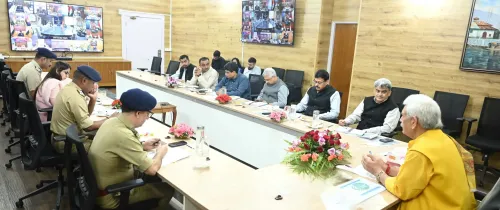
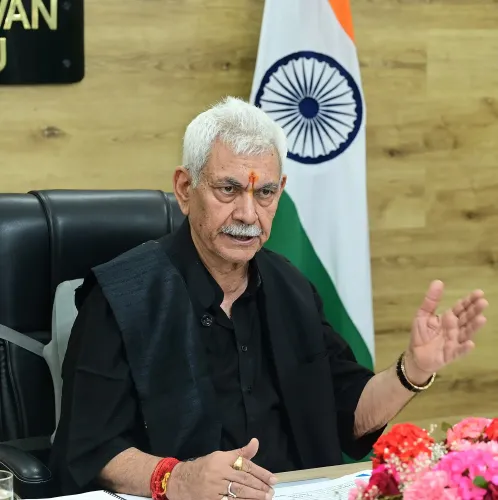
He also called for continuous auditing of the campaign, directing Deputy Commissioners, Senior Superintendent of Police (SSPs), and enforcement agencies to conduct weekly reviews ensuring a complete care chain — from identification and counselling to treatment, recovery, and rehabilitation.
Samba Cricket Premier League and Bike Rally Launched
In a move to engage youth through sports and culture, LG Sinha flagged off a bike rally and officially launched the Samba Cricket Premier League under the Nasha Mukt Jammu Kashmir Abhiyaan (Drug-Free J&K Mission).
The use of cricket — a sport with enormous youth appeal — as a vehicle for anti-drug messaging reflects a deliberate strategy to connect with the demographic most vulnerable to addiction. This approach mirrors successful models deployed in Punjab and Himachal Pradesh, where sports-based outreach has complemented enforcement-led campaigns.
As the 100-day Drug-Free J&K campaign crosses its first fortnight, the administration's ability to sustain momentum, ensure measurable rehabilitation outcomes, and dismantle cross-border narco networks will be closely watched. The next major review is expected at the 30-day mark, which will serve as the first real test of whether this movement translates from public energy into lasting structural change.
Point of View
Sinha is attempting to transform a feel-good campaign into a governance audit mechanism. The critical question, however, is whether J&K's overburdened rehabilitation infrastructure can absorb the surge in identified addicts — because without treatment capacity, awareness drives risk becoming hollow optics. If the 30-day review reveals genuine seizure and rehabilitation numbers, this could become a replicable model for other border states battling the same cross-border drug menace.
NationPress
25 Sept 2026
Frequently Asked Questions
What is the Drug-Free J&K 100-day campaign?
The Drug-Free J&K 100-day campaign, officially called the Nasha Mukt Jammu Kashmir Abhiyaan , is a government-led anti-narcotics drive initiated across Jammu and Kashmir to eliminate drug trafficking, rehabilitate addicts, and build community awareness. It involves weekly accountability targets for law enforcement, panchayat-level outreach, and youth engagement through sports.
Why did LG Manoj Sinha visit Samba for the anti-drug drive?
LG Manoj Sinha visited Samba district on April 25, 2025 to personally lead the 100-day Drug-Free J&K campaign rally, signalling the administration's high-level commitment to the initiative. Samba, located near the International Border, is considered a sensitive zone for cross-border drug smuggling.
How is Pakistan linked to J&K's drug problem?
LG Sinha stated that a neighbouring country — widely understood to be Pakistan — has systematically fuelled J&K's drug crisis to finance terrorism and cause social breakdown. Intelligence agencies have long documented cross-border narcotics smuggling through the International Border and Line of Control as a key component of Pakistan-backed destabilisation efforts.
What are the weekly targets set under the Drug-Free J&K campaign?
The LG directed that weekly outcomes must clearly show the number of addicts rehabilitated, drug smugglers prosecuted, fake rehabilitation centres shut down, cases registered, contraband seized, and women's committees formed in panchayats and city wards. Deputy Commissioners and SSPs are responsible for reviewing these metrics every week.
What is the Samba Cricket Premier League and its connection to the anti-drug drive?
The Samba Cricket Premier League was launched by LG Manoj Sinha under the Nasha Mukt Jammu Kashmir Abhiyaan as a sports-based youth engagement initiative to steer young people away from drug addiction. It is part of a broader strategy to use recreational activities alongside enforcement and rehabilitation to fight the drug menace.