Lok Sabha adjourned till noon as Opposition protests NEET crackdown
Synopsis
Parliament's lower house ground to a halt on 29 July as Opposition members protested police action against NEET demonstrators — the same controversy that already claimed the Education Minister's job. With Rahul Gandhi set to address the House and a sweeping anti-paper-leak bill on the table, Wednesday's session could define the political temperature for the rest of the monsoon session.
Key Takeaways
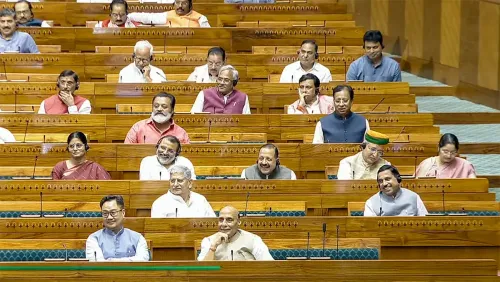
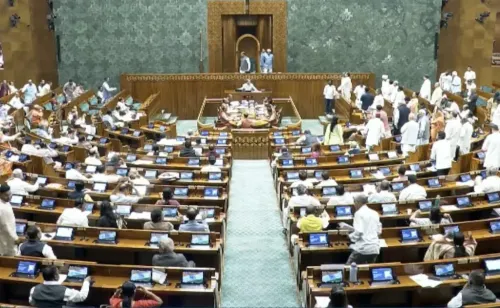
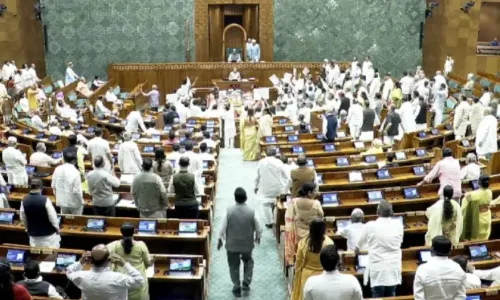
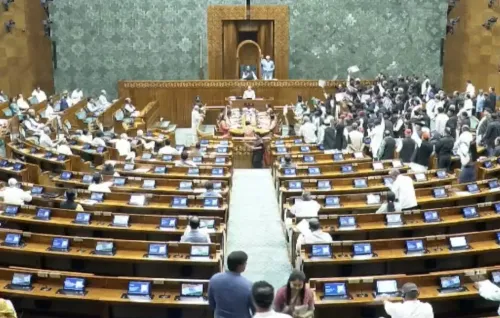
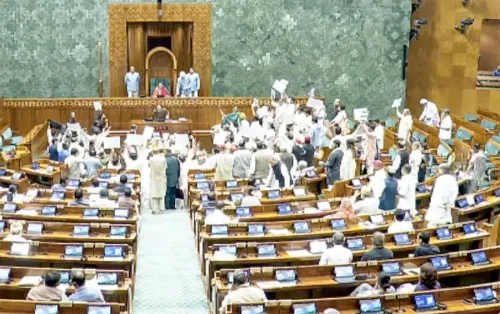
Lok Sabha was adjourned till noon on 29 July amid Opposition sloganeering during the Question Hour .
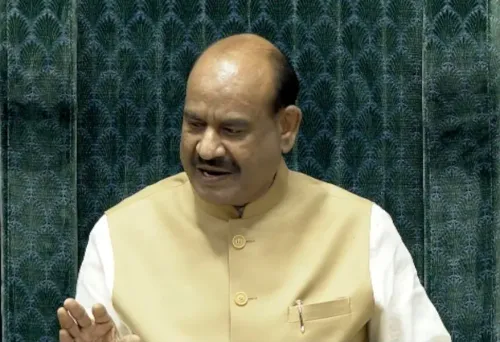
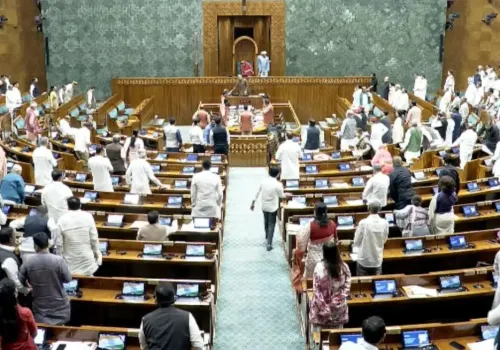
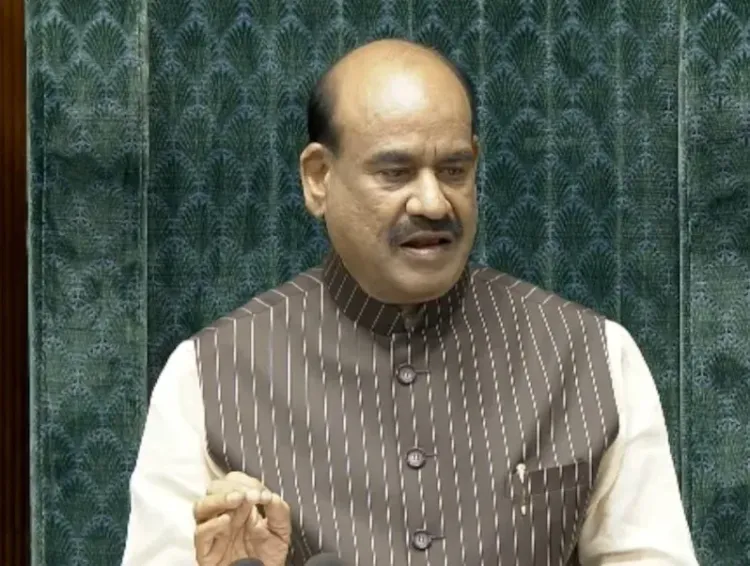
Speaker Om Birla opened proceedings by acknowledging India's Commonwealth Games 2026 medal winners before the disruption began.
The Opposition protested police action against NEET paper leak demonstrators at Jantar Mantar on 20 July .
The Public Examinations (Prevention of Unfair Means) Amendment Bill, 2026 proposes up to 10 years imprisonment and fines of up to ₹10 crore for exam fraud.
Leader of Opposition Rahul Gandhi was expected to address the Lower House at around 12.30 pm on Wednesday.
The NEET controversy had earlier led to the resignation of Union Education Minister Dharmendra Pradhan .
The Lok Sabha was adjourned till noon on Wednesday, 29 July, minutes after reconvening for the day, as Opposition members launched into heavy sloganeering during the Question Hour, disrupting proceedings over the police action against demonstrators at Jantar Mantar on 20 July. The protest centred on the crackdown during NEET paper leak demonstrations held at the landmark protest site.
How the Disruption Unfolded
Speaker Om Birla opened the session by acknowledging India's medal winners at the Commonwealth Games 2026 in Glasgow. He then moved to preside over the Question Hour, but the Opposition benches erupted in sloganeering almost immediately. Despite repeated appeals by the Speaker urging members to allow the House to function smoothly, the protests did not subside, forcing the adjournment.
The NEET Shadow Over Parliament
The disruption is the latest flashpoint in a parliamentary session already consumed by the NEET-UG paper leak controversy. On Tuesday, the Lok Sabha witnessed a charged debate over the Public Examinations (Prevention of Unfair Means) Amendment Bill, 2026, introduced by Union Minister of State for Personnel Jitendra Singh on Monday. The Bill proposes imprisonment of up to 10 years, fines of up to ₹10 crore, asset confiscation, and fast-track courts mandated to deliver verdicts within three months for examination fraud.
The government defended the tougher provisions as a necessary deterrent, while Opposition members termed the legislation an 'admission of failure' of the existing examination framework. NDA allies, while backing the Bill, called for broader systemic reforms in how competitive examinations are conducted.
Rahul Gandhi Expected to Address the House
According to reports, Leader of Opposition Rahul Gandhi was expected to speak in the Lower House at around 12.30 pm on Wednesday. His address, if delivered, would mark one of the more closely watched interventions of the session, given the political salience of the NEET controversy.
Background: The Controversy That Triggered It All
The legislative push and the parliamentary turbulence both trace back to nationwide protests over the NEET-UG paper leak, a crisis that ultimately led to the resignation of Union Education Minister Dharmendra Pradhan. The 20 July demonstrations at Jantar Mantar, and the police action that followed, have since become a focal point for the Opposition, which argues that the government's response to the leak — and to protesters — has been inadequate. This is not the first time the session has been stalled over the issue; the NEET controversy has repeatedly disrupted proceedings since the leak came to light.
Point of View
However stringent on paper, arrives after the damage: a minister has resigned, lakhs of students have been affected, and the street has already delivered its verdict at Jantar Mantar. The Opposition's parliamentary strategy is straightforward — keep the optics of the crackdown alive until the government is forced into a more substantive response than legislation. Whether the Bill's fast-track courts and ₹10 crore fines translate into accountability, or become another headline without institutional follow-through, is the question this session has not yet answered.
NationPress
29 Jul 2026
Frequently Asked Questions
Why was the Lok Sabha adjourned on 29 July 2026?
The Lok Sabha was adjourned till noon on 29 July 2026 because Opposition members launched heavy sloganeering during the Question Hour, protesting police action against NEET paper leak demonstrators at Jantar Mantar on 20 July. Speaker Om Birla's repeated appeals to let the House function went unheeded.
What is the Public Examinations (Prevention of Unfair Means) Amendment Bill, 2026?
It is a bill introduced by Union Minister of State for Personnel Jitendra Singh that amends the Public Examinations (Prevention of Unfair Means) Act, 2024. It proposes up to 10 years' imprisonment, fines of up to ₹10 crore, asset confiscation, and fast-track courts required to deliver verdicts within three months for examination fraud.
What triggered the NEET controversy that is disrupting Parliament?
The NEET-UG paper leak sparked nationwide protests, including demonstrations at Jantar Mantar on 20 July 2026 that drew a police crackdown. The crisis led to the resignation of Union Education Minister Dharmendra Pradhan and has since dominated the monsoon session of Parliament.
Is Rahul Gandhi expected to speak in the Lok Sabha on 29 July?
According to reports, Leader of Opposition Rahul Gandhi was expected to address the Lower House at around 12.30 pm on Wednesday, 29 July. His intervention is being closely watched given the political significance of the NEET controversy.
How did NDA allies respond to the anti-paper-leak bill?
NDA allies backed the Public Examinations Amendment Bill but used the debate to call for broader systemic reforms in the examination process. The Opposition, by contrast, termed the legislation an 'admission of failure' of the existing system and questioned whether it addressed the root causes of repeated examination failures.