Lt Gen Rajesh Pushkar calls on CM Fadnavis in Mumbai
Synopsis
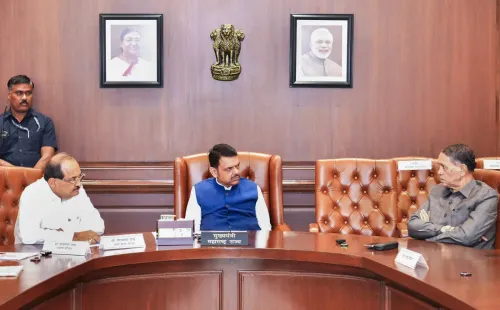
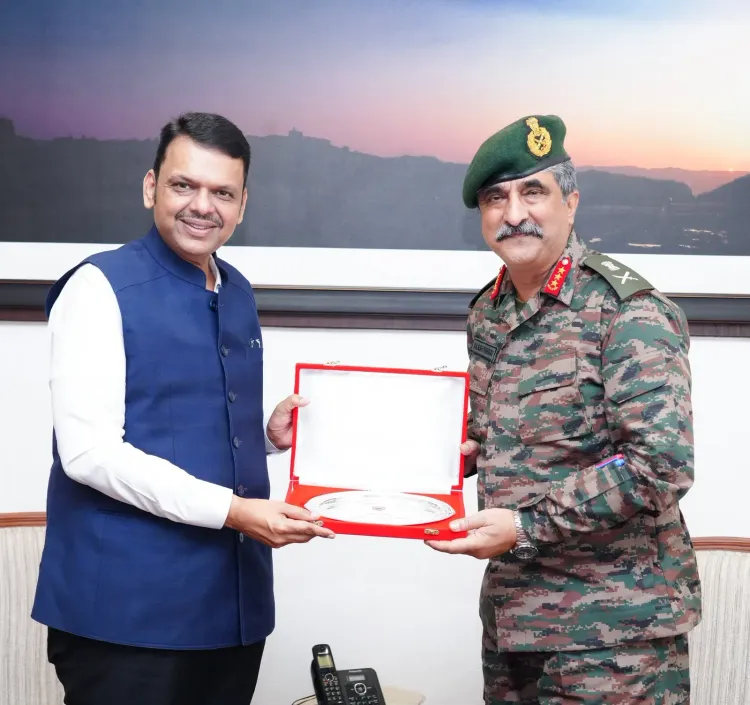
Lieutenant General Rajesh Pushkar, AVSM, VSM, the newly appointed General Officer Commanding-in-Chief of the Indian Army's Southern Command, paid a courtesy call on Maharashtra Chief Minister Devendra Fadnavis at Varsha Bungalow, Mumbai, on 23 July 2026, following his assumption of the new command.
Key Takeaways
Lt Gen Rajesh Pushkar, AVSM, VSM met CM Devendra Fadnavis at Varsha Bungalow, Mumbai on 23 July 2026 at 11:20 am .
The visit was a formal courtesy call following Lt Gen Pushkar 's assumption of charge as General Officer Commanding-in-Chief, Southern Command .
Southern Command is headquartered in Pune, Maharashtra , making state-level civil-military coordination especially relevant.
Such courtesy visits are standard Indian Army protocol when a new commander assumes charge of an operational command.
The liaison is expected to facilitate cooperation on monsoon flood relief , coastal security, and joint civil-military exercises in Maharashtra.
The Chief Minister's Office of Maharashtra announced on 23 July 2026 that Lieutenant General Rajesh Pushkar, AVSM, VSM, the newly appointed General Officer Commanding-in-Chief, Southern Command, paid a courtesy visit to Chief Minister Devendra Fadnavis at his official residence, Varsha Bungalow, Mumbai, at 11:20 am.
Context
The visit marked Lt Gen Pushkar's first formal call on the Maharashtra government following his assumption of the new charge as head of Southern Command, one of six operational commands of the Indian Army, headquartered in Pune. The CMO's post, shared simultaneously in English, Marathi, and Hindi, confirmed the meeting took place at Varsha Bungalow — the official residence of the Maharashtra Chief Minister — underscoring its formal, protocol-driven character.
Policy Backdrop
Courtesy calls by newly appointed army commanders on state chief ministers are a long-standing practice in Indian civil-military relations. Southern Command, responsible for military operations across southern and parts of western India, maintains close institutional ties with the Maharashtra government given the state's strategic coastline and the command's Pune headquarters.
Maharashtra has periodically required coordination with Southern Command formations during monsoon-related flooding and coastal emergencies. Such visits create the foundation for follow-up discussions on internal security, coastal defence, and disaster relief planning between the Pune-based headquarters and the state administration.
Stakeholders and Impact
The meeting brings together two key pillars of regional governance and security: the Maharashtra state government under CM Fadnavis and the Indian Army's Southern Command under its new chief. For citizens, the significance lies in the coordination this liaison enables — particularly around monsoon flood relief, coastal security, and joint civil-military preparedness exercises.
The visit also signals Lt Gen Pushkar's intent to establish early working relationships with civilian administrations in his area of responsibility, a step that defence observers regard as essential for effective regional security management.
What's Next
Follow-up coordination meetings between Southern Command formations and Maharashtra's disaster management authorities are likely, particularly given the active monsoon season. Joint civil-military exercises and discussions on coastal defence preparedness between the state and the command are expected to follow as part of the established liaison framework.
Point of View
But its timing during an active monsoon season gives it operational weight beyond ceremony. With Southern Command's headquarters in Pune, the Maharashtra government is a natural and critical civilian counterpart for the command — making early rapport between a new GOC-in-C and the Chief Minister strategically sensible. CM Fadnavis, who has consistently positioned himself as a security-conscious administrator, benefits from visible engagement with the armed forces. The trilingual announcement by the CMO also reflects a deliberate effort to communicate the state government's defence outreach to Maharashtra's diverse electorate.
NationPress
21 Oct 2026
Frequently Asked Questions
Who is Lt Gen Rajesh Pushkar?
Lieutenant General Rajesh Pushkar, AVSM, VSM is the newly appointed General Officer Commanding-in-Chief of the Indian Army's Southern Command , which is headquartered in Pune, Maharashtra .
Why did Lt Gen Pushkar visit CM Devendra Fadnavis?
The visit was a formal courtesy call following Lt Gen Pushkar 's assumption of his new charge as GOC-in-C, Southern Command — a standard protocol in Indian civil-military relations where newly appointed army commanders call on state chief ministers in their area of responsibility.
Where did the meeting between Lt Gen Pushkar and CM Fadnavis take place?
The meeting took place at Varsha Bungalow , the official residence of the Chief Minister of Maharashtra , in Mumbai , on 23 July 2026 at 11:20 am .
What is the Indian Army's Southern Command?
Southern Command is one of six operational commands of the Indian Army , headquartered in Pune, Maharashtra . It is responsible for military operations across southern and parts of western India.
What is the significance of army commanders visiting state chief ministers?
Such courtesy visits are a long-standing protocol in Indian civil-military relations. They help establish working relationships for coordinating on internal security, coastal defence, disaster relief, and joint civil-military exercises — areas where state governments and army commands must work closely together.