CM Fadnavis chairs meeting on integrated Film City land development
Synopsis
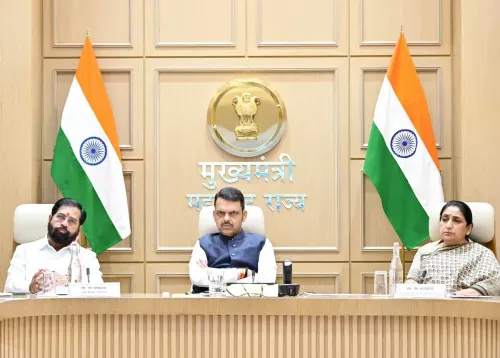
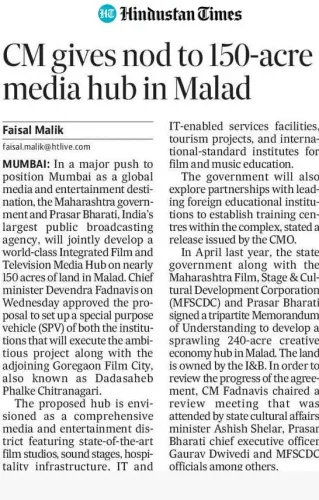
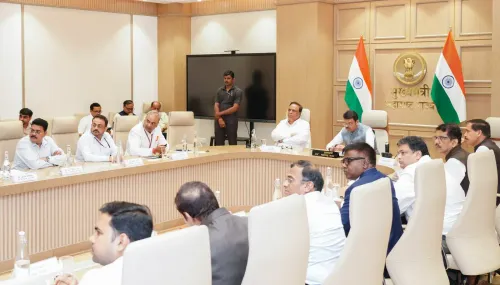
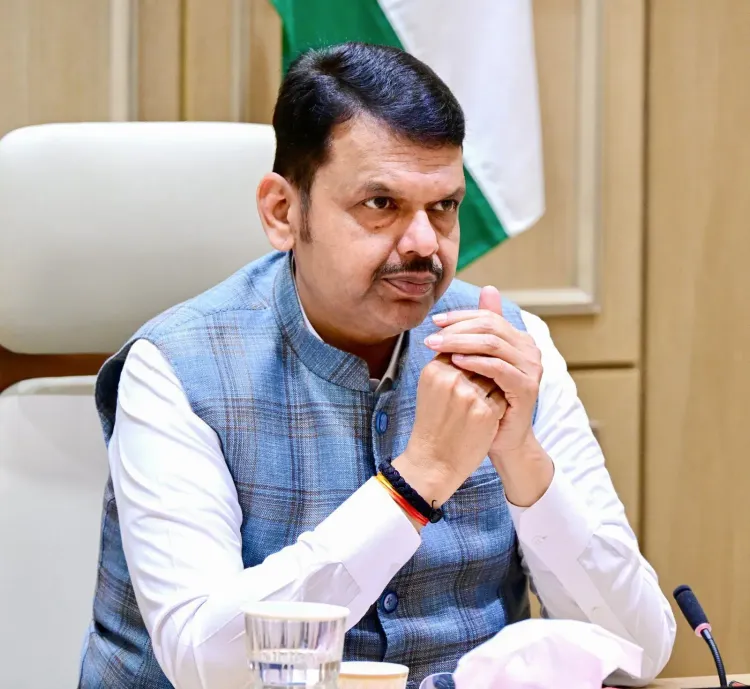
Maharashtra Chief Minister Devendra Fadnavis chaired a meeting at Varsha Bungalow in Mumbai on integrated development of Film City land. Minister Ashish Shelar and senior officials attended. The trilingual CMO announcement tagged Prasar Bharati, hinting at possible central coordination, though no specific decisions or timelines were disclosed.
Key Takeaways
CM Devendra Fadnavis chaired a meeting on integrated development of Film City land in Mumbai.
The meeting was held at Varsha Bungalow at 2.40 pm on 3 June 2026 .
Minister Advocate Ashish Shelar and senior state officials attended.
The CMO post tagged Prasar Bharati , signalling possible coordination with the central broadcaster.
Film City was established in 1977 in Goregaon, Mumbai , as a state facility for the Indian film industry.
No specific decisions, timelines or financial details were disclosed in the announcement.
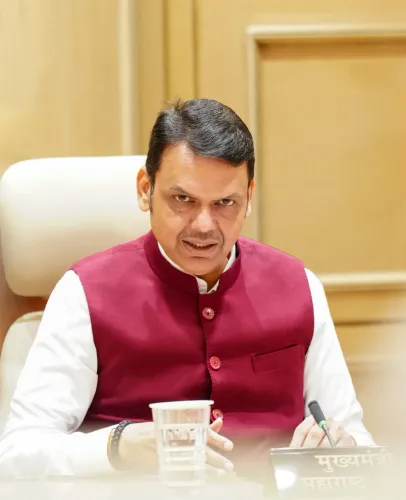
The Chief Minister's Office of Maharashtra announced that Chief Minister Devendra Fadnavis chaired a high-level meeting on the integrated development of Film City land at his official residence in Mumbai. The meeting, held at Varsha Bungalow at 2.40 pm on 3 June 2026, was also attended by Minister Advocate Ashish Shelar and senior officials of the state government.
Context
In its post, the CMO stated that 'CM Devendra Fadnavis chairs a meeting regarding the integrated development of Filmcity land,' adding that 'Minister Adv. Ashish Shelar and senior officials were present.' The trilingual update — issued in English, Marathi and Hindi — tagged the Chief Minister, the minister, and India's public service broadcaster Prasar Bharati, signalling possible coordination with central media institutions.
The Marathi version of the post described the agenda as 'फिल्मसिटीच्या जागेच्या एकात्मिक विकासासंदर्भात बैठक' (a meeting concerning the integrated development of the Film City land), while the Hindi version used similar phrasing. No specific decisions, timelines or financial outlays were disclosed in the post.
Policy backdrop
Film City, formally known as Dadasaheb Phalke Chitranagari, was established by the Maharashtra government in 1977 in Goregaon, Mumbai, as a dedicated facility to nurture the Indian film industry. Spread across hilly terrain on the city's western edge, it has long served as a backbone for film, television and advertising shoots, hosting both indoor studios and outdoor locations.
Successive state governments have periodically revisited land use and facility upgrades at the complex to keep pace with the evolving demands of a digital-era entertainment economy. The phrase 'integrated development' typically signals a master-plan approach — combining studio modernisation, infrastructure renewal and ancillary land use under a single framework rather than piecemeal interventions.
The tagging of Prasar Bharati, which operates Doordarshan and All India Radio, suggests the state is exploring tie-ins with central broadcasting infrastructure, though the precise scope of any such collaboration was not detailed in the announcement.
Stakeholders and impact
Any reworking of the Film City land has direct implications for film producers, studio operators, technicians and the wider entertainment ecosystem that depends on Mumbai's status as India's primary content-production hub. The complex supports thousands of daily-wage workers, set designers, lighting crews and post-production units that cluster around it.
Minister Ashish Shelar, who holds portfolios intersecting with cultural and information sectors, has been a visible voice within the state cabinet on entertainment-industry matters. His presence at the meeting alongside senior officials indicates that the exercise is being driven at the political-administrative level rather than purely through bureaucratic channels.
For Mumbai's urban planners, the review also sits within a wider conversation about balancing creative-sector real estate with competing land-use pressures in the metropolitan region, including housing, green cover and transport corridors.
What's next
The CMO's announcement is preliminary in nature and does not specify follow-up actions. Stakeholders will be watching for subsequent government resolutions, tender notices or a formal master plan that translates the 'integrated development' framing into concrete proposals.
Should the engagement with Prasar Bharati deepen, it could mark a rare instance of state-level film infrastructure being aligned with central public-broadcasting assets — a model that, if pursued, would shape how Mumbai sustains its position as the country's film capital in the years ahead.
Point of View
Hinting at a potential state-Centre alignment on media infrastructure. With Fadnavis personally chairing the discussion, the political weight behind the exercise is clear. The real test will be whether it produces a credible master plan or remains another consultative milestone.
NationPress
19 Sept 2026
Frequently Asked Questions
Who chaired the Film City land development meeting in Mumbai?
Maharashtra Chief Minister Devendra Fadnavis chaired the meeting on the integrated development of Film City land. It was held at his official residence, Varsha Bungalow, in Mumbai on 3 June 2026.
Where is Mumbai's Film City located?
Mumbai's Film City is located in Goregaon, on the western edge of the city. It was established by the Maharashtra government in 1977 as a dedicated facility for the Indian film industry.
Who attended the Film City meeting with CM Fadnavis?
Minister Advocate Ashish Shelar and senior officials of the Maharashtra government attended the meeting. The CMO post also tagged the public broadcaster Prasar Bharati.
What is meant by 'integrated development' of Film City?
'Integrated development' typically refers to a master-plan approach that combines studio modernisation, infrastructure upgrades and ancillary land use under a single framework. The Maharashtra government has not yet released specific details of the plan.
Why was Prasar Bharati tagged in the announcement?
Prasar Bharati was tagged in the CMO's post, suggesting possible coordination with India's public broadcaster on Film City development. However, the exact scope of any collaboration has not been officially detailed.