Maharashtra CMO: Fadnavis Clears 150-Acre Media Hub in Malad
Synopsis
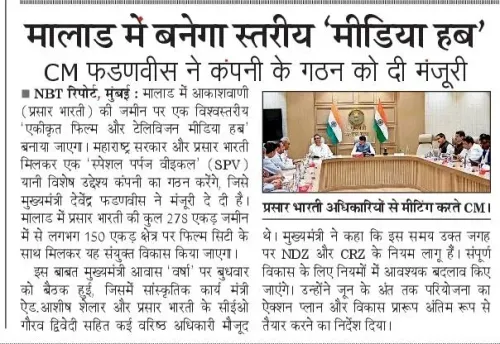
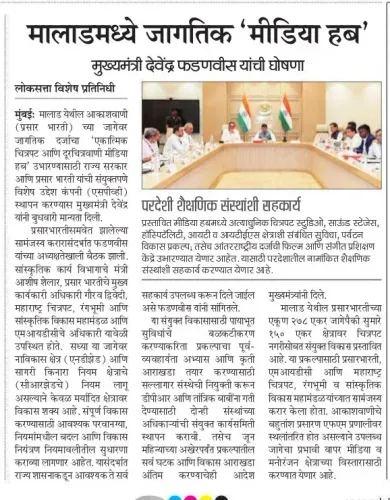
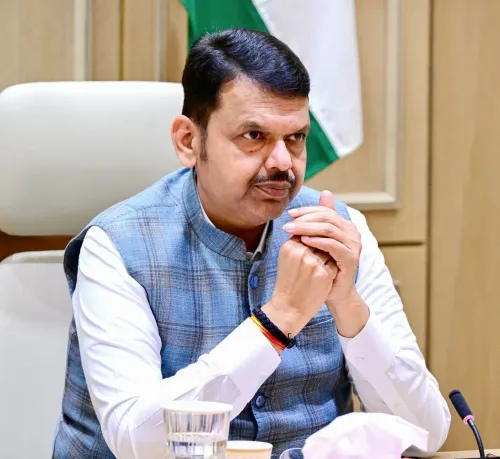
Maharashtra Chief Minister Devendra Fadnavis has approved a 150-acre media hub in Mumbai's Malad, the state CMO announced on X, tagging Prasar Bharati. The project would extend Mumbai's broadcasting cluster around Film City, though financial outlay, timelines and tenant details were not disclosed in the post.
Key Takeaways
Maharashtra CM Devendra Fadnavis has cleared a 150-acre media hub in Malad , Mumbai.
The CMO's post on 4 June 2026 tagged Prasar Bharati , indicating possible central broadcaster involvement.
Malad sits close to Goregaon's Film City , Mumbai's existing media-entertainment cluster.
No financial outlay, timeline or tenant list has been publicly disclosed.
Land acquisition, environmental clearance and any public-private partnership terms remain to be detailed.
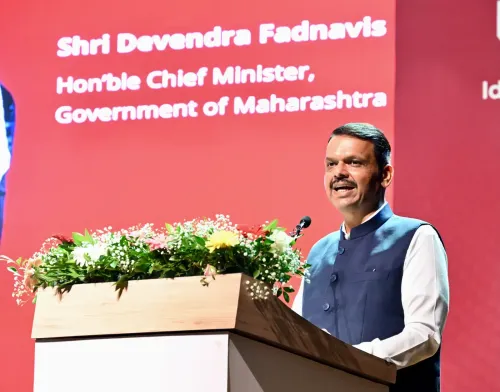
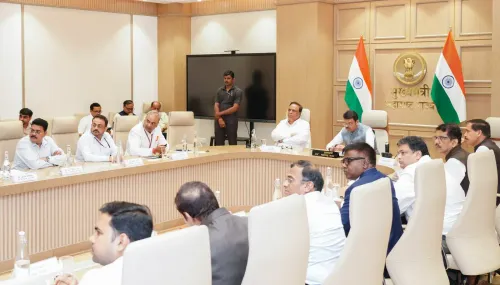
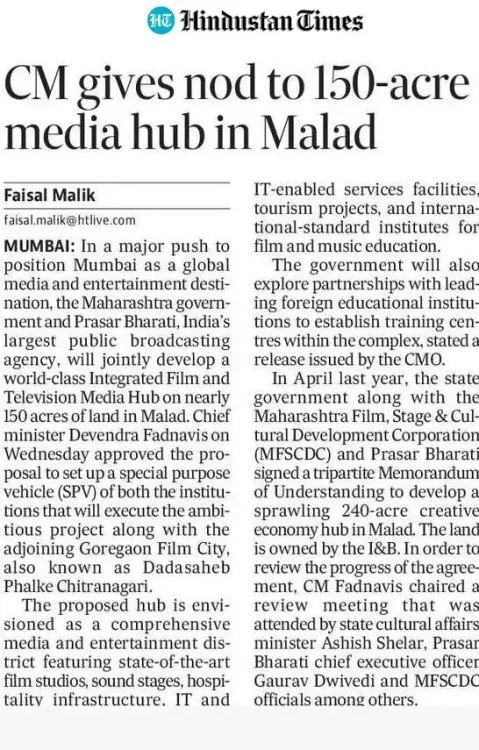
The Chief Minister's Office of Maharashtra announced on 4 June 2026 that Chief Minister Devendra Fadnavis has approved a 150-acre media hub in Malad, a western Mumbai suburb. The post tagged Prasar Bharati, signalling the involvement of India's public broadcaster in the proposed cluster. The development was flagged on the CMO's official handle on X.
The post stated that 'CM Devendra Fadnavis gives nod to 150-acre media hub in Malad' and carried the hashtags #Maharashtra, #DevendraFadnavis and #PrasarBharati. No further financial outlay, timeline or tenant list was disclosed in the announcement.
Context
Malad, in Mumbai's western suburbs, sits within easy reach of Goregaon's Film City and an established belt of post-production studios, IT parks and broadcasting offices. A 150-acre contiguous parcel in this corridor would rank among the larger single-use media land allotments approved by the state in recent years.
Devendra Fadnavis, who has served multiple terms as Chief Minister of Maharashtra, has historically pushed urban-industrial clusters as a vehicle for private investment. The Malad approval extends that template into the broadcasting and content economy.
Policy backdrop
Maharashtra has, since the 2000s, attempted to deepen Mumbai's media-entertainment ecosystem by carving out dedicated land for studios, production houses and broadcasting infrastructure around Film City. The objective has been to retain talent and capital that might otherwise migrate to Hyderabad, Noida or Bengaluru.
The tagging of Prasar Bharati, the statutory autonomous body that runs Doordarshan and All India Radio, suggests the central public broadcaster could anchor or co-locate at the proposed hub. Such state-Centre coordination on broadcasting real estate has precedent, though the contours of any agreement for the Malad site have not been spelt out publicly.
Stakeholders and impact
Private media companies, OTT platforms, news broadcasters and post-production firms are the natural tenant base for a project of this scale. A 150-acre footprint could accommodate sound stages, newsrooms, satellite uplink facilities and ancillary services within a single campus.
For Malad's local economy, the project carries the prospect of construction-phase employment and longer-term white-collar jobs in content and broadcasting. It also raises questions familiar to large Mumbai land allotments: existing land use, displacement risk, traffic load on the Western Express Highway corridor and environmental clearances in a city short on open land.
What's next
Key milestones to watch include the formal government resolution detailing the land parcel and ownership, the agency designated to develop the campus, and any memorandum with Prasar Bharati or private anchor tenants. Environmental impact assessments and the land acquisition mechanism — whether existing government land or fresh acquisition — will determine how quickly the project moves from announcement to ground-breaking.
If executed at the indicated scale, the Malad hub could reinforce Mumbai's position as India's primary broadcasting and content production base at a time when rival cities are aggressively courting the same industry.
Point of View
Even as rival cities chase the same industry. Tagging Prasar Bharati is the more interesting signal — it hints at a state-Centre alignment on broadcasting infrastructure that goes beyond the usual private-studio cluster. The real test will lie in the fine print: who develops it, who occupies it, and how quickly land and clearances actually materialise. Without those details, the announcement is directional rather than transactional.
NationPress
18 Oct 2026
Frequently Asked Questions
Where is the new Maharashtra media hub being built?
The hub is planned on a 150-acre site in Malad, a western suburb of Mumbai, close to the existing Film City cluster in Goregaon. The Maharashtra CMO announced the approval on 4 June 2026.
Who approved the 150-acre Malad media hub?
Maharashtra Chief Minister Devendra Fadnavis approved the project, according to the official CMO handle on X. The announcement also tagged Prasar Bharati.
What is the role of Prasar Bharati in the Malad media hub?
The CMO's post tagged Prasar Bharati but did not specify its role. Prasar Bharati is the statutory autonomous body that operates Doordarshan and All India Radio, suggesting possible central broadcaster involvement at the site.
How big is the proposed Malad media hub?
The proposed hub spans 150 acres, according to the Maharashtra CMO's announcement. The footprint is large enough to host sound stages, newsrooms, uplink facilities and ancillary services on a single campus.
When will construction of the Malad media hub start?
No construction timeline has been announced. The next milestones to watch are the formal government resolution, land acquisition arrangements, environmental clearances and any tenant or partnership agreements.