Maharashtra CMO: World-class media hub planned in Malad with Prasar Bharati
Synopsis
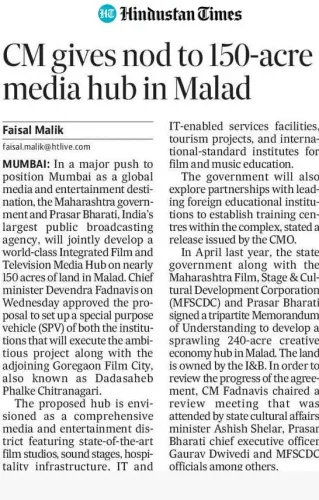
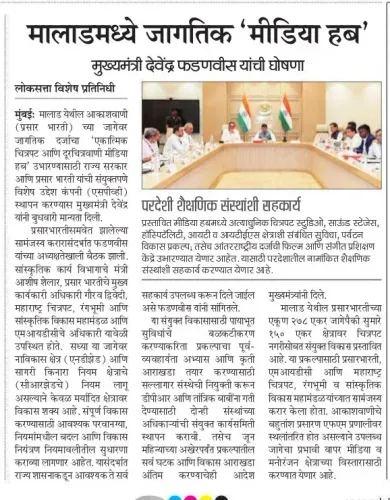
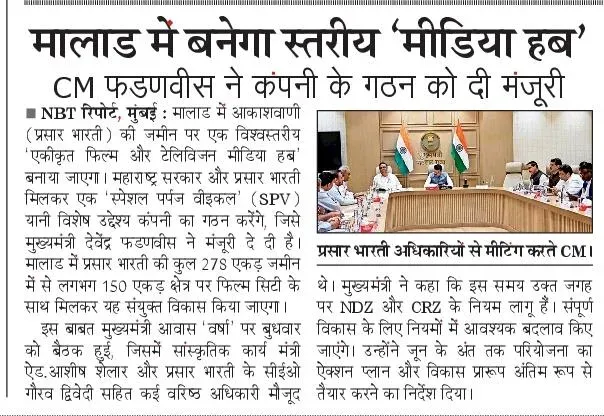
The Chief Minister's Office of Maharashtra announced that the state government and Prasar Bharati will jointly develop a world-class media hub in Malad, Mumbai. Tagging CM Devendra Fadnavis, the post frames the project as a centre-state push to expand India's public broadcasting and media-production capacity beyond Delhi.
Key Takeaways
Maharashtra Government and Prasar Bharati to jointly build a media hub in Malad, Mumbai.
Announcement made via the official Chief Minister's Office handle on June 4, 2026.
Project tagged to Chief Minister Devendra Fadnavis as the lead political sponsor.
Malad already hosts established clusters of studios and post-production firms.
Partnership extends Maharashtra's longstanding policy of building media infrastructure in Mumbai suburbs.
Cost, land allocation and timeline details have not been officially disclosed.
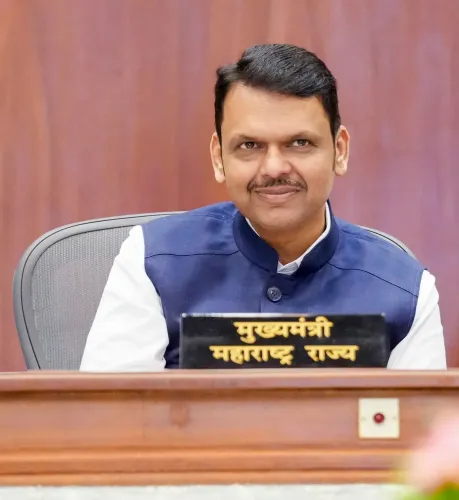
The Chief Minister's Office of Maharashtra on Thursday, June 4, 2026, announced that the state government and Prasar Bharati will jointly develop a 'world-class media hub' in Malad, a western suburb of Mumbai. The post, tagging Chief Minister Devendra Fadnavis, frames the project as a centre-state collaboration aimed at expanding India's public broadcasting and media-production footprint outside the national capital.
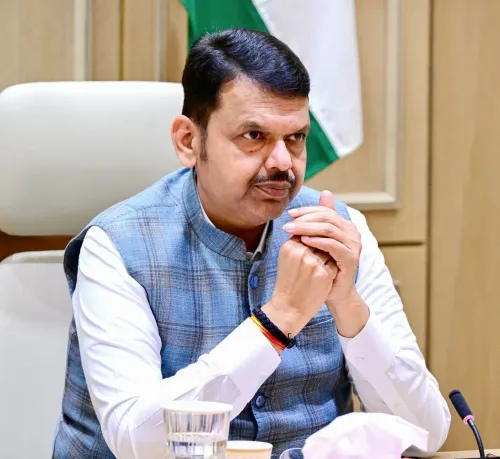
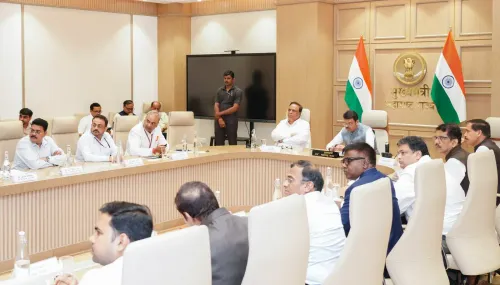
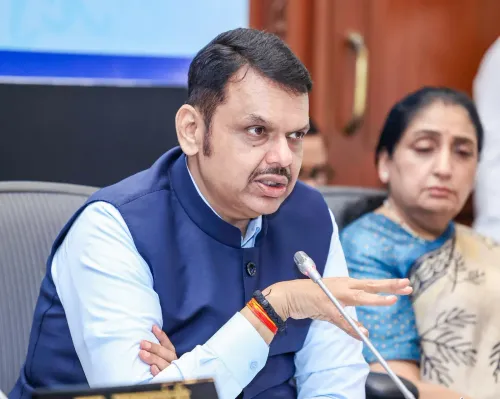
In Hindi, the post reads: 'Maharashtra Sarkar va Prasar Bharati banayenge Malad mein vishwastariya media hub' ('The Maharashtra Government and Prasar Bharati will build a world-class media hub in Malad'). The announcement was accompanied by two images and routed through the official handle of the Chief Minister's Office.
Context
Malad, in Mumbai's western suburbs, has for years hosted clusters of production houses, studios and post-production facilities, sitting along the corridor that links Goregaon's film city to the broader Mumbai Metropolitan Region. A dedicated public-sector media hub in the suburb would consolidate that ecosystem with a sovereign broadcasting anchor.
The partner agency, Prasar Bharati, is India's autonomous public service broadcaster and operates Doordarshan and All India Radio. Tying the proposed hub to Prasar Bharati signals a role beyond commercial studios, with possible facilities for public-service content, regional broadcasting and digital media production.
Policy backdrop
Successive Maharashtra state policy documents through the 2010s identified Mumbai's suburbs as priority sites for expanding film, television and digital media infrastructure. The Malad announcement extends that lineage, layering a centre-state partnership on top of the state's longstanding positioning as India's media capital.
It also fits a broader pattern: Indian states periodically partner with Prasar Bharati to set up regional production and broadcasting facilities, aligning with national efforts to expand public-service content and digital media capacity beyond Delhi. Chief Minister Devendra Fadnavis, who has anchored several urban-infrastructure pushes across his terms, is positioned as the political driver of the project.
Stakeholders and impact
The most immediate beneficiaries would be the media industry and broadcast professionals based in and around Mumbai — production crews, technicians, regional content creators and Prasar Bharati's own programming verticals. A consolidated hub could lower facility costs for smaller producers and create shared infrastructure for studios, dubbing, archives and digital distribution.
For the state, a flagship media facility carries economic and soft-power dividends: employment in the creative economy, training pipelines for technical roles, and visibility as Maharashtra competes with other states that have courted film and OTT investment. For Prasar Bharati, a Mumbai anchor could strengthen its production capacity outside its Delhi headquarters.
The post does not specify project cost, land parcel, phasing or completion timeline. Exact scope and funding figures referenced around the announcement have not been independently established and are not asserted here.
What's next
Attention will turn to formal project sanction orders, the identification of the Malad site, and any memorandum of understanding between the state government and Prasar Bharati. Land allocation details and phased rollout timelines are typically articulated in subsequent state cabinet decisions or budget announcements.
If executed at the scale the 'world-class' framing suggests, the Malad hub could reshape the geography of India's public broadcasting infrastructure — pulling more of the country's content production and digital media capacity into a single, government-anchored campus in the country's commercial capital.
Point of View
And for Maharashtra it doubles as a defensive play to protect Mumbai's status as the country's content capital amid aggressive courting by southern and northern states. Choosing Malad — rather than a greenfield site — signals an attempt to build on existing industry density rather than relocate it. The political optics also matter: a centre-state collaboration under a BJP-led state government dovetails neatly with the broader national push to expand public-service content beyond Delhi. The real test will be in the sanction orders and budget lines that follow.
NationPress
20 Sept 2026
Frequently Asked Questions
What did the Maharashtra CMO announce about Malad?
The Chief Minister's Office of Maharashtra announced that the state government and Prasar Bharati will jointly develop a world-class media hub in Malad, a western suburb of Mumbai. The announcement was made via the official CMO handle on June 4, 2026 and tagged Chief Minister Devendra Fadnavis.
Why is Malad being chosen for the media hub?
Malad, in Mumbai's western suburbs, already hosts established clusters of media companies, studios and post-production facilities. Locating a public-sector media hub there builds on existing industry density rather than starting from scratch.
What is Prasar Bharati's role in the project?
Prasar Bharati, India's autonomous public service broadcaster that runs Doordarshan and All India Radio, is the central government partner in the project. Its involvement signals a role for public-service content, regional broadcasting and digital media production at the hub.
How much will the Malad media hub cost?
The post does not specify the cost, funding source, land parcel or completion timeline. Such details are typically articulated in subsequent state cabinet decisions or budget announcements.
Who will benefit from the Maharashtra media hub?
The immediate beneficiaries are the media industry and broadcast professionals based in and around Mumbai, including production crews, technicians, regional content creators and Prasar Bharati's own programming verticals. The state expects employment and creative-economy gains.