Maharashtra clears Quantum, Deep Tech policies; Malad media hub on 150 acres
Synopsis
Maharashtra has become the first Indian state to clear a dedicated Deep Tech and Quantum policy framework — a pre-emptive bid to lead the next tech wave before Karnataka or Telangana stake claim. In parallel, Fadnavis unlocked 150 acres of Prasar Bharati's Malad land for an integrated film and TV hub, the state's biggest media-infra play in years.
Key Takeaways
CM Devendra Fadnavis approved Maharashtra's first-ever Quantum Policy and Deep Tech Policy on 3 June .
Maharashtra claims to be the first Indian state with a comprehensive deep tech ecosystem policy.
An SPV with Prasar Bharati will develop an Integrated Film and Television Media Hub on 150 acres in Malad .
The site is governed by NDZ and CRZ rules; statutory clearances and DCR changes are planned.
Final development plan to be locked by the end of June ; consultancy firm to be appointed for pre-feasibility.
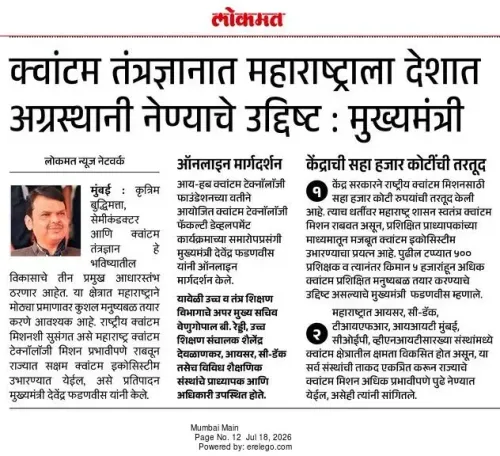
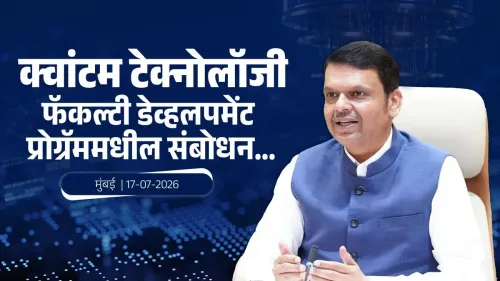
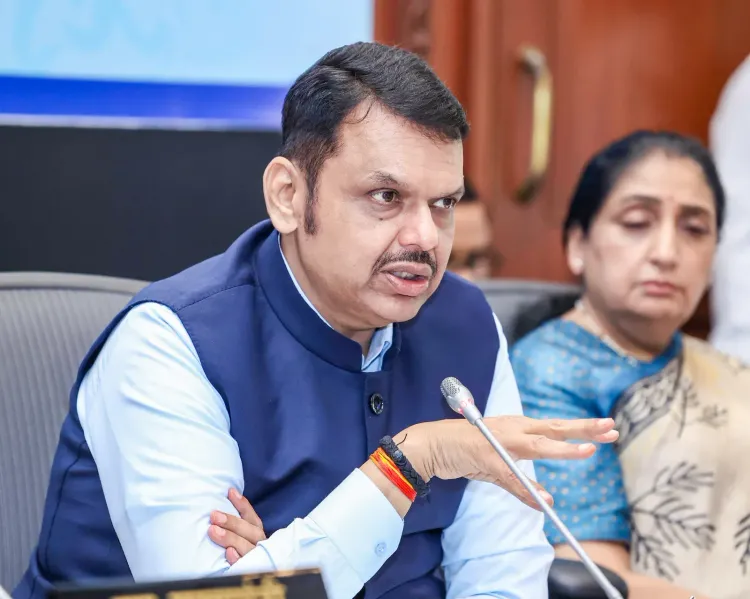
Chief Minister Devendra Fadnavis on Wednesday, 3 June approved Maharashtra's first-ever Quantum Policy and Deep Tech Policy, making the state the first in India to roll out a comprehensive framework covering the entire deep tech ecosystem. The twin policies, cleared at a high-level meeting in Mumbai, are aimed at accelerating research, investment and high-skilled job creation in advanced technology sectors.
Key Developments
The Maharashtra government has positioned the policies as a structural push to build a global technology hub, with an explicit focus on quantum computing and frontier deep tech segments. “These two policies will be instrumental in boosting research, innovation, investment, and high-skilled job creation in the state,” said Fadnavis, adding that the rollout would provide a “massive impetus to high-tech investments, cutting-edge research, and employment opportunities”.
What the policies cover
While detailed sectoral guidelines are awaited, the framework is expected to address quantum computing research, deep tech start-up support, talent pipelines and industry-academia linkages. Maharashtra's first-mover claim positions it ahead of states such as Karnataka, Telangana and Tamil Nadu, which have so far focused largely on broader IT and electronics policies rather than deep tech-specific frameworks.
Malad media hub gets the green light
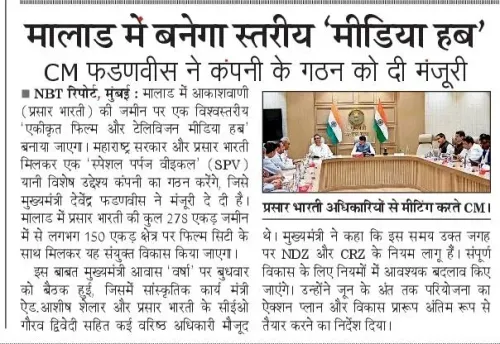
In a parallel decision, Fadnavis approved a Special Purpose Vehicle (SPV) — a joint venture between the Government of Maharashtra and Prasar Bharati — to develop an Integrated Film and Television Media Hub on All India Radio land in Malad. Of Prasar Bharati's 278-acre land parcel, around 150 acres are proposed for joint development alongside Film City.
Since the site falls under No Development Zone (NDZ) and Coastal Regulation Zone (CRZ) rules, the state will pursue statutory clearances and modifications to the Development Control Regulations to unlock full-scale development. A joint committee will be set up to expedite the Detailed Project Report (DPR), and a consultancy firm will be appointed for a pre-feasibility study and infrastructure master plan.
What's next
The Chief Minister has directed that all project components and the final development plan be finalised by the end of June. The proposed hub will house film studios, sound stages, hospitality services, IT and ITES infrastructure, tourism projects, and international-standard film and music training institutes in collaboration with global educational institutions, according to the government release. With most of All India Radio's broadcasting shifting to FM systems, the surplus land is being repurposed to expand the state's media and entertainment footprint.
Point of View
But the real test is execution depth — quantum and deep tech require patient capital, sovereign-grade compute, and a research talent pool India is still building. Maharashtra's edge over Karnataka and Telangana will hinge on whether this policy moves beyond incentives into genuine R&D infrastructure. The Malad media hub announcement, meanwhile, is a smart land-monetisation play, but NDZ and CRZ overhangs have stalled similar projects before. Watch the end-June deadline closely — it is unusually tight for a project of this regulatory complexity.
NationPress
21 Oct 2026
Frequently Asked Questions
What is the Maharashtra Quantum and Deep Tech Policy?
It is a pair of policies approved by Chief Minister Devendra Fadnavis on 3 June 2025 to support research, investment and job creation in quantum computing and deep tech sectors. Maharashtra claims this makes it the first Indian state to implement a comprehensive policy covering the entire deep tech ecosystem.
What is the Malad media hub project?
It is an Integrated Film and Television Media Hub planned on roughly 150 acres of Prasar Bharati's 278-acre All India Radio land in Malad, Mumbai. It will be developed through a Special Purpose Vehicle jointly set up by the Maharashtra government and Prasar Bharati.
Why does the Malad land require special clearances?
The site falls under No Development Zone (NDZ) and Coastal Regulation Zone (CRZ) regulations, which restrict construction. The state government will pursue statutory clearances and amendments to the Development Control Regulations to enable full-scale development.
When will the media hub project be finalised?
Chief Minister Fadnavis has directed that all project components and the final development plan be locked by the end of June. A consultancy firm will be appointed to conduct a pre-feasibility study and draft the infrastructure master plan.
What facilities will the media hub include?
The hub is proposed to feature film studios, sound stages, hospitality services, IT and ITES infrastructure, and tourism projects. It will also house international-standard film and music training institutes set up in collaboration with global educational institutions.