Will Madhya Pradesh Merge Small Primary Schools?
Synopsis
In a significant move, the Madhya Pradesh government plans to merge primary schools with fewer than 10 students with nearby institutions. This decision, revealed by Minister Uday Pratap Singh, seeks to enhance educational efficiency and address resource allocation effectively. Discover the implications of this policy and its impact on local education.
Key Takeaways
Government to merge small schools with fewer than 10 students.
Teachers will be reassigned to larger schools for better resource utilization.
Compensation issues for farmers were discussed in the Assembly.
New budget allocations focus on rural development and women's welfare.
Education reform aims to enhance student engagement.
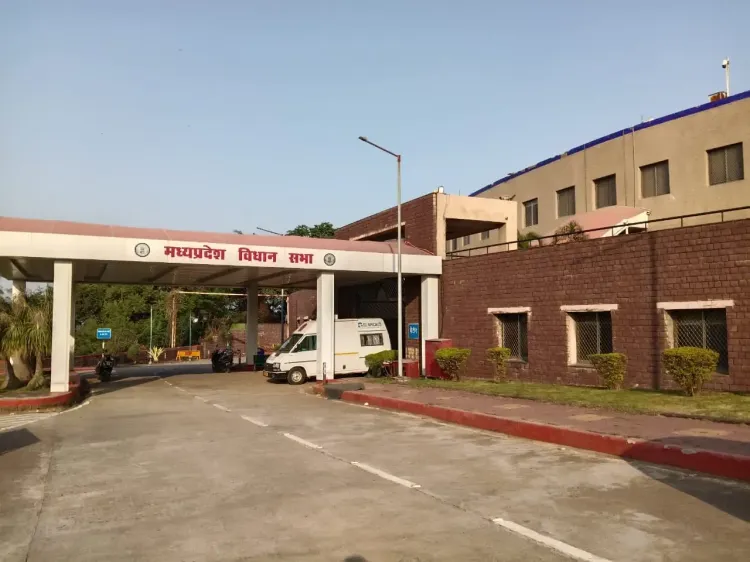
Bhopal, Dec 4 (NationPress) In Madhya Pradesh, government-operated primary schools with fewer than 10 students will be consolidated with larger schools that are situated within a 1 km radius, as announced by School Education Minister Uday Pratap Singh in the Assembly on Thursday.
This initiative intends to optimize resource use and foster greater student interaction.
In response to a query from MLA Amar Singh Yadav during the Winter Session, Minister Singh noted that teachers from these under-enrolled institutions would also be reassigned to larger schools, ensuring the effective use of both staff and facilities.
During Question Hour, Congress MLA Babu Jandel brought up the subject of compensation for farmers in Sheopur district whose crops have been damaged. He asserted that numerous farmers have not yet received the funds allocated by the state government.
"Farmers in Sheopur district were to receive compensation of Rs 16,000 per hectare, yet many have yet to see the funds deposited into their bank accounts," remarked Sheopur Congress MLA Jandel.
In reply to Jandel's statement, State Revenue Minister Karan Singh Verma acknowledged the issue and promised to personally investigate to ensure all farmers obtain their compensation. He also conceded that some farmers had not yet received their funds.
On a related note, on November 27, Chief Minister Mohan Yadav transferred Rs 238.78 crore into the accounts of over three lakh farmers as compensation for paddy crops affected by heavy rainfall a few weeks ago.
The funds were distributed to farmers in seven districts, including Sheopur, Morena, Harda, Vidisha, Narmadapuram, Dhar, and Khandwa.
Additionally, the House is set to discuss the second supplementary budget that was presented on Tuesday by Deputy Chief Minister and Finance Minister Jagdish Devda. The budget totals Rs 13,476.94 crore, which comprises Rs 8,448.57 crore under the revenue section and Rs 5,028.37 crore under capital.
Key allocations include Rs 4,000 crore for the Pradhan Mantri Awas Yojana (Rural Development), Rs 1,794 crore for the Mukhyamantri Ladli Behna Yojana (Women & Child Development), and Rs 500 crore under the Bhavantar/flat rate scheme (Farmers’ Welfare & Agriculture Development).
The five-day Winter Session is scheduled to conclude on Friday.
Point of View
It's crucial to recognize the importance of educational reforms in Madhya Pradesh. Merging smaller schools can optimize resources and enhance student engagement. This policy reflects a commitment to improving the educational landscape, but we must remain vigilant about the transition's challenges and ensure that affected students receive the support they need.
NationPress
7 Oct 2026
Frequently Asked Questions
What is the new policy regarding small schools in Madhya Pradesh?
The Madhya Pradesh government plans to merge primary schools with fewer than 10 students into larger nearby schools to optimize resources and improve student interaction.
Who announced this merging policy?
The merging policy was announced by School Education Minister Uday Pratap Singh during the Assembly session.
How will teachers be affected by this policy?
Teachers from the smaller schools will be reassigned to larger institutions to ensure effective use of staff and resources.
What compensation issue was raised during the Assembly session?
MLA Babu Jandel highlighted that many farmers in Sheopur district have not received their compensation for crop damages, despite funds being released.
What are the key allocations in the supplementary budget?
Key allocations include Rs 4,000 crore for the Pradhan Mantri Awas Yojana and Rs 1,794 crore for the Mukhyamantri Ladli Behna Yojana.