Madras HC asks ECI to respond on PIL over TVK using children in TN polls
Synopsis
The Madras High Court has asked the Election Commission to respond to a PIL alleging that CM Vijay's TVK used children to influence voters in the 2026 Tamil Nadu elections — and posed a pointed legal question that existing election law has rarely been tested on: can a party, not just a candidate, be disqualified for corrupt practices?
Key Takeaways
The Madras High Court on 21 May sought the ECI's response on a PIL alleging TVK used children to influence voters in the 2026 Tamil Nadu Assembly elections .
The bench of Justice G.R.
Swaminathan and Justice V.
Lakshminarayanan raised whether a political party — not just a candidate — can be disqualified for corrupt practices.
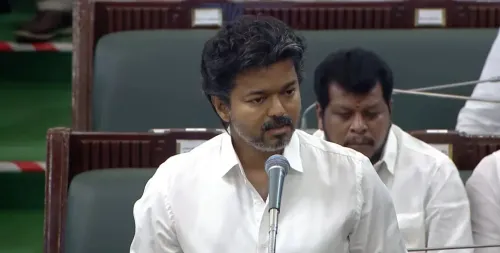
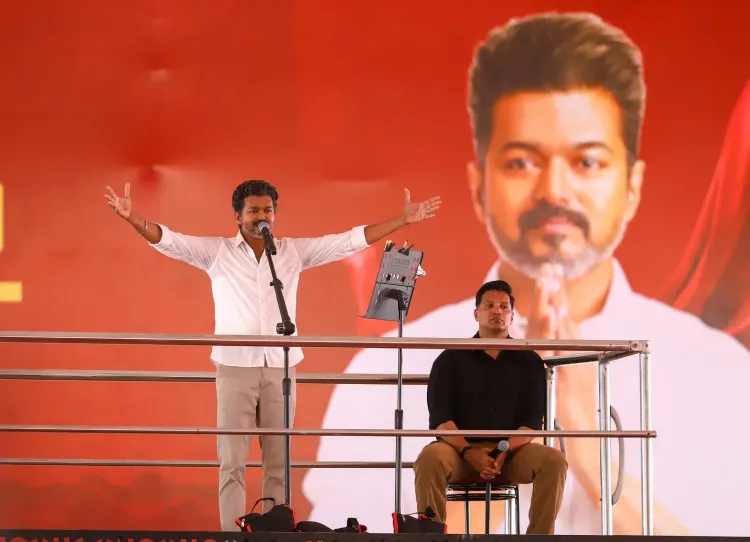
The PIL alleges a public meeting at YMCA Grounds, Chennai on 21 April saw Vijay urge children to influence their parents' voting choices.
ECI directives from 2009, 2013, 2014 , and 2017 prohibiting child involvement in campaigns were cited in the plea.
The petition also alleges cash-for-votes practices by DMK and AIADMK in several constituencies and seeks a time-bound independent inquiry.
The Madras High Court on Thursday, 21 May directed the Election Commission of India (ECI) to file its response on a public interest litigation (PIL) alleging that Chief Minister C. Joseph Vijay's party, Tamilaga Vettri Kazhagam (TVK), deployed children to sway voters during the 2026 Tamil Nadu Assembly elections. The petition raises serious questions about electoral integrity, child exploitation in political campaigns, and the limits of party disqualification under Indian election law.
What the Court Heard
A division bench comprising Justice G.R. Swaminathan and Justice V. Lakshminarayanan took up the petition filed by advocate Vasuki and pressed for clarity on a fundamental legal question: whether a political party — not just an individual candidate — could be disqualified for corrupt electoral practices.
'The candidate can be disqualified, but can a party be disqualified?' the bench asked, directing counsel for the ECI to seek instructions and return with a formal response. 'Matter requires some investigation. Get instructions,' the court stated.
Key Allegations in the PIL
The petitioner alleged that TVK engaged in vote-for-money practices and used children as instruments of electoral influence during the Tamil Nadu Assembly elections. A specific incident cited was a public meeting held at YMCA Grounds, Chennai, on 21 April, where Vijay allegedly called upon children to persuade their parents and grandparents on voting preferences.
According to the plea, the speech circulated widely across print, electronic, and social media platforms. Videos reportedly emerged online showing children attempting to emotionally influence family members over their voting choices.
The petitioner also noted that following the election results, TVK President Vijay publicly thanked children during his victory address — cited as further indication of their alleged involvement in the campaign.
Past ECI Directives on Child Involvement
The PIL drew attention to multiple Election Commission communications issued in 2009, 2013, 2014, and 2017, each emphasising that children must not be involved in election-related activities, campaigns, rallies, or propaganda. The petitioner argued these directives were systematically disregarded during the 2026 cycle.
Broader Allegations Against Other Parties
The petition did not limit its scope to TVK alone. It also raised concerns about alleged cash-for-votes practices involving the Dravida Munnetra Kazhagam (DMK) and the All India Anna Dravida Munnetra Kazhagam (AIADMK) across several constituencies. The petitioner sought a time-bound independent inquiry by the ECI and the Tamil Nadu Chief Electoral Officer into all alleged violations.
What Happens Next
The Madras High Court has called on the ECI to provide instructions and a formal response on the matter. The case is expected to test the boundaries of existing election law — particularly whether party-level accountability for corrupt practices can be enforced beyond the individual candidate framework. The next hearing date is yet to be announced.
Point of View
Not just a candidate, can be disqualified for corrupt practices — cuts to a long-standing gap in Indian election law that has rarely been tested. Candidate-level disqualification has been the default remedy, leaving party organisations largely insulated from electoral misconduct findings. If the Madras High Court presses this line of inquiry, it could force the ECI and ultimately the Supreme Court to confront a structural accountability vacuum. The child-involvement allegations also spotlight a recurring enforcement failure: the ECI has issued circulars on this since 2009, yet the practice reportedly persists across party lines.
NationPress
6 Oct 2026
Frequently Asked Questions
What is the PIL filed in the Madras High Court about TVK?
The PIL alleges that Tamilaga Vettri Kazhagam (TVK), led by Chief Minister C. Joseph Vijay, used children to influence voters during the 2026 Tamil Nadu Assembly elections. It also raises allegations of vote-for-money practices and seeks a time-bound independent inquiry by the ECI.
What legal question did the Madras High Court raise in this case?
The court asked whether a political party itself can be disqualified for corrupt electoral practices under Indian election law, noting that existing provisions clearly allow for candidate disqualification but are ambiguous on party-level accountability.
What specific incident did the petitioner cite as evidence?
The petitioner cited a public meeting at YMCA Grounds in Chennai on 21 April, where Vijay allegedly urged children to persuade their parents and grandparents on voting preferences. Videos of children emotionally appealing to family members on voting choices reportedly circulated on social media.
What have previous ECI guidelines said about children in elections?
The Election Commission issued directives in 2009, 2013, 2014, and 2017 explicitly stating that children must not be involved in election campaigns, rallies, or political propaganda. The petitioner argued these guidelines were violated during the 2026 Tamil Nadu elections.
Are other parties also named in the PIL?
Yes, the petition also alleges cash-for-votes practices by DMK and AIADMK in several constituencies, and seeks a time-bound independent inquiry by the ECI and the Tamil Nadu Chief Electoral Officer into all alleged violations.