Did Maha Leaders Endorse PM Modi's Criticism of Congress Over 26/11 Response?
Synopsis
In a recent rally, PM Modi criticized Congress for its lack of military response to the 2008 Mumbai terror attacks amidst foreign pressure. Maharashtra's Mahayuti leaders support this claim, stating that the BJP has transformed India's defense posture since 2014. Meanwhile, Congress counters the Prime Minister's accusations, raising questions about his government's decisions.
Key Takeaways
PM Modi's criticisms focus on Congress's response to 26/11.
Maharashtra leaders support a shift in defense strategy.
Congress contests the narrative, emphasizing their own perspective.
The discourse reflects broader concerns about national security.
Political will is deemed crucial for effective anti-terrorism measures.
Mumbai, Oct 9 (NationPress) Leaders from Maharashtra's Mahayuti expressed their support for Prime Minister Narendra Modi's comments that criticized the Congress party for its lack of military response to the 2008 Mumbai terror attacks, citing alleged foreign pressure. They argue that since the BJP took power in 2014, the nation's stance has significantly transformed.
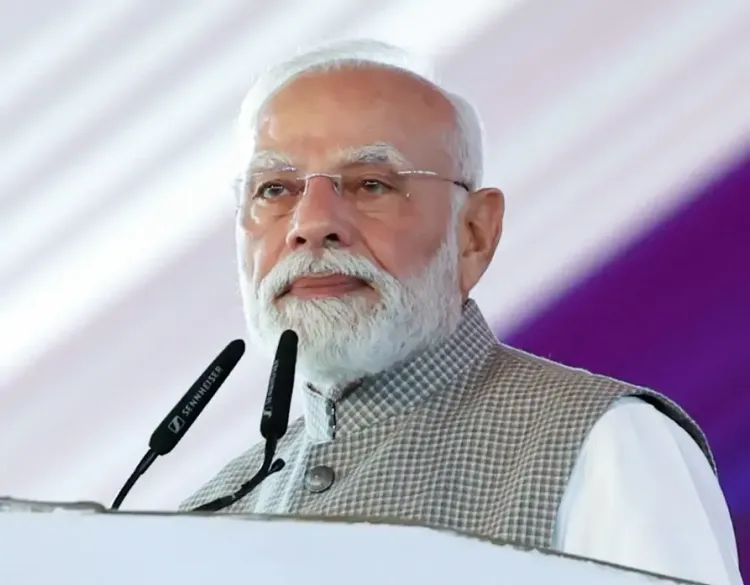
During a rally in Mumbai on Wednesday, PM Modi asserted that India was ready to retaliate after the 26/11 attacks but was restrained by the then UPA government due to external influences.
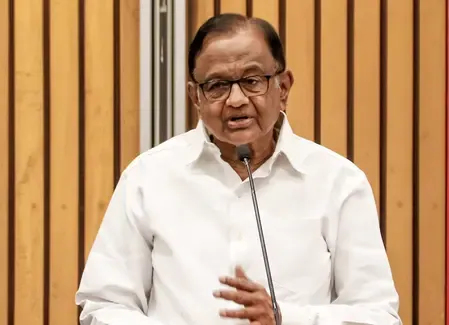
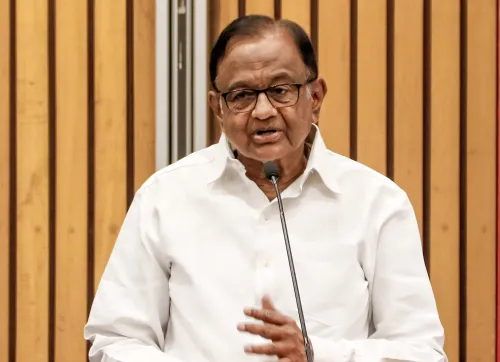
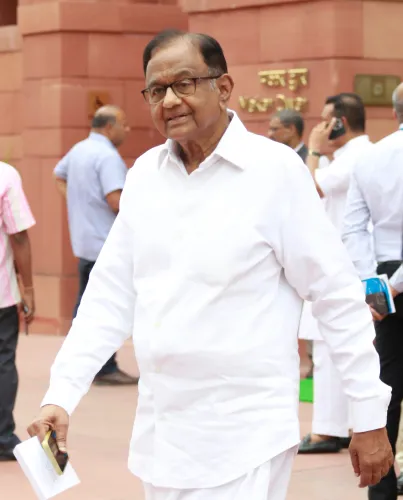
He referenced a recent interview with senior Congress figure P. Chidambaram, who served as Union Home Minister during the UPA, where it was disclosed that the Armed Forces were poised to strike Pakistan after the 26/11 attacks but were held back by foreign pressure.
"The entire nation desired a robust response. Our forces were prepared. Yet, the Congress administration halted them. Who exerted that foreign pressure? Which Congress member made that call? The citizens of India deserve clarity," the Prime Minister stated, accusing the previous government of undermining national sentiment and empowering terrorists through indecision.
"This indecisiveness has cost us dearly, bolstering terrorists and endangering innocent lives repeatedly," he emphasized.
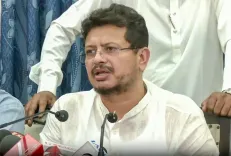
Maharashtra Minister Ashish Jaiswal supported the Prime Minister's views, asserting that prior responses to terrorist incidents were mostly limited to condemnation without effective action.
"Historically, when terrorists or Pakistani entities targeted our forces, whether during the 26/11 incident, the March 12 attack, the Ghatkopar blast, or the Gateway of India blast, we only condemned these actions without robust responses. Until we change this narrative to one of strong action rather than mere condemnation, the enemy will persist in attacking us. Since 2014, under our current government, we have not encountered similar bombing incidents," he informed reporters.
Jaiswal further noted that since 2014, whenever Pakistan engaged in hostile actions, the Modi administration and the Armed Forces have delivered a "fitting response".
Shiv Sena MP Milind Deora also backed PM Modi's statements, telling IANS that past administrations demonstrated confusion in handling various violent factions.
"I can only say this: previously, there was uncertainty in addressing anti-social elements—be they terrorist organizations, home-grown extremist groups, foreign terrorist entities, or Left-Wing Extremists. Today, that confusion has dissipated. The Prime Minister’s vision is unequivocal: to safeguard national security, any individual or group attempting to destabilize India and engaging in violence will be dealt with decisively," he remarked.
Deora claimed that the country is now safer. "Whether in Mumbai or elsewhere in India, we are better protected from terrorism. The credit for this goes to Prime Minister Modi. His leadership has significantly bolstered our anti-terrorism capabilities. The key distinction between the prior government and the Modi regime is the political will," he added.
In contrast, the Congress party dismissed the Prime Minister's statements, asserting that had the BJP-led government not "capitulated" to the US after Operation Sindoor, Pakistan-occupied Kashmir (PoK) could have been reclaimed.
Speaking with IANS, Udit Raj questioned, "Under whose influence did the Modi administration refrain from attacking Pakistan?"
Referring to Operation Sindoor, Raj stated, "PM Modi claimed that Pakistan was on the brink of defeat. If that were true, then PoK should have been reclaimed. Trump issued a 24-hour ultimatum, and PM Modi surrendered in six hours. In February 2025, he eagerly visited Trump in the US, only to be called a thief... He didn’t refute Trump’s claim that he brokered the ceasefire between India and Pakistan. Did the Prime Minister ever deny that?"
Point of View
It's crucial to understand the gravity of national security discussions. Both sides present compelling arguments, yet the focus should remain on ensuring the safety of our citizens. Regardless of political affiliations, a united front against terrorism is essential for the nation’s stability and security.
NationPress
18 Sept 2026
Frequently Asked Questions
What did PM Modi criticize about the Congress party?
PM Modi criticized the Congress party for not taking military action in response to the 2008 Mumbai terror attacks, claiming that foreign pressure influenced their decision.
How did Maharashtra leaders respond to PM Modi's comments?
Leaders from Maharashtra's Mahayuti expressed their support for PM Modi's remarks, stating that the nation's approach to terrorism has significantly changed under the BJP government since 2014.
What are the significant changes in India's defense strategy since 2014?
Since 2014, the BJP government has adopted a more assertive stance against terrorism, emphasizing decisive military responses to threats, unlike previous administrations.
How did Congress respond to PM Modi's accusations?
Congress dismissed PM Modi's remarks, arguing that if the BJP government had not yielded to external pressures, Pakistan-occupied Kashmir could have been reclaimed.
What implications does this debate have for national security?
The debate highlights the importance of a unified approach to national security, emphasizing the need for clear strategies in dealing with terrorism and external threats.