CM Fadnavis backs bullet train push under Aatmanirbhar Bharat
Synopsis
Maharashtra CM Devendra Fadnavis publicly backed India's first bullet train corridor on 2 November 2026, linking the 508-km Mumbai-Ahmedabad high-speed rail project to the Aatmanirbhar Bharat and Viksit Bharat visions championed by PM Modi.
Key Takeaways
Maharashtra CM Devendra Fadnavis amplified the bullet train project on 2 November 2026 , tagging PM Modi and Railways Minister Vaishnaw.
The Mumbai-Ahmedabad High-Speed Rail corridor spans 508 km and uses Japanese Shinkansen technology under a 2015 cabinet-approved JICA loan agreement.
The project's foundation stone was laid by PM Modi in Ahmedabad in September 2017 .
Fadnavis frames the corridor as a flagship proof-point of the Aatmanirbhar Bharat self-reliance initiative launched in 2020 .
The corridor is also central to the Viksit Bharat vision of a developed India by 2047 , with western India commuters as direct beneficiaries.
The National Rail Plan envisions the corridor as a template for additional high-speed routes across the country.
India's most ambitious rail project is gathering momentum, and Maharashtra Chief Minister Devendra Fadnavis wants the country to know it. On Monday, 2 November 2026, Fadnavis took to X to champion the Mumbai-Ahmedabad Bullet Train corridor, tagging Prime Minister Narendra Modi and Union Railways Minister Ashwini Vaishnaw in a burst of national pride — calling it 'Aatmanirbhar Bharat, moving ahead at bullet speed.'
A 508-km corridor and the dream of Shinkansen on Indian soil
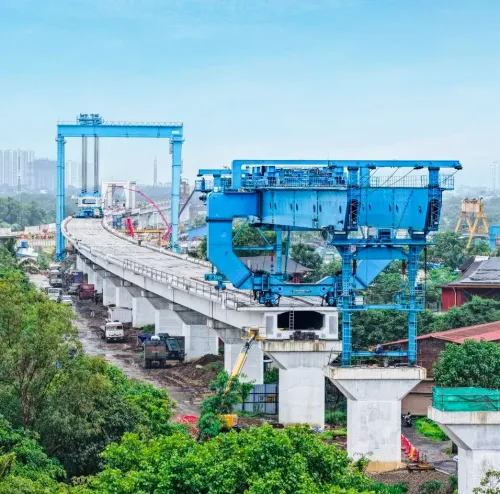
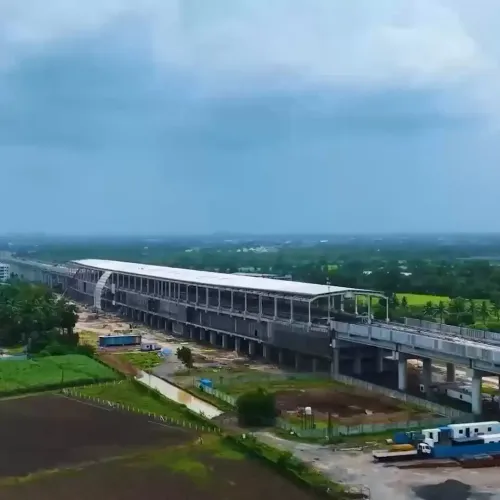
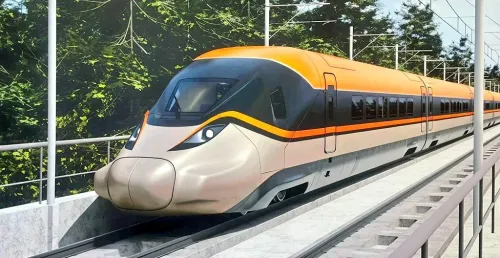
The Mumbai-Ahmedabad High-Speed Rail corridor stretches 508 kilometres and is India's first foray into genuine bullet-train technology, built on a foundation laid — literally — by Prime Minister Modi in Ahmedabad in September 2017. The project draws heavily on Japanese Shinkansen engineering, backed by a concessional loan from the Japan International Cooperation Agency (JICA) approved by the cabinet in 2015. The technology-transfer component is central to its identity: Indian engineers and manufacturers are meant to absorb Shinkansen know-how, seeding a domestic high-speed rail industry rather than simply importing one.
That technology-transfer ambition is precisely why Fadnavis frames the project under the Aatmanirbhar Bharat banner — the self-reliance initiative Prime Minister Modi launched in 2020. The logic is direct: a bullet train built with Japanese blueprints but Indian hands, Indian steel, and Indian civil contractors is exactly the kind of 'self-reliant' infrastructure the initiative envisions. Fadnavis's tagging of Railways Minister Ashwini Vaishnaw signals that the project's execution phase is where political attention is now firmly fixed.
Viksit Bharat's most visible infrastructure bet
The bullet train corridor sits at the intersection of two of the government's biggest narrative threads: Aatmanirbhar Bharat and the Viksit Bharat vision — a developed India by 2047. High-speed rail is the kind of tangible, photographable progress that both slogans need. Western India commuters on one of the country's busiest intercity routes stand to gain the most immediately, but the National Rail Plan envisions the Mumbai-Ahmedabad corridor as a template for additional high-speed routes connecting major economic hubs across the country.
As a chief minister whose state anchors one terminal of the corridor — and as a senior BJP leader with a stake in the government's infrastructure narrative — Fadnavis has a direct political and developmental interest in the project's visible progress. His post is a signal that the momentum is real enough to amplify publicly.
The next hard markers to watch: the phased opening of initial sections on the Mumbai-Ahmedabad alignment and any cabinet announcements on sanctioning additional high-speed corridors under the National Rail Plan. India's bullet-train era is no longer a blueprint pinned to a ministry wall — it is a construction site, and a politically charged one at that.
Point of View
One terminal of which sits in Mumbai. By invoking both 'Aatmanirbhar Bharat' and hashtagging 'Viksit Bharat,' he threads the bullet train into a broader BJP governance narrative that links self-reliance, technology absorption, and 2047 economic aspirations. The tagging of Railways Minister Vaishnaw also subtly signals that the chief minister is watching execution closely — a pressure point as the corridor moves from civil works into the politically rewarding phase of section openings. For the BJP, a running bullet train before the next electoral cycle would be one of the most photogenic infrastructure wins in independent India's history.
NationPress
2 Nov 2026
Frequently Asked Questions
What is the Mumbai-Ahmedabad Bullet Train project?
It is India's first high-speed rail corridor, spanning 508 km between Mumbai and Ahmedabad, built using Japanese Shinkansen technology under a concessional loan from the Japan International Cooperation Agency approved in 2015 .
When was the bullet train foundation stone laid?
Prime Minister Narendra Modi laid the foundation stone for the Mumbai-Ahmedabad High-Speed Rail corridor in Ahmedabad in September 2017 .
What is Aatmanirbhar Bharat and how does the bullet train relate to it?
Aatmanirbhar Bharat is a self-reliance initiative launched by PM Modi in 2020 to boost domestic manufacturing and reduce import dependence. The bullet train project supports the initiative through a technology-transfer arrangement with Japan, aimed at building Indian capacity in high-speed rail manufacturing and engineering.
Why did CM Fadnavis post about the bullet train?
Maharashtra anchors one terminal of the Mumbai-Ahmedabad corridor, giving CM Devendra Fadnavis a direct political and developmental stake in the project's progress. His 2 November 2026 post signals active political attention to the corridor's execution phase.
What is the Viksit Bharat vision linked to this project?
Viksit Bharat is the government's goal of making India a fully developed nation by 2047 . High-speed rail infrastructure like the bullet train is cited as a key pillar of that vision, connecting economic hubs and cutting intercity travel times.