Maharashtra CM Fadnavis Cabinet Takes Decisions on Medical Education
Synopsis
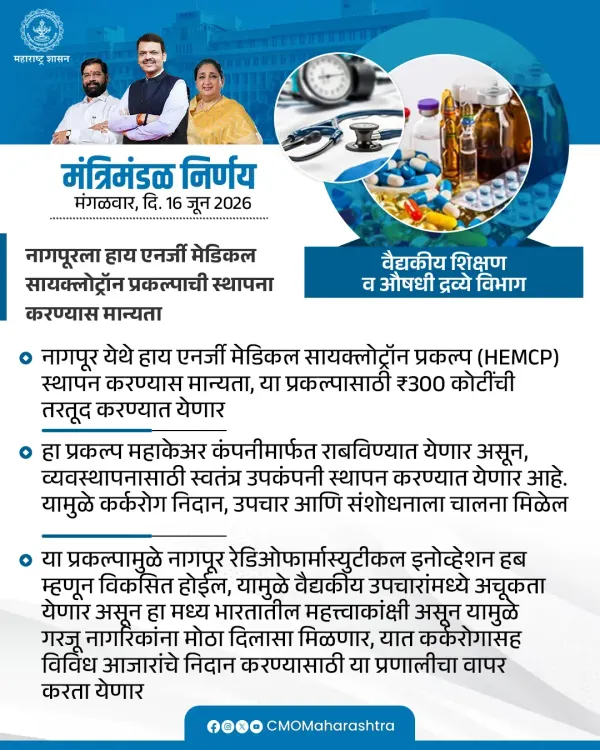
The Chief Minister's Office of Maharashtra announced cabinet decisions on the Medical Education and Pharmaceuticals Department on 16 June 2026. CM Devendra Fadnavis is tagged in the post, signalling direct executive authority over policy moves that affect medical students and the state's large pharmaceutical sector.
Key Takeaways
The Chief Minister's Office of Maharashtra announced cabinet decisions on 16 June 2026 concerning the Medical Education and Pharmaceuticals Department.
Chief Minister Devendra Fadnavis was directly tagged, indicating personal executive ownership of the decisions.
The department oversees government and private medical colleges , pharmaceutical manufacturing regulation, and drug licensing in Maharashtra.
Maharashtra is one of India's largest pharmaceutical manufacturing hubs , making state-level decisions in this portfolio nationally significant.
Formal Government Resolutions (GRs) with full details are expected to be published on the state government's official portal shortly.
Key stakeholders include medical students , aspiring doctors, and pharmaceutical manufacturers operating across the state.
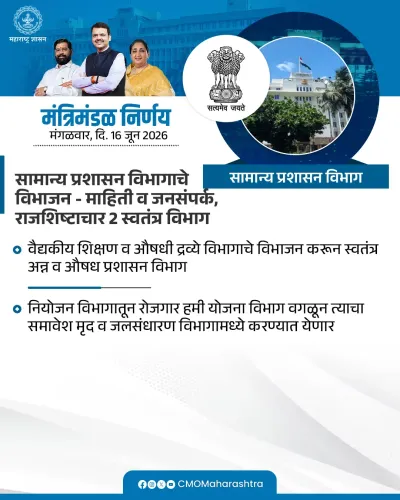
The Chief Minister's Office of Maharashtra announced on Tuesday, 16 June 2026, that the state cabinet chaired by Chief Minister Devendra Fadnavis had taken decisions concerning the Medical Education and Pharmaceuticals Department (वैद्यकीय शिक्षण व औषधी द्रव्ये विभाग). The official post, shared from the CMO's verified account, signals a fresh round of policy action in one of Maharashtra's most consequential governance portfolios.
Context
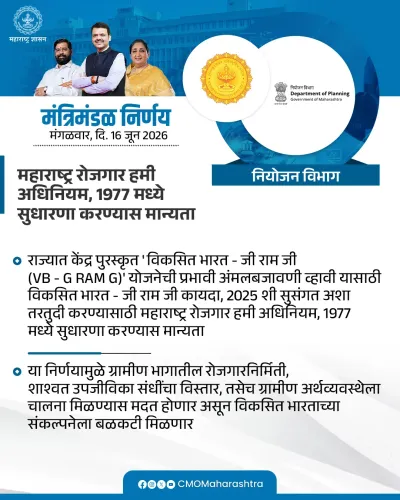
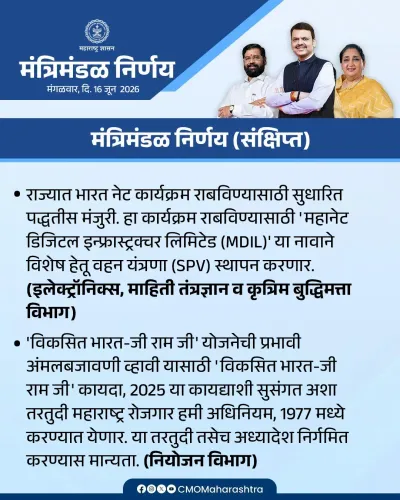
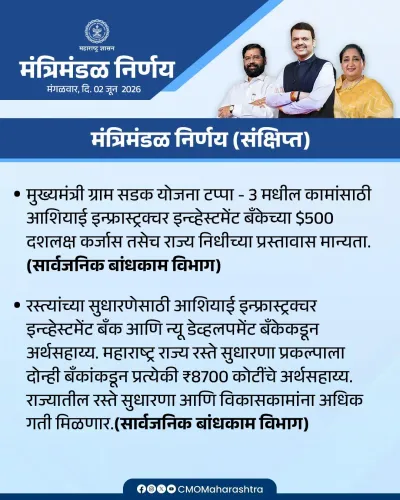
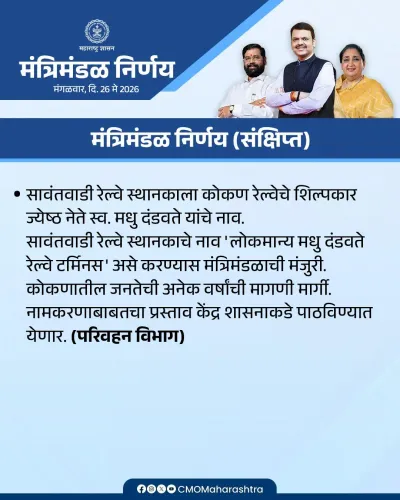
The cabinet decision, as announced by the Chief Minister's Office of Maharashtra, pertains to the state's Medical Education and Pharmaceuticals Department — the body responsible for overseeing government and private medical colleges, regulating pharmaceutical manufacturing, and setting curriculum and licensing standards. The post was accompanied by four images, indicating the release of official government resolution documents or infographics, a standard practice for Maharashtra cabinet communications.
Chief Minister Devendra Fadnavis has been personally tagged in the announcement, underscoring that the decisions carry direct executive authority. Maharashtra's cabinet meetings routinely produce department-specific resolutions, and publishing them through the CMO's social media account has become a key transparency measure for the current administration.
Policy Backdrop
The Medical Education and Pharmaceuticals Department sits at the intersection of two critical sectors for Maharashtra: healthcare workforce development and pharmaceutical industry regulation. The state is home to one of India's largest clusters of pharmaceutical manufacturers, particularly in and around Mumbai and Pune, making drug-related policy decisions especially consequential for industry stakeholders.
During Fadnavis's earlier tenure (2014–2019) as Chief Minister, the state government pursued an expansion of government medical colleges and an increase in MBBS seats to address acute doctor shortages in rural and semi-urban regions. That policy lineage provides the framework within which the current cabinet decisions are likely to be situated, though the specific content of Tuesday's resolutions has not been detailed in the post itself.
Maharashtra's broader healthcare agenda aligns with national targets under central health policy frameworks that seek to scale up medical education infrastructure and rationalise pharmaceutical pricing and supply chains at the state level.
Stakeholders and Impact
Medical students and aspiring doctors stand as the most immediate stakeholders in any decision touching the Medical Education and Pharmaceuticals Department, particularly if the resolutions address seat allocations, fee structures, or college recognition norms. Any expansion of government medical college capacity would directly affect admissions cycles and regional healthcare access.
Pharmaceutical manufacturers operating in Maharashtra — a sector employing hundreds of thousands across the state — are equally attentive to cabinet-level decisions that may affect licensing, pricing controls, or manufacturing standards. Maharashtra accounts for a significant share of India's domestic pharmaceutical output, amplifying the national relevance of state-level regulatory moves.
What's Next
Formal Government Resolutions (GRs) elaborating the specifics of Tuesday's cabinet decisions are expected to be published on the Maharashtra government's official portal in the coming days. These documents will clarify whether the decisions involve new college approvals, changes to seat matrices, drug pricing measures, or regulatory amendments.
Subsequent discussions in the Maharashtra Legislative Assembly, particularly during budget sessions or question hours, are likely to probe the implementation timelines and financial allocations attached to these decisions. Observers tracking Maharashtra's healthcare policy will watch for follow-up notifications from the Directorate of Medical Education and Research (DMER) and the Food and Drug Administration (FDA) Maharashtra as the next indicators of on-ground action.
Point of View
Which resonates strongly with voters, and pharmaceutical regulation, which carries significant industry and revenue implications for Maharashtra. This announcement fits a broader pattern in which the current state government uses structured, department-wise cabinet communication to signal policy momentum ahead of legislative scrutiny. The specifics, once formalised in Government Resolutions, will determine whether this marks incremental administrative action or a more substantive policy shift in either medical education capacity or drug regulation.
NationPress
20 Sept 2026
Frequently Asked Questions
What did the Maharashtra cabinet decide about medical education on 16 June 2026?
The Chief Minister's Office of Maharashtra announced cabinet decisions concerning the Medical Education and Pharmaceuticals Department on 16 June 2026, but the specific content of those resolutions was not detailed in the official post. Full details are expected in formal Government Resolutions to be published on the state government's portal.
What does the Medical Education and Pharmaceuticals Department of Maharashtra do?
The department oversees government and private medical colleges, sets curriculum and licensing standards, regulates pharmaceutical manufacturing, and implements drug-related policies across Maharashtra.
How many MBBS seats does Maharashtra have in government medical colleges?
Maharashtra has expanded its government medical college MBBS seat capacity over successive years, with notable increases during the 2014–2019 Fadnavis administration, though the exact current seat count is subject to annual regulatory updates by the National Medical Commission.
Why is Maharashtra important for India's pharmaceutical sector?
Maharashtra hosts one of India's largest clusters of pharmaceutical manufacturers, particularly around Mumbai and Pune, making it a key contributor to domestic drug production and export, and giving state-level regulatory decisions national significance.
Where can I find the full text of Maharashtra cabinet decisions?
Formal Government Resolutions (GRs) following cabinet decisions are published on the Maharashtra government's official website, typically within a few days of the cabinet meeting.