Maharashtra air ambulance SOPs: 7-member panel formed
Synopsis
Maharashtra has tasked a seven-member panel with drafting ambulance operating procedures within two months. The state also plans to prioritise air ambulance deployment on three major accident-prone corridors, including the Mumbai–Pune Expressway.
Key Takeaways
The Maharashtra government formed a seven-member committee to recommend SOPs for air ambulances and new ambulance services.
Transport Minister Pratap Sarnaik said the report is due within two months of the resolution issued on 23 November .
Additional Transport Commissioner Ravi Gaikwad will chair the committee.
The panel’s remit includes dispatch, fleet availability, equipment, staffing, operator accountability and trauma centre mapping.
Maharashtra plans to prioritise air ambulance deployment on the Samruddhi Mahamarg , Mumbai–Pune Expressway and Mumbai–Goa Highway .
The Maharashtra government has formed a seven-member committee to frame standard operating procedures (SOPs) for air ambulances and new ambulance services across the state. Transport Minister Pratap Sarnaik said the panel must submit its report within two months of the government resolution issued on 23 November.
The committee will examine operational requirements and recommend measures for uniform procedures. The state also plans to prioritise air ambulance deployment along major accident-prone corridors, including the Samruddhi Mahamarg, Mumbai–Pune Expressway and Mumbai–Goa Highway.
Panel formed after transport and health meeting
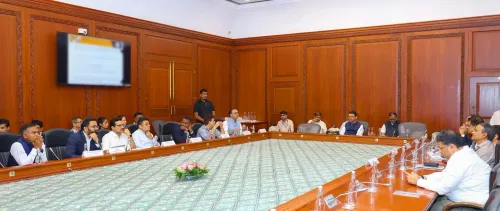
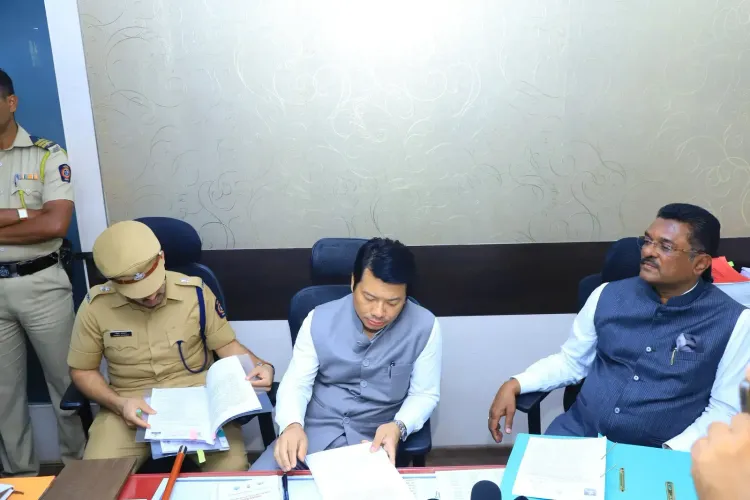
The decision follows a high-level meeting on 13 October 2026, chaired by Sarnaik and attended by Public Health Minister Prakash Abitkar. Officials discussed the need for separate SOPs to regulate air ambulances and newly introduced ambulance services in Maharashtra.
Following the meeting, the Transport Commissioner’s Office was instructed to constitute the committee. It was formally established through the government resolution on 23 November.
The resolution gives the panel two months from its issuance to submit a final report with recommendations. The source does not specify when the proposed procedures would take effect.
Committee membership and responsibilities
Additional Transport Commissioner Ravi Gaikwad will head the committee. Sachinkumar Giri, Deputy Transport Commissioner, Road Safety Cell, will serve as member secretary.
The other members are Mokshada Patil, Additional Commissioner of Police (Traffic); Sunil Bhardwaj, Superintendent of Police in the Office of the Additional Director General of Police (Traffic); and Rajashree Sarang, Deputy Secretary, Public Health Department. They are joined by Jayant Mule, Deputy Director, and Pramod Tawde, Deputy Superintendent of Police, Road Safety Cell in the Transport Commissioner’s Office.
The panel brings together transport, traffic, road safety and public health officials. Its assignment covers both air ambulances and new ambulance services rather than air transport alone.
Fleet, staffing and dispatch standards
The proposed protocols will cover fleet availability, emergency dispatch, technical and medical equipment benchmarks, staff qualifications, operator accountability and trauma centre mapping.
These areas span the movement of a patient from dispatch to a suitable treatment facility, as well as the equipment and personnel available during transport. The committee’s report is intended to set out recommendations for a uniform approach across the state.
Officials said the decision would streamline operations and accelerate the rollout of standardised, well-planned emergency medical transport services. Specific standards and implementation arrangements remain for the committee’s report and subsequent government action.
Priority corridors for air ambulance deployment
The state plans to prioritise the Samruddhi Mahamarg, Mumbai–Pune Expressway and Mumbai–Goa Highway for air ambulance deployment because they are major accident-prone corridors.
The stated aim is to help critically injured trauma patients reach care within the “golden hour”. The source does not provide a deployment timetable or specify how many aircraft will be available on the routes.
The next step is the committee’s report within the stipulated two-month period; the final procedures and their implementation will depend on what the government does with its recommendations.
Point of View
Equipment and staffing, and how compliance will be checked. Prioritising accident-prone corridors is a start, but the eventual plan should also explain fleet availability and connections to trauma centres. The government should publish the recommendations and an implementation timetable so the public can assess progress.
NationPress
23 Nov 2026
Frequently Asked Questions
What has Maharashtra announced for air ambulance services?
Maharashtra has formed a seven-member committee to recommend standard operating procedures for air ambulances and new ambulance services. The panel will examine operational requirements across the state.
When will the Maharashtra ambulance committee submit its report?
The committee must submit its report within two months of the government resolution issued on 23 November. No date has been specified for the proposed procedures to take effect.
Who heads the Maharashtra air ambulance SOP panel?
Additional Transport Commissioner Ravi Gaikwad heads the seven-member committee. Deputy Transport Commissioner Sachinkumar Giri is its member secretary.
Which Maharashtra highways are prioritised for air ambulances?
The state plans to prioritise the Samruddhi Mahamarg, Mumbai–Pune Expressway and Mumbai–Goa Highway. The aim is to help critically injured patients reach care within the golden hour.
What will the new ambulance procedures cover?
The proposed procedures will cover fleet availability, emergency dispatch, equipment, staffing qualifications, operator accountability and trauma centre mapping. The committee will recommend measures for both air ambulances and new ambulance services.