Maharashtra MPID Act amendment: Crypto frauds covered, trial delays curbed
Synopsis
Maharashtra has amended its 25-year-old depositor protection law to cover cryptocurrency scams for the first time — closing a loophole that fraudsters had exploited for years. With ₹38,000 crore in fraud recoveries still pending and courts clogged by adjournment tactics, the state is now capping delays at two hearings and requiring fraudulent firms to pre-deposit 50% of liability before filing an appeal.
Key Takeaways
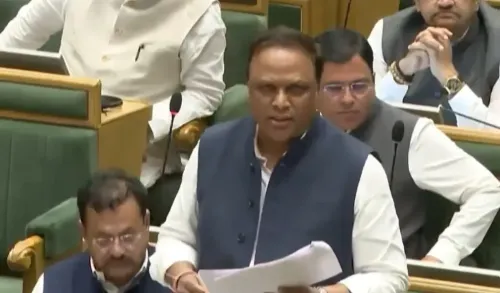
The Maharashtra Legislative Assembly passed the MPID Act amendment Bill on 1 July , piloted by MoS Home Yogesh Kadam .
Virtual digital assets, including cryptocurrencies, are now formally classified as 'deposits' under the Act, enabling prosecution of crypto-based Ponzi schemes.
Courts are restricted to a maximum of two adjournments , with one additional adjournment only in exceptional cases.
Property attachments must be made 'absolute' within 180 days ; auction proceeds can be distributed to investors even before trial concludes.
Financial establishments must deposit 50% of total liability with the Competent Authority before any appeal is entertained.
Recovery of ₹38,000 crore linked to financial frauds remains pending in Maharashtra.
The Maharashtra Legislative Assembly on Wednesday, 1 July passed a Bill to amend the Maharashtra Protection of Interest of Depositors (in Financial Establishments) Act, 1999, bringing cryptocurrency and other virtual digital assets within the law's ambit for the first time and imposing strict limits on court adjournments to speed up relief for cheated investors. The Bill was piloted by Minister of State for Home Yogesh Kadam.
Why the Amendment Was Needed
Under Section 2(c) of the original MPID Act, virtual digital assets were not classified as 'deposits', creating a regulatory blind spot that fraudsters routinely exploited to run cryptocurrency-based Ponzi and unauthorised deposit schemes. The government noted a sharp rise in such scams, with recovery of an estimated ₹38,000 crore linked to financial frauds remaining pending.
Because blockchain-based instruments fell outside the Act's definition, law enforcement agencies faced significant hurdles in prosecuting perpetrators and attaching their assets. The amendment closes this gap by formally including all virtual digital assets within the definition of a deposit.
Key Changes to Court Proceedings
To tackle deliberate delays in legal proceedings, the Bill amends Section 7 of the Act in alignment with the Bharatiya Nagarik Suraksha Sanhita, 2023. The Designated Court will now be restricted to granting a maximum of two adjournments, with only one additional adjournment permissible under exceptional circumstances.
Separately, the Designated Court is required to decide on making a property attachment 'absolute' within 180 days of the initial application — addressing the long-standing problem of properties remaining 'attached on paper' but legally unsaleable. Once an order is made absolute, the government is empowered to initiate the auction process immediately, and proceeds can be distributed to investors even while the accused is still on trial.
Curbing Appeals Used as Delay Tactics
The Bill also amends Section 11 to address a common stalling tactic: fraudulent financial establishments filing appeals against court orders solely to delay the return of depositors' money. Under the new provision, no appeal by a financial establishment will be admitted unless it deposits 50 per cent of its total liability with the Competent Authority upfront.
This pre-deposit condition is expected to deter frivolous appeals and accelerate the recovery pipeline for duped investors.
Government's Position
Minister Kadam said the Bill aims to reinforce consumer safety in Maharashtra's financial sector, particularly given the scale of pending fraud recoveries. Chief Minister Devendra Fadnavis, who had announced the amendments during the Winter Session of the state Legislature, framed the adjournment cap in direct terms: 'To stop the practice of date-seeking by defence lawyers, the proposed amendment will now strictly limit adjournments to just two. Justice for depositors cannot wait for the convenience of the accused.'
The passage of the Bill marks a significant step in Maharashtra's effort to modernise its depositor-protection framework for the era of digital finance, with implementation details and court notifications expected to follow in due course.
Point of View
000 crore frozen for years. The real test will be implementation — whether Designated Courts enforce the 180-day deadline in practice, and whether the Competent Authority has the capacity to process attachments at scale. Legislative intent and ground-level execution have diverged before on financial crime in India.
NationPress
30 Sept 2026
Frequently Asked Questions
What does the Maharashtra MPID Act amendment cover?
The amendment expands the Maharashtra Protection of Interest of Depositors Act, 1999 to include virtual digital assets such as cryptocurrencies within the definition of a 'deposit', enabling prosecution of crypto-based Ponzi and unauthorised deposit schemes. It also tightens court procedures to speed up relief for defrauded investors.
How does the amendment limit court adjournments?
Under the amended Section 7, the Designated Court can grant a maximum of two adjournments, with only one additional adjournment permitted in exceptional circumstances. This aligns with the Bharatiya Nagarik Suraksha Sanhita, 2023 and is aimed at preventing deliberate delays by accused parties.
What is the 50% pre-deposit condition for appeals?
Under the amended Section 11, no financial establishment can file an appeal against a court order unless it first deposits 50% of its total liability with the Competent Authority. The provision is designed to deter fraudulent firms from using appeals solely to delay returning depositors' money.
How much money is pending recovery in Maharashtra financial fraud cases?
According to the state government, recovery of approximately ₹38,000 crore linked to financial frauds is pending in Maharashtra. The amendment is intended to accelerate this recovery by removing procedural bottlenecks.
Can investors receive money before the accused is convicted?
Yes. Under the amended law, once a property attachment is made 'absolute' — which must happen within 180 days of the initial application — the government can immediately begin the auction process and distribute proceeds to investors even while the criminal trial against the accused is still ongoing.