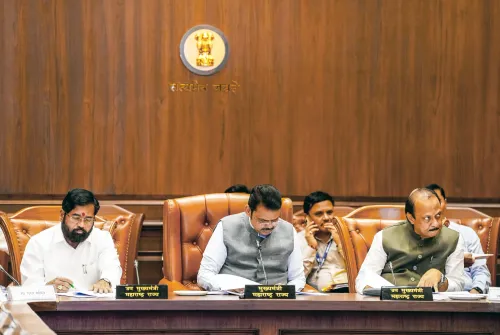
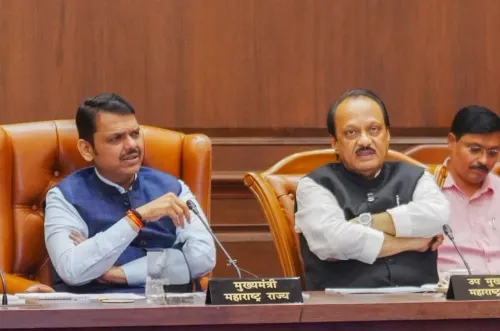
Did the Maha Assembly approve a bill to enhance trust-based governance?
Synopsis
The Maharashtra Assembly's recent bill approval revolutionizes governance, prioritizing trust over punishment. It aims for smoother business operations and improved citizen experience. A must-read for those invested in Maharashtra's economic landscape!
Key Takeaways
Unanimous Approval: The Maharashtra Jan Vishwas Act received unanimous support in the assembly.
Decriminalisation Focus: A significant objective is to decriminalise minor offences.
Trust-Based Governance: The bill promotes a transition to a trust-based framework.
Administrative Efficiency: It aims to improve efficiency in government operations.
Investor Protection: The act seeks to enhance protections for investors.
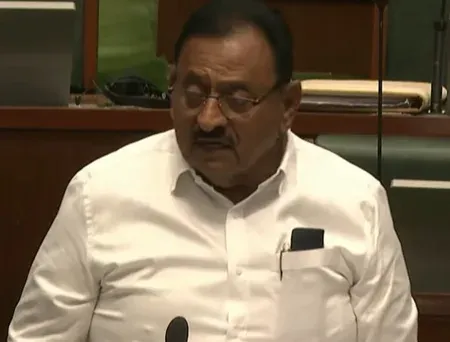
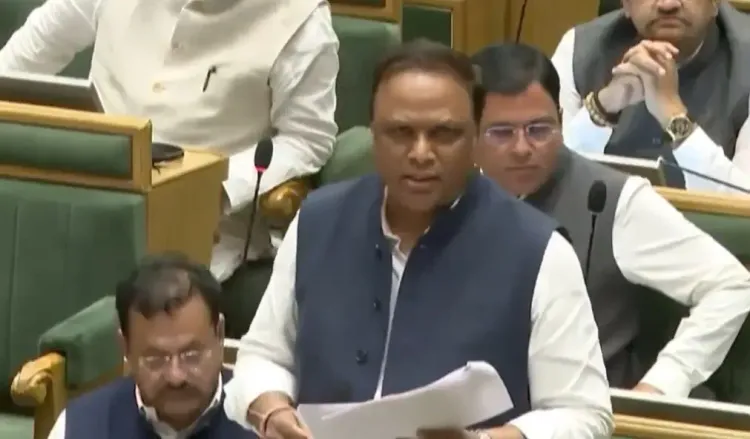
Nagpur, Dec 10 (NationPress) The Maharashtra State Legislative Assembly has unanimously approved the Maharashtra Jan Vishwas (Amendment of Provisions) Act, 2025 on Wednesday. This legislation aims to decriminalise and rationalise certain offences under various state laws, ultimately enhancing trust-based governance to improve both the ease of living and the ease of doing business within the state.
The bill was introduced by the Minister of Information Technology, Ashish Shelar.
This legislative measure proposes a significant shift in the regulatory framework, transitioning from a punitive approach, which includes criminal penalties, to one built on trust and civil penalties. It aims to lessen the compliance burden, litigation, and unnecessary criminal penalties for routine, technical, or procedural non-compliance. Further, it aims to modernise penalty frameworks and rationalise punitive provisions, thereby creating a more predictable and investment-friendly climate.
Notably, the bill suggests replacing imprisonment for minor and technical violations with civil penalties or fines. This change is intended to free up judicial and enforcement resources, while also reducing costs for both citizens and businesses.
“The state government is looking to substitute punishments for minor infractions with civil penalties to reduce the burden on courts and enhance administrative efficiency. While serious offences threatening public order, health, or safety will remain criminal, the bill decriminalises minor non-compliance and outdated regulatory requirements. It also revises and regionalises fines,” the bill states.
Amendments proposed by the bill extend to the Maharashtra Shops and Establishments (Regulation of Employment and Conditions of Service) Act, 2017; Maharashtra Industrial Relations Act, 1946; The Maharashtra Stamp Duty Act, 1958; Maharashtra Medical Council Act; Maharashtra Recognition of Trade Unions and Prevention of Unfair Labour Practices Act, 1971; Maharashtra State Tax on Professions, Trades, Callings and Employments Act, 1975; and the Maharashtra Nursing Homes Registration Act.
Welcoming the bill, NCP SP legislator and former finance minister Jayant Patil urged the government to introduce another bill aimed at protecting investors from harassment by various sections.
He asserted that this new legislation would bolster investor protection and further enhance Maharashtra's status as an attractive investment destination.
Minister Shelar responded affirmatively, assuring that the government would safeguard investors, adding that the Jan Vishwas Act is integral to improving the ease of doing business for citizens and investors, while also simplifying procedures.
“This is part of a structural reform initiative designed to streamline administrative processes and promote entrepreneurship and economic growth in Maharashtra,” he remarked.
The bill outlines that a primary aspect of the Viksit Maharashtra Vision is reforming the regulatory framework to shift from a punitive, compliance-heavy system to a trust-based facilitative model of governance.
“Excessive regulation and minor technical offences impose significant costs on businesses, citizens, and the state. Such regulations not only deter entrepreneurship and complicate the ease of doing business and living, but also overburden the judicial system and diminish administrative efficiency,” the bill concluded.
Point of View
Such reforms are crucial in establishing Maharashtra as a leading destination for investment in India.
NationPress
2 Oct 2026
Frequently Asked Questions
What is the Maharashtra Jan Vishwas Act?
The Maharashtra Jan Vishwas (Amendment of Provisions) Act, 2025 aims to decriminalise and rationalise certain offences under various state laws for improved governance.
Who presented the bill?
The bill was presented by the Minister of Information Technology, Ashish Shelar.
What are the main goals of the bill?
The main goals include reducing the compliance burden, shifting from punitive to trust-based governance, and enhancing the ease of doing business in Maharashtra.
What changes does the bill propose regarding penalties?
The bill proposes replacing imprisonment for minor and technical violations with civil penalties or fines.
How will this bill benefit investors?
This bill aims to protect investors by reducing harassment from various sections and enhancing the investment climate in Maharashtra.