Why is Maharashtra Facing Turmoil Over Ticket Distribution in BMC Elections?
Synopsis
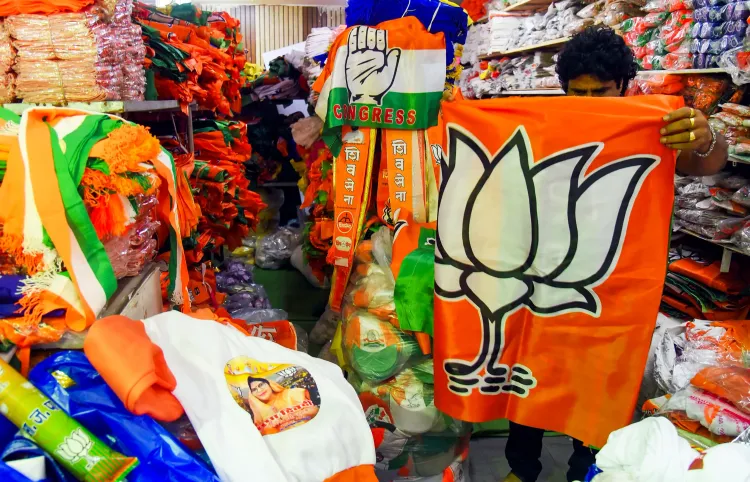
As Maharashtra approaches its municipal elections, tensions are rising across political parties due to contentious ticket distribution. With protests and heated exchanges erupting in cities like Nashik and Nagpur, the situation has drawn significant attention. This unrest highlights the challenges faced by political factions amid internal conflicts and the implications for upcoming elections.
Key Takeaways
Unrest is escalating across multiple political parties in Maharashtra due to ticket distribution issues.
Nashik and Nagpur have become focal points of protests and dissent.
Political leaders are facing backlash from long-time members sidelined in favor of newcomers.
Swift action is needed from party leadership to address grievances and restore trust.
The upcoming elections may be significantly influenced by these internal conflicts.
Mumbai, Dec 30 (NationPress) On the final day for submitting nominations for the elections involving 29 municipal corporations, including the Brihanmumbai Municipal Corporation, Maharashtra experienced significant unrest among various political factions. This turmoil was especially evident in Nashik and Nagpur, with escalating discontent in cities like Mumbai, Jalgaon, Sambhajinagar, Thane, and beyond concerning the distribution of tickets.
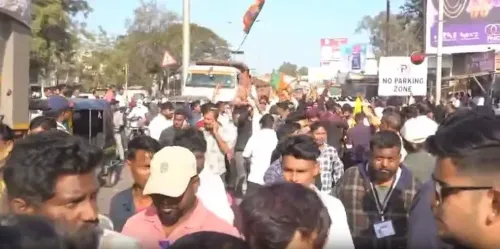
Nashik became a focal point of contention as frustrated BJP candidates allegedly pursued vehicles carrying AB forms throughout the city.
The vehicle of local BJP president Sunil Kedar was tailed by eager ticket seekers, resulting in tense moments on the Nashik-Mumbai highway. The convoy also included BJP MLAs Rahul Dhikle and Seema Hiray, according to reports.
The situation intensified in Nashik’s ward 26, where a heated discussion erupted between BJP office-holder Kailas Ahire and MLA Seema Hiray regarding the distribution of AB forms.
Ahire charged the MLA with attempting to revoke his ticket, despite the form already being issued. This disagreement, which unfolded outside the election decision officer's office, was recorded and quickly spread online.
Aspirants from neighborhoods like Panchavati and New CIDCO voiced their frustrations, alleging that dedicated workers were being overlooked in favor of newcomers.
Adding to the drama in Nashik, the BJP’s choice to nominate Riddhish Nimse, the son of former corporator Uddhav Nimse—currently incarcerated in connection with the Dhotre murder case—sparked further controversy.
Nashik district guardian minister Girish Mahajan responded critically, stating, “What transpired was not suitable. We made promises to new BJP members and needed to honor those. The number of candidates far exceeded the available seats.”
In Nagpur, a Shiv Sena member, Yogesh Gonnade, who lost his mother on the last day for nominations, initially gave up his election ambitions. However, Shiv Sena leaders arrived at the crematorium and provided him with the AB form while the last rites were being performed.
After completing the funeral ceremonies, Gonnade hurried to the Sataranjipura zonal office to submit his nomination for ward five just moments before the deadline.
Nagpur also witnessed BJP members protesting outside Union minister Nitin Gadkari's home after being denied tickets. Some expressed their distress through tears, while others threatened self-immolation, claiming that party tickets were awarded to candidates who had joined the BJP recently, sidelining long-time members.
In Mumbai, unrest was palpable across party lines. Aspirants from Shiv Sena (UBT) demonstrated outside Matoshree after being denied candidacies, with slogans heard in areas like Mankhurd and Dharavi.
In the faction of Shiv Sena led by Chief Minister Eknath Shinde, party members in Dahisar displayed black flags against MLA Prakash Surve after ward three was allocated to the BJP as part of their alliance.
Shiv Sena Shakha chief Prakash Pujari and his supporters accused senior leaders of keeping local members uninformed while the seat was assigned to BJP MLC Pravin Darekar’s sibling, Prakash Darekar. Aspirant Vaishnavi Pujari also criticized senior leadership for favoring an external candidate.
In Chembur’s ward 155, BJP aspirants Jayshree Kharat, Harsh Salve, and Shashikala Kamble submitted nominations as independents after the party allegedly awarded a ticket to former corporator Shrikant Shetye, who had transitioned to the BJP from Shiv Sena (UBT) only two days earlier, paving the way for a multi-cornered contest.
In the Mira-Bhayandar municipal body, the denial of a BJP ticket to Shradha Bane reportedly led to a medical emergency, with her mother and former women's district president, Vanita Bane, experiencing a cardiac arrest. She was admitted to a hospital in Mira Road, with her condition reported as stable.
In Jalgaon, the Ajit Pawar-led Nationalist Congress Party (NCP) found itself in turmoil after city president Abhishek Patil unexpectedly resigned, citing disagreements with district president Sanjay Pawar and former minister Gulabrao Deokar regarding seat allocations.
Senior figures, including Sanjay Pawar, Deokar, and former MLA Manish Jain, later met to convince Patil to retract his resignation. Patil’s mother, Kalpanabai Patil, a women’s office-bearer of the party, also participated in reconciliation efforts.
In Sambhajinagar and Thane, BJP aspirants also protested vigorously against the denial of tickets, accusing party leaders of neglecting committed members.
In Navi Mumbai, party legislator Manda Mhatre refused the AB forms handed to her son and three party workers, alleging she had not received her fair share in ticket distribution. She criticized party minister Ganesh Naik over the ticket allocation issues.
Both ruling and opposition parties took swift action to calm the discontented members and address the internal disputes.
Point of View
It is evident that political parties are grappling with internal dissent. The situation underscores the need for transparent processes to mitigate conflict and strengthen party unity. As we move towards the elections, it is crucial for all factions to address their members' grievances in a manner that fosters trust and engagement.
NationPress
19 Sept 2026
Frequently Asked Questions
What caused the unrest in Maharashtra's political parties?
The unrest is primarily due to dissatisfaction over ticket distribution for the upcoming municipal elections, resulting in protests and heated arguments among party members.
Which cities are most affected by the unrest?
Cities like Nashik, Nagpur, Mumbai, Jalgaon, Sambhajinagar, and Thane have reported significant unrest among political party members.
What actions are being taken to address the unrest?
Both ruling and opposition parties are actively working to pacify disgruntled members and manage internal disputes to ensure a smoother electoral process.
What are the implications of this unrest for the upcoming elections?
The internal conflicts may impact party cohesion and voter perception, potentially influencing election outcomes across various municipal corporations.
How has the BJP responded to the protests?
The BJP has acknowledged the unrest and is attempting to address the concerns of its members, including reassessing ticket allocations.