Maharashtra launches AI and Digital Twin Learning pilot for 10,000 farmers
Synopsis
Maharashtra is betting on AI and Digital Twin Learning to fix farming — and early sugarcane trials back the ambition. Yields jumped by 17.66 tons per acre while water use fell 42%, conserving 90,000 litres per hectare daily. With 10,000 farmers in the pilot and eight crops in scope, the state's push could redefine agri-tech adoption in India's largest farming economy.
Key Takeaways
CM Devendra Fadnavis directed Maharashtra's Agriculture Department on 21 August to implement an AI and Digital Twin Learning pilot project.
The pilot initially covers 10,000 farmers across eight crops including cotton, sugarcane, soybean, and turmeric.
Sugarcane yields in early trials rose from 65.45 tons/acre to 73.12 tons/acre — a gain of 17.66 tons/acre .
AI-driven irrigation cut water usage by 42% , saving approximately 90,000 litres per hectare daily .
The project was developed by the Agricultural Development Trust at Baramati and uses satellites, drones, IoT sensors, and data analytics.
A statewide rollout will follow region-wise and crop-wise performance evaluation.
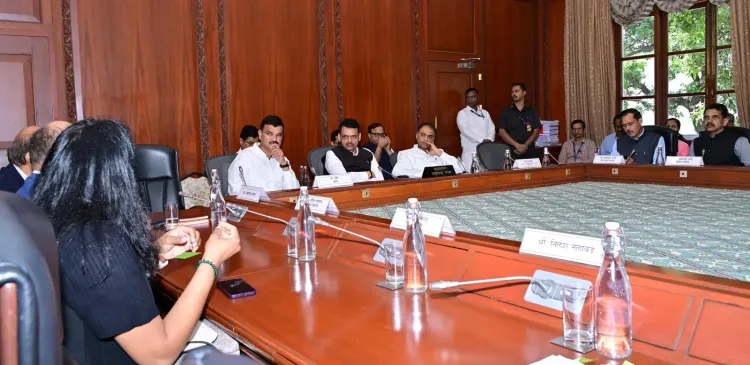
Maharashtra Chief Minister Devendra Fadnavis on Friday, 21 August directed the state's Agriculture Department to roll out a pilot project combining Artificial Intelligence (AI) and Digital Twin Learning technology to boost crop productivity across the state. The initiative, developed by the Agricultural Development Trust at Baramati, will initially cover 10,000 farmers and target eight key crops.
What the Pilot Covers
The project deploys an integrated stack of satellite technology, drones, IoT sensors, and data analytics to build a unified digital model of farm conditions. Data on crop growth, soil moisture, water requirements, weather patterns, and pest outbreaks is fed into machine learning algorithms that then deliver personalised crop advisories directly to farmers' mobile phones.
Crops targeted in this phase include cotton, soybean, pigeon pea (tur), sugarcane, orange, turmeric, onion, and maize — a cross-section of Maharashtra's most economically significant produce.
Early Trial Results
Nilesh Nalawade, CEO of the Agricultural Development Trust, presented pilot outcomes at the meeting. Sugarcane trials showed average yields climbing from 65.45 tons per acre to 73.12 tons per acre — a gain of 17.66 tons per acre. AI-driven irrigation management reportedly delivered average water savings of 42 per cent, conserving roughly 90,000 litres of water per hectare daily. Drone imagery processed through AI is also enabling early detection of crop diseases, with actionable alerts pushed to farmers in near real time.
What the Government Said
Chief Minister Fadnavis underscored the need for a unified digital system to address climate change, water scarcity, declining soil fertility, and rising production costs — structural challenges that have squeezed Maharashtra's farming community for years. He said that analysing multi-source farm data through machine learning would allow the state to cut input costs and raise overall farm income.
State Agriculture Minister Dattatray Bharane called AI-based farming a government priority and expressed confidence that the project would deliver transformative growth to the state's agricultural sector. Pratap Pawar, Chairman of Sakal Media Group, welcomed the government's backing, noting that state support is essential for scaling such initiatives.
What Happens Next
With more than 10,000 farmers having already experienced positive outcomes from initial trials, the state plans to evaluate region-wise and crop-wise performance data before deciding on a statewide rollout. The phased assessment approach signals a measured expansion strategy rather than an immediate blanket deployment — a notable contrast to past agri-tech schemes that scaled prematurely. How quickly the model can be replicated across Maharashtra's diverse agro-climatic zones will be the critical test ahead.
Point of View
Patchy internet connectivity, and the variable literacy levels of smallholder farmers who make up the bulk of the 10,000-strong cohort. The Baramati trust's institutional credibility lends the project legitimacy, but independent verification of the trial data — and a transparent expansion framework — will determine whether this becomes a template for Indian agriculture or another promising pilot that never quite scaled.
NationPress
6 Oct 2026
Frequently Asked Questions
What is Maharashtra's AI and Digital Twin Learning agriculture project?
It is a state-directed pilot that uses Artificial Intelligence and Digital Twin Learning — combining satellite data, drones, IoT sensors, and machine learning — to deliver personalised crop advisories to farmers. Developed by the Agricultural Development Trust at Baramati, the pilot initially covers 10,000 farmers across eight crops.
What results did the early trials show?
Sugarcane trials showed average yields rising from 65.45 tons per acre to 73.12 tons per acre, a gain of 17.66 tons per acre. AI-driven irrigation management also cut water consumption by 42%, saving around 90,000 litres per hectare daily.
Which crops are covered under the pilot?
The eight crops targeted in the first phase are cotton, soybean, pigeon pea (tur), sugarcane, orange, turmeric, onion, and maize — representing Maharashtra's most economically significant agricultural output.
When will the project expand statewide?
A statewide rollout has not been given a fixed date. The government plans to first evaluate region-wise and crop-wise performance from the 10,000-farmer pilot before deciding on broader expansion.
Who is leading the initiative?
The project was developed by the Agricultural Development Trust at Baramati, whose CEO Nilesh Nalawade presented the pilot results. CM Devendra Fadnavis directed the Agriculture Department to implement it, with Agriculture Minister Dattatray Bharane calling AI-based farming a state priority.