Maharashtra Launches Solar Micro-Grid Initiative for Melghat Villages
Synopsis
Maharashtra's Chief Minister Devendra Fadnavis has revealed a transformative Solar Micro-Grid initiative aimed at providing reliable electricity to remote Melghat villages. This innovative project replaces individual solar units with a centralized microgrid, enhancing energy access in this challenging terrain.
Key Takeaways
Solar Micro-Grid Initiative: A centralized approach to electricity in Melghat.
Overcoming Geographic Challenges: Addressing the limitations of traditional power grids.
Community Empowerment: Enhancing energy access for isolated villages.
Farmers' Support: Free electricity scheme for limited consumption.
Infrastructure Improvements: Prioritizing road repairs in the region.
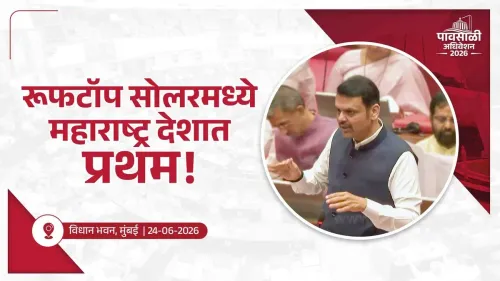
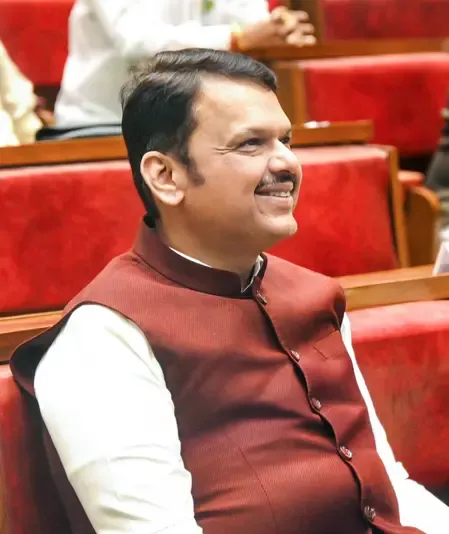
Mumbai, March 10 (NationPress) The Chief Minister of Maharashtra, Devendra Fadnavis, announced in the state assembly on Tuesday that the government is implementing the Solar Micro-Grid initiative aimed at supplying electricity to the isolated villages in Melghat.
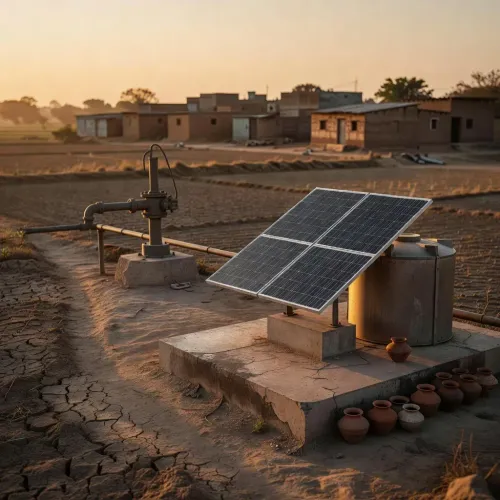
Instead of installing individual solar panels for each household, a centralized, high-capacity solar installation will be established in the village to form a microgrid. The electricity generated, supported by battery storage, will be distributed to all residences in the area.
The issue of electricity access and other essential services in the Melghat region, specifically in the Dharni and Chikhaldara talukas of Amravati district, was highlighted by MLA Sulabha Khodke. Other members like Jayant Patil and Dilip Walse-Patil also contributed to the discussion.
Fadnavis pointed out that many villages in Melghat are situated in dense forest reserves, making it unfeasible to connect them through the conventional power grid.
He remarked that past attempts were hindered due to the absence of permissions from the Forest Department.
“In 2017, the government opted to provide individual solar systems to homes. Under the ‘Saubhagya’ program in 2018, numerous households received electricity. However, because of the region’s remoteness, Annual Maintenance Contracts could not be effectively executed, resulting in system malfunctions,” he stated.
The Chief Minister revealed that solar micro-grid installations are complete in two villages, while projects in five others are actively progressing through NGO efforts. The tender process for four villages has been finalized, with about Rs 20 crore allocated for the remaining areas.
Additionally, he mentioned that road repairs and surfacing in four villages will be prioritized.
In response to another inquiry, Fadnavis clarified that the Mukhyamantri Baliraja Free Electricity Scheme is applicable only to users consuming up to 7.5 Horsepower (HP). Farmers who limit their electricity consumption to this threshold will qualify for the scheme’s advantages. This was in response to concerns raised by MLA Satyajeet Deshmukh regarding farmers in Shirala taluka (Sangli district) who feel they are missing out on benefits.
Following grievances from Shirala farmers about inflated electricity bills, a site inspection of 52 connections was conducted. The investigation confirmed that the bills were correct and represented actual high usage, according to the Chief Minister.
He further explained that there is a special independent rate applied to these consumers, which differs from the standard rate, and the government is “considering positive options” for additional relief.
Fadnavis reiterated that consumers exceeding 7.5 HP are ineligible for the scheme.
He clarified that the classification of agricultural pumps is determined by the Maharashtra Electricity Regulatory Commission (MERC), not the Maharashtra State Electricity Distribution Company Limited (MSEDCL).
A proposal for a separate classification was submitted to the Commission but did not receive approval. However, he assured that efforts to assist farmers will persist.
Point of View
The introduction of solar micro-grids in Melghat showcases the government's commitment to renewable energy and the need for innovative solutions in hard-to-reach areas. This initiative can potentially uplift communities by providing essential services and promoting sustainable development.
NationPress
7 Oct 2026
Frequently Asked Questions
What is the Solar Micro-Grid initiative?
The Solar Micro-Grid initiative is a government program aimed at providing electricity to remote villages in Melghat through a centralized solar power system instead of individual solar units.
Why are traditional power grids not feasible in Melghat?
Many villages in Melghat are located in dense forest reserves, making it impractical to connect them to the conventional power grid.
What are the benefits of the Mukhyamantri Baliraja Free Electricity Scheme?
This scheme offers free electricity to farmers who consume up to 7.5 Horsepower, helping to reduce their electricity costs.
How is the electricity distributed in the micro-grid model?
Electricity generated from a centralized solar project is stored in batteries and distributed to all households within the village.
What are the future plans for road repairs in Melghat?
Road repairs and tarring work in four villages are set to be prioritized to improve access and infrastructure.