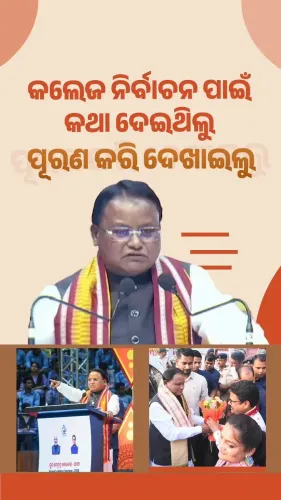
CM Majhi restores Odisha student union polls after 8-year ban
Synopsis
Odisha CM Mohan Charan Majhi declared that his BJP government has restored student union elections after an eight-year suspension under the previous BJD administration, framing it as a restoration of students' democratic rights and leadership opportunities.
Key Takeaways
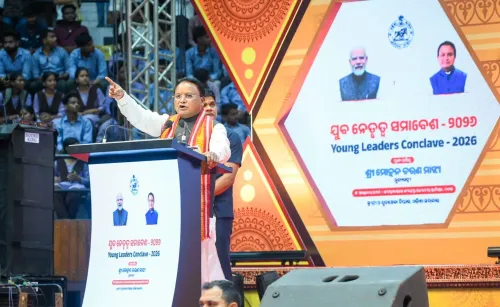
Odisha CM Mohan Charan Majhi announced on 18 October 2026 that his government has restored student union elections in the state.
Student elections had been suspended for eight years under the previous Biju Janata Dal government led by Naveen Patnaik .
Majhi criticised former student-politicians-turned-legislators for remaining silent when the elections were stopped.
The BJP ended the BJD's unbroken 24-year rule in Odisha after the 2024 assembly elections .
The restoration is part of the new administration's broader youth-engagement agenda; conduct of campus polls across universities is the next operational step.
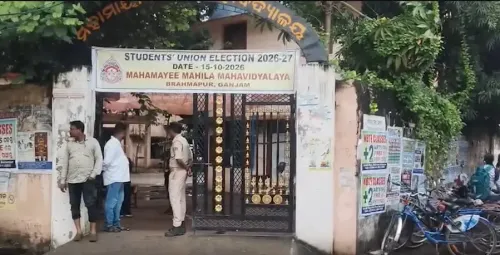
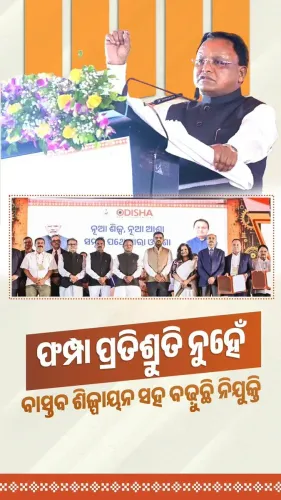
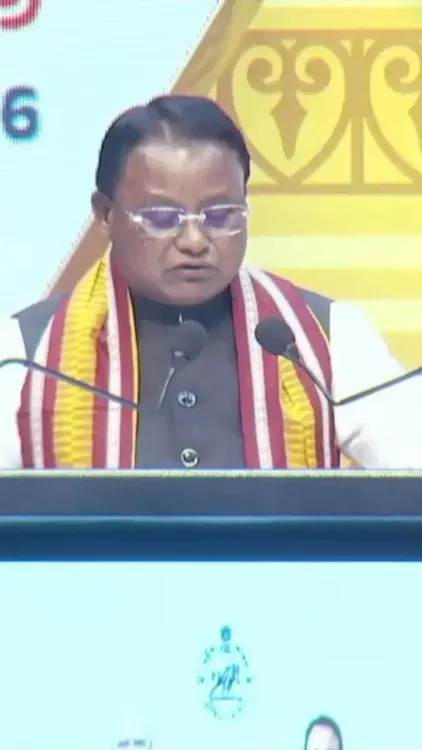
For eight years, the college campuses of Odisha fell silent on one specific front — no student union elections, no student leaders chosen by ballot, no pipeline of young democratic talent. Odisha Chief Minister Mohan Charan Majhi used the platform of X on Sunday, 18 October 2026, to draw a sharp line between that era and now, announcing that his government has restored student elections and returned to students their right to lead.
Posting in both Odia and English, CM Majhi framed the revival as a matter of democratic rights, not mere administrative procedure. 'Chaatra chhaatrīṅka gaṇatāntrika adhikāra o netṛtwa bikāśara sujogaku dīrgha 8 barṣa dhare banda kari rakhāyāithilā' — 'For eight long years, the democratic rights and leadership-development opportunities of students were kept shut,' he wrote. His sharpest line was pointed squarely at those who benefited from student politics but stayed quiet when it was switched off: those who 'once came from student politics to become ministers, legislators and MPs remained silent when student parliament elections were stopped.'Eight years of closed campuses and the BJD era
The suspension of student union elections in Odisha's colleges and universities stretches back through the final years of the Biju Janata Dal government led by former Chief Minister Naveen Patnaik, which governed the state continuously from 2000 to 2024 — one of the longest unbroken regional tenures in modern Indian politics. The eight-year hiatus meant an entire generation of undergraduate students entered and exited higher education without ever casting a vote for their own representatives or running for campus office.
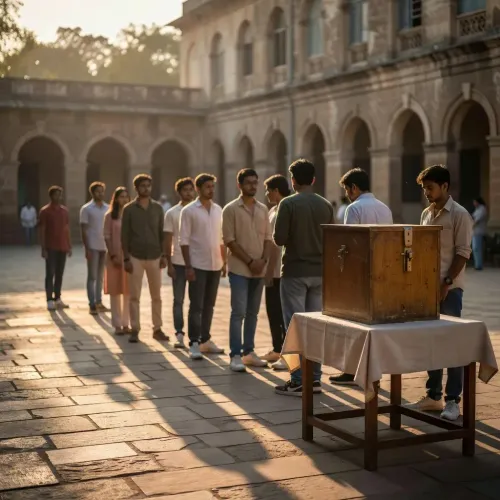
Student union elections are widely regarded as the first rung of democratic participation and a nursery for political talent. Their absence does not simply remove a campus ritual — it cuts off the experience of campaigning, coalition-building, accountability, and grassroots leadership that has historically produced state and national politicians across party lines. Majhi's post leaned into precisely this irony: that the very politicians who owe their careers to student politics allowed that ladder to be pulled up behind them.
BJP's 2024 victory and the youth-engagement pivot
The Bharatiya Janata Party ended the BJD's quarter-century dominance in the 2024 Odisha assembly elections, bringing Majhi to office as Chief Minister. From early in his tenure, the new administration has signalled a deliberate pivot toward youth — positioning the restoration of student elections as evidence that the BJP-led government trusts young people with democratic agency rather than viewing campus politics as a risk to be managed.
The move carries political undertones that are hard to miss. By framing the eight-year suspension as an act of democratic suppression by the previous dispensation — and naming the hypocrisy of silence from those who benefited from student politics — Majhi is building a contrast narrative ahead of future electoral cycles. Whether that narrative lands will depend in large part on how smoothly the elections are actually conducted across Odisha's universities and colleges in the coming academic cycle.
What students and campuses now await
The immediate question is operational: what guidelines the higher education department issues, which institutions hold polls first, and whether the process is uniform across state universities, autonomous colleges, and affiliated institutions. The announcement from CM Majhi establishes the political will; the administrative machinery now has to deliver the ballot.
For students who have spent their entire college lives without a union election, the revival is not an abstraction — it is the first concrete chance to experience representative democracy at close quarters. If Odisha's campuses can hold credible, peaceful elections, the state may set a benchmark for other states still grappling with the same question of whether to restore or extend student union polls.
A generation silenced for eight years is finally being handed the microphone — and how they use it will say as much about Odisha's political future as any party manifesto.
Point of View
CM Majhi is doing something politically precise: he is using governance to write an opposition indictment. Pinning an eight-year campus silence on the BJD sharpens the BJP's contrast narrative with a new generation of first-time voters who experienced that silence personally. The move fits a broader pattern seen in states where newly elected governments use early symbolic reversals to cement the idea that the old order was not merely defeated but was actively harmful. The real test, however, is execution — if the elections are conducted cleanly and on schedule, the political dividend follows naturally; if they stall or turn chaotic, the narrative flips.
NationPress
18 Oct 2026
Frequently Asked Questions
Why were student union elections stopped in Odisha?
Student union elections in Odisha's colleges and universities were suspended for approximately eight years during the Biju Janata Dal government led by Naveen Patnaik. The precise administrative reasons for the suspension have not been officially detailed, but CM Majhi's government has described it as a denial of students' democratic rights.
Has Odisha restored student union elections in 2026?
Yes. Chief Minister Mohan Charan Majhi announced on 18 October 2026 that his BJP-led government has restored student union elections, ending an eight-year suspension.
When did Mohan Majhi become Chief Minister of Odisha?
Mohan Charan Majhi became Chief Minister of Odisha in June 2024 after the BJP won the state assembly elections, ending the BJD's continuous rule of over two decades.
What did Naveen Patnaik's government do about student elections?
The BJD government under Naveen Patnaik suspended student union elections in Odisha colleges and universities for eight years before losing power in the 2024 elections. The current BJP government has described this as a suppression of students' democratic rights.
What is the significance of student union elections in India?
Student union elections are considered the first step in democratic participation for young Indians and have historically served as a training ground for future politicians at the state and national level, making their suspension a significant democratic setback for a generation of students.