BJP's Amit Malviya fires back at Jairam Ramesh over private investment claims

Synopsis
BJP’s Amit Malviya went well beyond a political rebuttal — he turned a Congress social media post into a data duel, citing CMIE Prowess figures, NPA records, and FDI numbers to argue that India’s investment cycle is strengthening, not faltering. The real story is that both sides are now fighting over the same economic datasets, and who controls that narrative may matter as much as the numbers themselves.
Key Takeaways
BJP leader Amit Malviya on Tuesday called Congress leader Jairam Ramesh’s economic critique “alarmist and misleading.” Malviya cited CMIE Prowess data showing private sector investment rising 67 per cent year-on-year to ₹7.7 lakh crore in September 2025 .
Gross FDI inflows in FY26 reportedly rose to $94.5 billion ; net FDI increased sixfold year-on-year, according to Malviya.
Public sector bank gross NPAs fell to 1.93 per cent in FY26 , described as a historic low; gross advances grew 15.7 per cent to ₹127 lakh crore .
Q4 FY26 adjusted net profits for a sample of 837 listed companies rose to ₹3.24 lakh crore , with margins at a five-year high.
Ramesh had argued that private investment as a share of GDP was at half its pre-2014 peak; Malviya countered that peak was “heavily debt-fuelled” and ended in an NPA crisis.
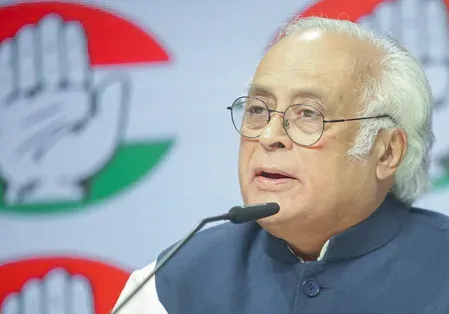
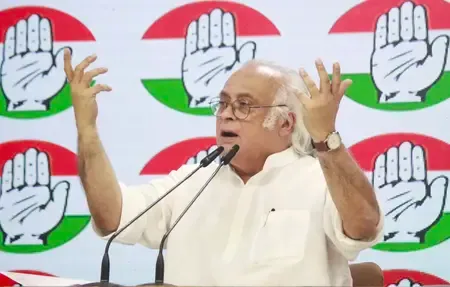
Bharatiya Janata Party (BJP) leader Amit Malviya on Tuesday sharply rebutted Congress communications chief Jairam Ramesh, calling his critique of the government's economic management “alarmist and misleading.” The exchange, centred on private investment trends, FDI flows, and banking health, marks one of the more data-heavy political confrontations on economic policy in recent weeks.
What Jairam Ramesh Said
Ramesh, posting on X, argued that Finance Minister Nirmala Sitharaman was consumed by the “3Fs” — fuel, fertilisers, and forex — while ignoring what he called the “all-important fourth F: falling rates of private investment that have been in evidence these past few years.” He also contended that net FDI flows had declined and that private corporate investment as a share of GDP stood at roughly half its pre-2014 peak.
Malviya's Counter: The Investment Data
Malviya pushed back by citing an analysis of nearly 1,200 companies from the CMIE Prowess database, which reportedly showed private sector investment rising 67 per cent year-on-year to ₹7.7 lakh crore in September 2025, up from ₹4.6 lakh crore a year earlier. Manufacturing accounted for nearly half of this capital expenditure, with services also contributing strongly. Capacity utilisation climbed to 75.6 per cent in Q3 FY26, new order books expanded 10.3 per cent year-on-year, and bank credit growth strengthened in the second half of FY26.
On the FDI question, Malviya said low net FDI did not automatically signal weak foreign investor confidence. “Gross FDI inflows in FY26 rose to around $94.5 billion, while net FDI increased sixfold compared to the previous fiscal year,” he said, calling Ramesh’s framing “a deliberate attempt to mislead.”
The Pre-2014 Benchmark Dispute
Malviya took particular issue with Ramesh’s use of the pre-2014 private investment peak as a reference point. He argued that the cycle was “heavily debt-fuelled and ended in stalled projects, over-leveraged corporates, stressed banks and the NPA crisis.” Using that peak as a benchmark “without mentioning the balance-sheet damage it created is dishonest economics,” he said.
Notably, this framing reflects a broader BJP counter-narrative that has been consistent since 2014: that the UPA-era investment boom was structurally unsound, and that the current cycle, while more modest, rests on cleaner foundations.
Banking Health and Corporate Profits
Malviya cited public sector bank data to argue the financial system was now capable of financing growth. According to him, public sector banks closed FY 2025-26 with gross NPAs at 1.93 per cent and net NPAs at 0.39 per cent — described as historically the lowest levels. Gross advances grew 15.7 per cent year-on-year to ₹127 lakh crore, with retail, agriculture, and MSME advances rising 18.1 per cent, 15.5 per cent, and 18.2 per cent respectively.
On corporate profitability, a sample of 837 listed companies showed Q4 FY26 adjusted net profits rising to ₹3.24 lakh crore, up from ₹2.81 lakh crore a year earlier, while revenue reached ₹28.65 lakh crore. Margins, Malviya said, hit their highest level in five years.
What Comes Next
The exchange underscores a deepening political contest over India’s economic narrative ahead of upcoming state elections. Congress is likely to press the private investment argument further, while the BJP will lean on banking and capex data as proof of a strengthening cycle. Independent economists and market analysts will be closely watched for third-party readings of the same datasets that both sides are now invoking.
Point of View
Which is what makes this exchange politically effective and analytically frustrating. Ramesh is right that private investment as a share of GDP remains subdued relative to historical peaks; Malviya is right that those peaks were debt-fuelled and ended badly. The CMIE Prowess capex figure — a 67 per cent year-on-year jump — is striking, but a single-quarter reading from a database sample is not a trend. The more durable signal is the NPA data: if public sector banks have genuinely cleaned up to 1.93 per cent gross NPAs, the credit pipeline for a sustained investment cycle is finally open. Whether demand-side conditions are strong enough to pull that investment through is the question neither side is fully answering.
NationPress
19 Sept 2026
Frequently Asked Questions
What did Jairam Ramesh say about private investment in India?
Ramesh argued on X that Finance Minister Nirmala Sitharaman was focused on the ‘3Fs’ — fuel, fertilisers, and forex — while neglecting falling rates of private investment. He also said net FDI flows had declined and that private corporate investment as a share of GDP was at roughly half its pre-2014 peak.
How did Amit Malviya respond to the private investment criticism?
Malviya cited CMIE Prowess data showing private sector investment rose 67 per cent year-on-year to ₹7.7 lakh crore in September 2025. He argued that demand, profitability, credit availability, and policy confidence — the four drivers of investment — were all pointing toward strengthening fundamentals.
What is the BJP’s position on India’s FDI figures?
Malviya said gross FDI inflows in FY26 rose to around $94.5 billion, with net FDI increasing sixfold compared to the previous fiscal year. He called Ramesh’s focus on net FDI a deliberate attempt to mislead, arguing that gross inflows better reflect actual foreign investor confidence.
Why does Malviya reject the pre-2014 private investment peak as a benchmark?
Malviya argued the pre-2014 investment boom was heavily debt-fuelled and ended in stalled projects, over-leveraged corporates, and the NPA crisis. He said using that peak as a reference without acknowledging the resulting balance-sheet damage amounted to ‘dishonest economics.’
What do the latest public sector bank figures show?
According to Malviya, public sector banks closed FY 2025-26 with gross NPAs at 1.93 per cent and net NPAs at 0.39 per cent, described as historically the lowest levels. Gross advances grew 15.7 per cent year-on-year to ₹127 lakh crore, with retail, agriculture, and MSME segments all posting double-digit growth.