Mamata Backs NEET Protesters, Slams Delhi Police Crackdown
Synopsis
West Bengal Chief Minister Mamata Banerjee on 24 July 2026 backed student protesters at Jantar Mantar demanding accountability over the 2024 NEET-UG paper leak, condemned an alleged police crackdown involving lathi charges and pellet guns, and questioned why the CBI found no evidence against the accused kingpin.
Key Takeaways
Mamata Banerjee on 24 July 2026 publicly backed student protesters at Jantar Mantar demanding accountability over the 2024 NEET-UG paper leak .
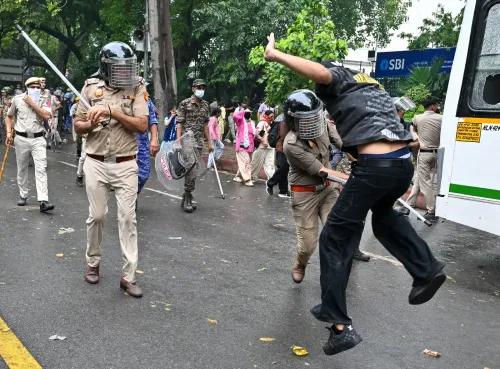
She alleged Delhi Police used lathi charges, pellet guns, and tear gas against peaceful student demonstrators.
She claimed internet services were reportedly suspended around Jantar Mantar and the National Security Act (NSA) was invoked for preventive detentions of students.
Banerjee cited a reported CBI statement that it found no evidence against the alleged kingpin in the 2024 NEET paper leak case , questioning the government's commitment to accountability.
She called on the government to answer why it appeared to be protecting the Education Minister rather than addressing students' demands.
The entire opposition, she said, stands in solidarity with student protesters across the country.
West Bengal Chief Minister Mamata Banerjee on Friday, 24 July 2026, issued a sharp statement backing student protesters demanding accountability over the 2024 NEET-UG paper leak, condemning what she described as a brutal police crackdown on peaceful demonstrators at Jantar Mantar, New Delhi, and questioning why those accused in the scam continue to evade justice.
Context
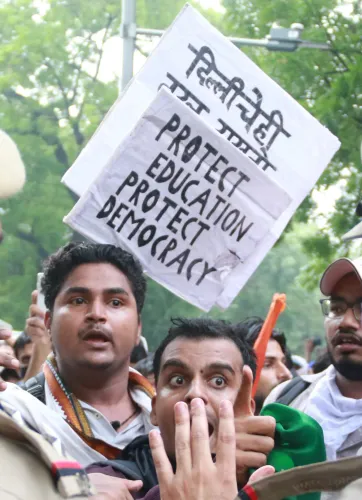
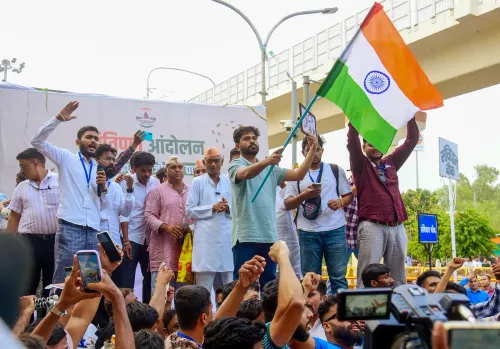
Student groups have been staging demonstrations at Jantar Mantar — New Delhi's designated protest site — demanding accountability over alleged irregularities in the 2024 NEET-UG examination. Banerjee, in her post, alleged that Delhi Police responded with lathi charges, pellet guns, and tear gas against peaceful protesters, and that internet services were reportedly suspended in and around the area. She also alleged that authorities invoked the National Security Act (NSA) to carry out preventive detentions of students.
The Chief Minister wrote: 'The brutal crackdown by the Delhi Police on peaceful protesters is deeply disturbing and utterly unacceptable. Students were mercilessly beaten, lathi-charged, fired upon with pellet guns and subjected to tear gas simply for demanding accountability.'
Policy Backdrop
NEET, introduced as the sole nationwide entrance test for medical and dental admissions in 2016, replaced a patchwork of state-level examinations. The centralisation was intended to standardise the admissions process, but the 2024 NEET-UG edition triggered a nationwide controversy after widespread allegations of paper leaks and irregularities surfaced, prompting a Central Bureau of Investigation (CBI) probe.
Banerjee pointed to a statement she attributed to the CBI — made just a day before her post — in which the agency reportedly stated it found no evidence against the alleged kingpin in the 2024 NEET paper leak case. She wrote: 'If those accused of destroying the future of lakhs of students continue to escape accountability, who is the government really protecting?' She further questioned why the government appeared more focused on shielding the Education Minister than answering students' demands for transparency.
Stakeholders and Impact
At the heart of the controversy are lakhs of medical aspirants whose futures hinge on the integrity of the NEET examination. Student-led movements demanding transparent competitive examinations have recurred across India each time major leak allegations surface, reflecting deep anxiety about the fairness of centralised testing systems.
Regional opposition leaders, including Banerjee, have consistently framed the central government's handling of national examinations and Delhi protests as evidence of federal overreach and a deficit of accountability. Delhi Police, which functions under the Union Government rather than the Delhi state administration, has frequently been at the centre of such political disputes during protest episodes at Jantar Mantar.
Banerjee declared solidarity from the broader political spectrum: 'The entire Opposition, along with the entire nation, stands firmly with our students and youth.' She added: 'I salute every young Indian for their indomitable spirit, unwavering courage, and refusal to bow before lathis, intimidation or the abuse of state power.'
What's Next
The NEET controversy is expected to feature prominently in the ongoing monsoon session of Parliament, with opposition parties likely to press the government on the CBI investigation's findings and the treatment of protesters. Supreme Court hearings on pending NEET-related petitions will also be closely watched, as any judicial direction on the probe or the examination process could reshape the political and legal landscape around the issue.
With student anger showing no signs of abating and opposition voices amplifying the movement, the Union Government faces mounting pressure to provide credible answers — both on the integrity of the examination system and on the conduct of security forces at protest sites.
Point of View
She frames the issue not merely as a policy failure but as an assault on democratic rights, maximising its emotional and electoral resonance. The post also signals a broader opposition strategy of consolidating student anger into sustained pressure on the Union Government over the NEET controversy. For the ruling establishment, the convergence of a stalled CBI probe, street protests, and vocal regional leaders represents a compounding accountability challenge that is unlikely to dissipate before Parliament reconvenes.
NationPress
22 Oct 2026
Frequently Asked Questions
What is the NEET paper leak controversy?
The 2024 NEET-UG examination faced widespread allegations of paper leaks and irregularities, prompting a CBI investigation and nationwide student protests demanding accountability and examination reform.
Why did Mamata Banerjee criticise Delhi Police?
Mamata Banerjee alleged that Delhi Police used lathi charges, pellet guns, and tear gas against students peacefully protesting at Jantar Mantar over the NEET scam , calling the crackdown 'deeply disturbing and utterly unacceptable.'
What is Jantar Mantar and why do protests happen there?
Jantar Mantar in New Delhi is a historic observatory that has served as a designated and symbolic protest site for opposition groups and civil society movements since the 1990s.
What did the CBI say about the NEET paper leak case?
According to Mamata Banerjee's post , the CBI reportedly stated on 23 July 2026 that it found no evidence against the alleged kingpin in the 2024 NEET paper leak case ; this claim has not been independently verified.
What is the National Security Act (NSA) and why is it controversial?
The National Security Act (NSA) allows authorities to detain individuals for up to 12 months without trial for reasons of national security or public order; critics and opposition leaders describe it as a 'draconian' law when applied to political protesters or student activists.