Mamata Slams BJP Over Delhi, Kolkata Violence on Martyrs' Day
Synopsis
West Bengal CM Mamata Banerjee on 21 July 2026 alleged police atrocities against youth in Delhi and BJP-orchestrated vandalism of TMC's Martyrs' Day event in Kolkata, declaring the party will carry its fight against the BJP from Bengal to the national stage.
Key Takeaways
Mamata Banerjee condemned alleged police action against youth protesters in Delhi and extended TMC's solidarity with the opposition sit-down protest near Akbar Road .
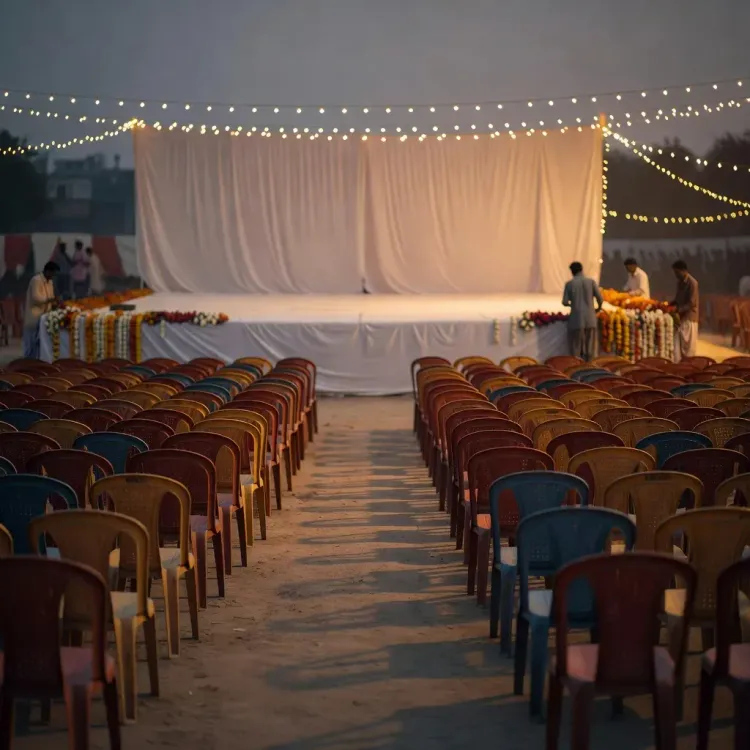
She alleged BJP workers arrived on motorcycle squads overnight in Kolkata , destroying TMC signage, vandalising the stage, and cutting microphone wires ahead of the Martyrs' Day programme.
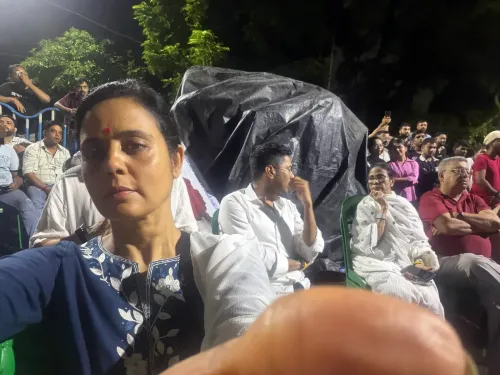
Despite the alleged disruptions, the Martyrs' Day event on 21 July 2026 proceeded, with Banerjee calling it 'very special.' Martyrs' Day is an annual TMC commemoration held on 21 July to honour party workers killed in political violence.
Banerjee declared TMC will 'take our fight from Bengal to India,' signalling an escalation of the party's national opposition role.
Responses from Delhi Police and West Bengal authorities on the cited incidents are yet to be issued.
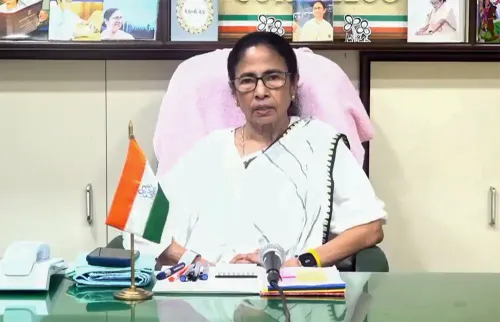
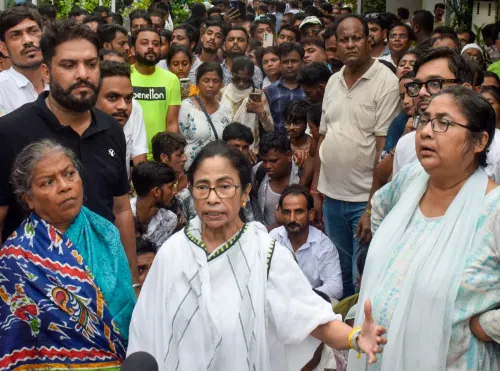
West Bengal Chief Minister Mamata Banerjee on Tuesday, 21 July 2026 condemned what she called police atrocities against youth in Delhi and alleged that BJP workers vandalised Trinamool Congress preparations in Kolkata overnight, even as her party observed its annual Martyrs' Day programme.
Context
Banerjee declared that 'the police atrocities on our youth in Delhi is unacceptable' and announced the All India Trinamool Congress (AITC) stands in 'full solidarity' with the opposition sit-down protest held near Akbar Road in New Delhi. The demonstration, joined by multiple opposition parties, was directed at the Union government. Akbar Road, located close to major political offices in the national capital, has been a recurring venue for opposition protests against the BJP-led central government.
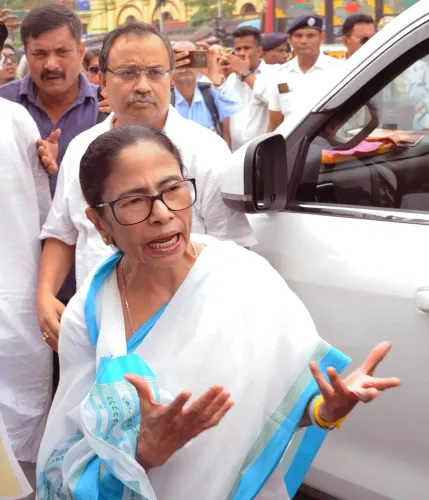
Simultaneously, Banerjee alleged that back in Kolkata, BJP workers arrived on motorcycle squads through the night, destroyed TMC signage, vandalised the party's stage, and deliberately cut microphone wires ahead of the Martyrs' Day event. She said many youth were 'threatened and injured' in the process.
Policy Backdrop
Martyrs' Day is an annual TMC commemoration held on 21 July to honour party workers who were killed in political violence. The event carries deep symbolic weight for the party and typically draws large gatherings in Kolkata. Disruptions to the event, if confirmed, would represent a significant escalation in TMC-BJP political friction.
TMC has a documented history of joining opposition coordination efforts in Delhi, including multiple demonstrations near Parliament in 2023 and 2024 against what the party describes as the central government's misuse of law-enforcement agencies. The party has consistently positioned itself as a defender of regional autonomy against perceived central overreach.
Stakeholders and Impact
The allegations, if substantiated, affect TMC's grassroots workers and youth who were preparing for one of the party's most significant annual events. Banerjee acknowledged the disruptions but said the programme ultimately went ahead, calling it 'very special, supported by our committed grassroots workers and people from across Bengal.'
For the broader opposition, the events in Delhi add to a pattern of coordinated demonstrations against the Union government. TMC's public solidarity with the Akbar Road protest signals continued alignment between the party and other opposition formations on issues of civil liberties and policing.
What's Next
Banerjee closed with a pointed political declaration: 'We pledge to unitedly fight the atrocities and dictatorial attitude of the BJP. We will take our fight from Bengal to India. United we stand.' This signals that TMC intends to escalate its national opposition role beyond West Bengal.
Responses from Delhi Police and West Bengal state authorities on the specific incidents cited are awaited. Further coordination meetings among opposition parties in Delhi are likely to follow, given the charged rhetoric on both sides. The coming days will test whether TMC's stated intent to carry its political fight to the national stage translates into concrete opposition bloc activity.
Point of View
The party's most emotionally resonant annual event, amplifies the political impact of the allegations. This fits a broader arc in which TMC has sought to graduate from a regional party with grievances to a meaningful pillar of the national opposition bloc. The declaration to 'take our fight from Bengal to India' is the clearest signal yet that TMC views the current political moment as an opportunity to expand its footprint beyond state boundaries.
NationPress
22 Jul 2026
Frequently Asked Questions
What is Martyrs' Day and why does TMC observe it?
Martyrs' Day is an annual commemoration held by the All India Trinamool Congress on 21 July to honour party workers who were killed in political violence. It is one of the most significant events in the TMC calendar and typically draws large crowds in Kolkata.
What did Mamata Banerjee allege about BJP workers in Kolkata?
Banerjee alleged that BJP workers arrived on motorcycle squads through the night of 20-21 July 2026 in Kolkata, destroying TMC signage, vandalising the party stage, cutting microphone wires, and threatening and injuring TMC youth ahead of the Martyrs' Day programme.
What is the opposition protest near Akbar Road that TMC supported?
Akbar Road in New Delhi is a location near major political offices that has served as a recurring venue for opposition demonstrations. On 21 July 2026 , opposition parties held a sit-down protest there against the Union government, which TMC publicly endorsed.
Did the TMC Martyrs' Day programme in Kolkata go ahead despite the alleged disruptions?
Yes. Banerjee confirmed the Martyrs' Day programme took place and called it 'very special,' crediting committed grassroots workers and people from across Bengal for ensuring its success despite the alleged overnight vandalism.
What did Mamata Banerjee mean by 'we will take our fight from Bengal to India'?
The statement signals TMC's intent to escalate its political opposition to the BJP beyond West Bengal and play a larger role in national politics, building on its existing participation in opposition coordination efforts in Delhi.